
Attualità
Le lezioni di Raffaella Carrà- What Raffaella Carrà taught us



Le lezioni di Raffaella Carrà
Come abbiamo scritto nella prima parte di questo articolo iniziamo questa seconda parte con il periodo di lingua spagnola della carriera artistica di Raffaella Carrà che dimostra soprattutto come promuovere i nostri artisti all’estero. Perciò, in questa seconda parte presenteremo video di alcune sue canzoni cantate in spagnolo.
Nel 1975, dopo il successo di “Mille luci” con Mina, lei decise di provare in Spagna, presentandosi sin dall’inizio con testi in spagnolo per potere entrare in quel mercato. All’epoca, la Spagna si trovava nell’ultima parte della dittatura franchista e il talento e soprattutto la vivacità di Raffaella Carrà le portò grande successo, aprendo la porta anche al grandissimo mercato latino-americano.
E anche in spagnolo si trovò vittima di censure per cui, “Hay Que Venir Al Sur”, la versione spagnola di grande successo italiano, “Tanti auguri”, “fare l’amore” dovette essere tradotta in “fare innamorare” per non offendere il pubblico cattolicissimo in quei paesi.
“Hay Que Venir Al Sur”, 1978
In seguito, Raffaella Carrà fece diverse tournée nelle Americhe con grandissimo successo, non solo perché portava artisti e ballerini italiani dai suoi spettacolo televisivi, ma anche perché trovava collaboratori locali capaci di assicurare il miglior impatto possibile con il nuovo pubblico internazionale.
Però, era sempre lei il centro di questi spettacoli perché, come in Italia, ci metteva il massimo al punto che, nel corso di questi spettacoli, perdeva ogni sera una media di due chili di peso…
E le lezioni che insegnò all’Italia con questi successi è che bisogna conoscere il nuovo pubblico e presentare i brani in modi che siano compresi da tutti e non solo da quei pochi all’estero che abbiano più di una base minima della nostra lingua. Un aspetto che, purtroppo, molti dei nostri addetti alle promozioni internazionali della nostra Cultura NON tengono in mente…
Ed è una lezione che un altro artista italiano ha dato al paese come abbiamo già spiegato in un articolo nel passato, Angelo Branduardi, che produce i suoi album in altre lingue per i suoi fans all’estero… .
“Que dolor”, 1984
Ma, come sappiamo, Raffaella Carrà non ha mai abbandonato l’Italia, ma ha dato al paese lezioni da seguire, non solo da artisti, ma anche da gente in ogni aspetto della vita, perchè il tempo passa, ma non possiamo mostrare sempre lo stesso volto al mondo perché ciascuno di noi cambia in base alle proprie esperienze, e dobbiamo avere il coraggio di mostrare questi cambiamenti.
Infatti, lei aveva capito che non poteva fare per sempre la “showgirl”, e che doveva trovare altre strade e così lei decise di cimentarsi in altri format, come giochi, in modo particolare quello di indovinare quanti fagioli ci fossero in un vasetto grande.
Però, nemmeno lei poteva immaginare la reazione del pubblico a questi format televisivi.
E il motivo del grandissimo impatto di pubblico di questa terza fase della sua vita fu la sua capacità di coinvolgere proprio il pubblico che cominciò ad amare non la ballerina e cantante, bensì la persona Raffella Carrà che dava voce a chi aveva bisogno di esprimere i propri timori, i problemi della vita, e, in un programma particolare, lei diventò anche il modo di mostrare al pubblico italiano, e tramite l’allora RAI International anche al mondo, il prezzo umano della nostra emigrazione.
Il primo programmo è stato “Pronto Raffaella” (1983-1984), non più di sabato sera, ma durante i giorni della settimana, nel quale il pubblico poteva telefonarle, e non solo per indovinare il numero di fagioli nel vaso. Con ogni puntata il legame con il suo pubblico diventava sempre più forte e anche, paradossalmente, più intimo mentre loro esprimevano i loro disagi.
Poi, nella puntata del 23 dicembre 1983, dopo l’attentato del treno rapido numero 904 Napoli-Milano all’interno della galleria di San Benedetto Val di Sambro (BO), la “galleria degli Appennini”, con 16 morti e circa 300 feriti, le lacrime di Raffaella, non più solo “la Carrà”, diventarono il simbolo dell’Italia colpita dall’ennesima violenza, questa volta per mano della criminalità organizzata e non del terrorismo domestico degli “Anni di piombo”.
Certo, per un periodo continuò a fare spettacoli televisivi in Italia, persino nella TV privata, con il “Raffaella Carrà Show”, e altri spettacoli sulla Fininvest, ora Mediaset, tra il 1987 e il 1988. Ma a questo punto era ben più della ballerina che fece il debutto televisivo da conduttrice con tre minuti di ballo da sola…
E continuò anche a fare programmi in lingua spagnola per il mercato latino-americano.
“Pedro”, 1980
Dopo i programmi sul canale di Silvio Berlusconi tornò alla Rai con un nuovo programma che le diede la possibilità di mostrare al pubblico italiano e internazionale il volto vero degli italiani all’estero.
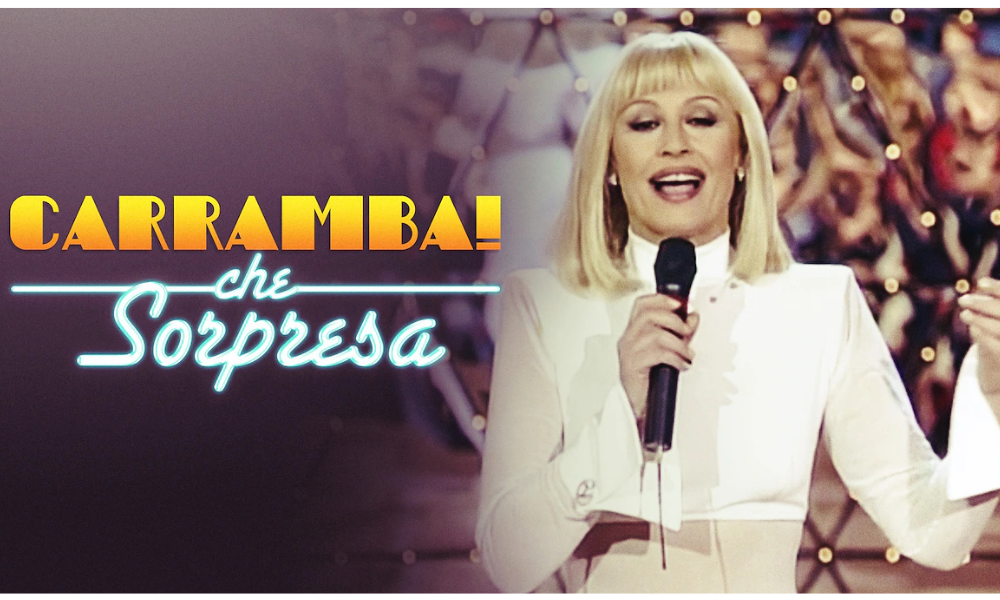
In “Caramba che sorpresa” (1995-2002), Raffaella Carrà presentava un programma dove lei non era affatto il centro dell’attenzione, ma i membri del pubblico che, all’improvviso, si trovano sotto i riflettori e le telecamere.
Infatti, in questo programma, certamente dopo suggerimenti dal pubblico, lei organizzava ricongiungimenti tra rami di famiglie in Italia e all’estero, con la commozione di tutti come vediamo nel video sotto, tratto da una puntata.
Ci vuole poco per capire che Raffaella diventò un’icona del paese, non solo perché sapeva ballare e cantare, ma perché ha saputo riconoscere i cambiamenti nel tempo, non solo in sé stessa, ma anche nel paese, e capiva cosa bisognasse fare per aiutare la gente che si fidava di lei, anche se nel corso di programmi televisivi nazionali di grande successo.
E, fino alla fine, ha saputo anche tenere fede alla sua decisione di separare la sua vita privata dalla vita pubblica, perché fino alla fine ha potuto tenere segreta la brutta malattia che l’ha portata via da questo mondo il 5 luglio 2021.
Un articolo di solo due parti non potrebbe mai fare capire la grandezza della sua carriera, e l’impatto che ha avuto non solo in Italia, ma in altri paesi, ma vogliamo fare capire ai nostri lettori all’estero chi era Raffaella Carrà, e la sua importanza, anche perché è stata un agente di cambi nella nostra Cultura che ci ha dato lezioni importanti su come promuovere la nostra Cultura all’estero, perché non siamo ancora stati capaci di fare conoscere al mondo la vera grandezza del nostro tesoro più importante.
E chiudiamo questo omaggio a Raffaella Carrà con una sua canzone in spagnolo con un titolo che spiega lo spirito di questo articolo, “La cosa importante è amarla”…
Lo importante es amarle, 1994
What Raffaella Carrà taught us
As we wrote in the first part of this article we start this second part with the Spanish language section of Raffaella Carrà’s artistic career which mainly demonstrates how to promote our artists overseas. So, in this second part we will present videos of some of her songs in Spanish.
In 1975, after the success of “Mille Luci” with Mina, she decided to try in Spain, presenting herself from the start in Spanish to be able to enter that market. At the time Spain found itself in the final part of Franco’s dictatorship and Raffaella Carra’s talent, and above all her vivacity, brought her great success, opening the door to the huge Latin American market as well.
And even in Spain she found herself in the hands of the censor so that her “Hay Que Venir Al Sur”, the Spanish version of her Italian hit “Tanti auguri”, “making love” had to be translated into “to make fall in love” so as not to offend the very Catholic audience in those countries.
“Hay Que Venir Al Sur”, 1978
Subsequently, Raffaella Carrà toured the Americas several times with great success, not only because she took Italian artists and dancers from her TV shows, but also because she found local collaborators who were able to ensure she had the best possible impact with the new international audience.
However, she was always the centre of these shows because, like in Italy, she put the most into them to the point that, during these shows, she lost an average of 2 kilos every night…
And the lessons she taught Italy with this success is that you must know the new audience and present the songs in ways that they are understood by the whole audience and not just by the few people overseas who have more than a minimal knowledge of our language. An issue that, unfortunately, many of the people responsible for our international promotions of our Culture do NOT keep in mind…
And this is a lesson that another Italian artist gave the country as we have already explained in a past article, Angelo Branduardi, who produces his albums in other languages for his fans overseas.
“Que dolor”, 1984
But, as we know, Raffaella Carrà had never forsaken Italy, she gave the country lessons to follow, not only artists, but also people in every aspect of life, that time passes, but we cannot always show the same face to the world because each one of us changes according to our experiences, and that we must have the courage to show these changes.
In fact, she had understood that she could not the “showgirl” forever, and that she had to find other ways, and so she decided to take on other types of programmes, such as games, especially that of guessing how many beans were in a large jar.
However, even she could not have imagined the public’s reaction to these programmes.
And the reason for the very big public reaction of this third phase of her career was her skill in involving the very audience that began to love, not the dancer or the singer, but the person Raffaella Carrà who gave a voice to those who needed to express their fears, their problems in life and, in one particular programme, she also became the way to show the Italian public, and through the then RAI International, also the world, the human price of our emigration.
The first programme was “Pronto Raffaella” (Hello Raffaella), no longer on Saturday nights, but on weekdays during which the public could telephone her, and not just to guess the number of beans in the large jar. With each episode the connection with her audience grew stronger and stronger, and even, paradoxically, more intimate, as they expressed their difficulties.
And then, on the episode of 23 December 1983, after the bombing of the express train 904 Naples-Milan inside the San Benedetto Val di Sambro (BO) tunnel, the “tunnel of the Apennines”, with 16 dead and about 300 wounded, Raffaella’s tears, no longer just “the Carrà”, became the symbol of Italy struck by yet another act of violence, this time at the hands of organized crime and not by the domestic terrorism of the “Anni di piombo” (years of lead)
Of course, for a while she continued to perform TV shows in Italy, even on private TV, with the “Raffaella Carrà Show”, and other shows on Fininvest, now Mediaset, between 1987 and 1988. But at this point she was far more than the dancer who made her TV debut as a presenter with three minutes of solo dancing…
And she also continued to make TV programs in Spanish for the Latin American market.
“Pedro”, 1980
After the programmes on Silvio Berlusconi’s channel, she returned to RAI with a new programme that gave her a chance to show the Italian and international audiences the true face of Italians overseas.
In “Caramba che sorpresa” (Caramba, what a surprise, 1995-2002), Raffaella Carrà hosted a programme where she was not the centre of attention at all, but the members of the audience who suddenly found themselves in the spotlight and the cameras.
In fact, during these programmes, certainly after suggestions from the public, she organized reunions of families with branches in Italy and overseas, with the emotional reaction of everyone, as we see in the video below, taken from one episode.
It does not take much to understand that she became an icon in the country, not only because she knew how to dance and sing, but also because she knew how to recognize the changes over time, not only in herself, but also in the country, and she understood what needed to be done to help the people who trusted her, even in the course of very successful national TV programmes
And, at the end, she also knew how to keep faith with her decision to keep her private life and her public life separate because she was able to keep secret the terrible disease that took her from this world on 5 July 2021.
An article of only two parts will never be able to make the greatness of her career, and the impact that she had not only in Italy, but also in other countries, be understood, but we want to make our readers overseas understand who Raffaella Carrà was, and her importance, also because she was an important agent of change in our Culture who gave us important lessons in how to promote our Culture overseas that we have not learnt because, as a country, we have not yet been able to let the world know the true greatness of our most important treasure.
And we conclude this tribute to Raffaella Carrà with a song of hers in Spanish with a title that explains the spirt of this article, “The important thing is to love her”…
Lo importante es amarle, 1994


