
Italiani nel Mondo
Non solo l’omertà: altri problemi affliggono il Sud Italia- Not Just omertà: other problems that afflict the South of Italy




Non solo l’omertà: altri problemi affliggono il Sud Italia
Ci sono questioni che non possono essere trattate nei limiti di un singolo articolo di giornale. Infatti, un recente articolo che trattava dell’omertà, è stato scritto con la consapevolezza che la questione sollevata rappresentasse solo un aspetto dei problemi che affliggono il Sud d’Italia.
Alcuni commenti scambiati con un amico del Sud, prima e dopo l’articolo, hanno rafforzato ciò che avevo iniziato a esporre in quell’articolo.
Filippo Brianni non è solo un caro amico, ma anche un avvocato di Messina che conosce bene i problemi, e i suoi commenti sull’articolo mi hanno fatto piacere e meritano di essere citati.
“L’omertà a volte non è una causa, ma un effetto. Succede quando le forze positive, lo stato, le sue istituzioni, non tutelano e così che la paura del male genera l’omertà. Che non è mancanza di coraggio, ma risposta istintiva nel momento ci si rende conto che anche “parlando” il problema non si risolve, il più forte l’avrà comunque vinta e le vendette sarebbero sicure. Hai seguito la vicenda di Lea Garofalo, vite distrutte in tutti i sensi possibili, per madre e figlia (https://www.rainews.it/articoli/2026/09/si-e-uccisa-denise-la-figlia-di-lea-garofalo-a4caa533-7532-4d92-8156-fbdbf257d88c.html )…
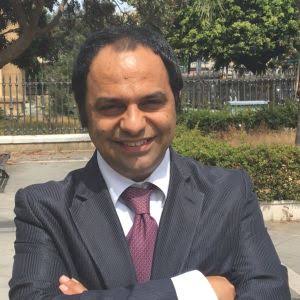
avv. Filippo Brianni
“Il primo pentito ha finito i propri giorni in manicomio dove poi l’hanno ucciso. Con Giovanni Falcone e Paolo Borsellino i testimoni sono proliferati, perché sentivano la presenza dello Stato, perché sentivano che attraverso le istituzioni le ingiustizie non sarebbero state impunite. Pensa a Tommaso Buscetta (https://biografieonline.it/biografia-tommaso-buscetta ): ha descritto a Falcone centimetro per centimetro la mafia ma quando gli ha chiesto dei politici, ha detto “di questi non parlo, altrimenti sopra di lei affosserebbero anche le indagini per i mafiosi che le sto facendo arrestare”. Infatti, quando successivamente collaboratori fino a quel momento credibili iniziarono a fare nomi “pesanti” la loro credibilità cadde e la loro protezione vacillò. Quindi non è un problema di sud o nord: l’omertà c’è laddove lo Stato è più debole di chi commette reati.
“Al Sud il problema è più marcato perché per troppo tempo lo Stato percepito come il nemico che “toglie” al territorio ed alle famiglie, al quale si preferiva l’amico che “dava” e che quindi non doveva esser tradito per favorire lo Stato. Soprattutto se si percepiva che gli stessi organi dello Stato erano complici di coloro che tu avresti dovuto tradire con la tua collaborazione, attirandoti così persino l’astio dello stesso Stato”.
Ho messo in evidenza un commento perché rappresenta il nocciolo centrale del problema nel Sud. In altre parole, in quei territori lo Stato è assente.
Ma cosa significa, in questo contesto, «lo Stato è assente»? Sto per raccontare a storia che molti lettori d’oltreoceano probabilmente non riusciranno a comprendere appieno – io stesso all’epoca non ci riuscivo – ma si tratta di un aspetto dell’Italia che, come l’omertà, non è evidente a chi visita il Paese, pur essendo una realtà della vita in Italia, in particolare nel Sud, che spesso costringe le persone a cercare lavoro in altre regioni o all’estero.
Dopo essermi laureato in Australia nel 1980, mi sono trasferito in Italia con l’intenzione di studiare all’università di Napoli. Quell’esperienza fu interrotta dal disastroso terremoto che colpì la Campania il 23 novembre 1980, causando enormi problemi e portandomi infine ad abbandonare gli studi a causa delle condizioni disastrose in cui versava la ricostruzione, persino all’interno della stessa università. Alla fine, mi sono trovato di fronte alla decisione di tornare in Australia, anche se una parte di me voleva restare in Italia; tuttavia, era difficile trovare lavoro, soprattutto per qualcuno il cui italiano non era perfetto per il tipo di lavoro che stavo cercando.
Un giorno, parlando con un amico a Scauri (LT), mi fu detto: «Vuoi lavorare? È facile, tiri a bordo 500 persone nella Democrazia Cristiana (il principale partito politico dell’epoca) e ti troveranno un buon lavoro».
Le ragioni di quel consiglio divennero chiarissime quando, nel 1992, a Milano scoppiò lo scandalo Tangentopoli (https://www.treccani.it/enciclopedia/tangentopoli_%28Enciclopedia-Italiana%29/ ), che mise a nudo aspetti malsani della politica italiana, coinvolgendo numerosi partiti e provocando un vero e proprio shock in tutto il Paese.
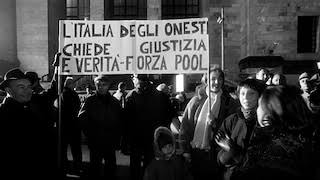
Tangentopoli, insieme alle rivelazioni sulle lotte di fazione all’interno dei partiti politici, finì per distruggere i partiti tradizionali, grandi e piccoli, che facevano parte del sistema politico italiano da decenni, poiché tali lotte erano state alimentate da coloro che erano in grado di controllare blocchi di voti all’interno dei partiti. E quello scandalo dimostrò anche come queste lotte politiche interne ai partiti fossero diventate il mezzo attraverso cui la criminalità organizzata otteneva accesso ai politici, poiché le bande controllavano facilmente blocchi di voti in interi territori e quindi decidevano chi sarebbe stato eletto, anche a pagamento, se necessario, ma a volte c’erano altri “incentivi”.
Con la scomparsa dei partiti politici tradizionali, sono sorti nuovi partiti e movimenti politici, approfittando del malcontento diffuso nei confronti della politica in ogni sua forma, ma quel malcontento non è mai scomparso.
A livello pratico, questo è ciò che “assenza dello Stato” significa per molte persone.
E questo malcontento ha creato nel sud quella mentalità, che esiste ancora oggi, secondo cui stringere «amicizia» con persone «influenti» è più importante per riuscire a trovare lavoro, o persino per avviare nuove attività, che possedere le qualifiche adeguate; ciò spiega la migrazione di professionisti qualificati dal sud al nord descritta nel primo articolo ed è spesso il motivo per cui molti giovani cercano di rifarsi una vita all’estero.
E se i lettori all’estero vogliono un “segno concreto” di ciò che accade nel Sud, non devono far altro che guardare le case incompiute in innumerevoli città di ogni regione meridionale. Erano state iniziate da persone che erano emigrate per lavorare in altri paesi europei, in particolare Germania, Francia e Belgio, e persino in Spagna, con l’intenzione di tornare, prima o poi, nelle loro nuove case. Ma dopo solo pochi anni all’estero hanno interrotto i lavori su queste «nuove case» perché si sono resi conto che, in molti casi, la situazione nei loro luoghi d’origine non era migliorata nel tempo e che il loro futuro era nei nuovi paesi e non nei luoghi in cui erano nati e cresciuti…
Il Sud ha problemi che devono essere risolti, perché possiede davvero un enorme potenziale, a cominciare dal turismo, ma ciò non accadrà se coloro che controllano interi territori, e non sono stati eletti da alcun cittadino, decidono cosa accadrà o non accadrà in un determinato territorio…
E questo accadrà solo quando, come ha accennato Filippo Brianni nei suoi commenti, «le “forze del bene” inizieranno a proteggere la gente»…
Not Just omertà: other problems that afflict the South of Italy
There are issues that cannot be written within the limits of one newspaper article. In fact, a recent article that dealt with omertà, was written knowing that the issue raised was only one aspect of the problems affecting the South of Italy.
These issues have been constant themes in my discussions since I moved to Italy in 2010 after several visits to the country that opened my eyes to things that I had not seen in my first visit as a naive 16-year-old student in 1972. And some comments with a friend from the South, before and after the article, reinforced what I started in that article.
Filippo Brianni is not just a good friend, he is also a lawyer based in Messina who knows the problems well, and his comments about the article pleased me and deserve to be quoted.
“The code of silence (omertà) is sometimes not a cause, but an effect. It arises when the forces for good – the state and its institutions – fail to protect people, and so the fear of evil gives rise to the code of silence. This is not a lack of courage, but an instinctive reaction when one realizes that even ‘speaking out’ will not solve the problem; the stronger party will prevail anyway, and retaliation is inevitable. Have you been following the story of Lea Garofalo, lives destroyed in every possible way, for both mother and daughter (https://www.rainews.it/ articles/2026/09/denise-lea-garofalo’s-daughter-took-her-own-life-a4caa533-7532-4d92-8156-fbdbf257d88c.html )…
Avv. Filippo Brianni
“The first state witness ended his days in a mental asylum, where he was subsequently murdered. With Giovanni Falcone and Paolo Borsellino, the number of witnesses multiplied, because they felt the presence of the State, because they felt that, through the institutions, injustices would not go unpunished. Take Tommaso Buscetta (https://biografieonline.it/biografia-tommaso-buscetta ): he described the Mafia to Falcone in minute detail, but when asked about politicians, he said, ‘I won’t talk about them; otherwise, those above you would also scupper the investigations into the Mafia members I’m helping you arrest’. In fact, when informants who had been credible up to that point subsequently began to name ‘big fish’, their credibility plummeted and their protection faltered. So, it is not a question of the South or the North: the code of silence exists wherever the State is weaker than those who commit crimes.
“In the South, the problem is more pronounced because, for too long, the State was perceived as the enemy that ‘takes’ from the local area and families, whilst the ‘friend’ who ‘gives’ was preferred – and therefore must not be betrayed in favour of the State. Especially if it was felt that the very organs of the state were complicit with those whom you would have had to betray through your cooperation, thereby even incurring the wrath of the state itself.”
This is the central core of the problem in the South. In other words, in those territories, the State is absent and many, too many people, still feel that politics, in all its various forms, still does not represent them.
So, what does the “absence of the State” mean when used in this context? Many readers overseas who probably will not be able to understand the story I am about to tell fully, I certainly did not at the time, but it is a face of Italy that, like omertà, is not obvious to those who visit Italy but it is an aspect of life in Italy, particularly the South, that often forces people to look for work in other regions or overseas.
After graduating from University in Australia in 1980 I moved to Italy with the intention of studying at Naples University. That experience was cut short by the disastrous earthquake that hit the Campania region on November 23, 1980, which caused huge problems, and eventually led to my abandoning the studies due to the horrid state of the city, even within the university itself. Ultimately, I was faced with the decision whether to return to Australia, although a part of me wanted to stay in Italy, but work was hard to find, particularly for someone whose Italian was not perfect for the kind of work I was seeking.
One day, talking to a friend in Scauri (LT), I was told: “You want to work? It’s easy, sign up 500 hundred people to the Christian Democrats (the leading political party of the time) and they will find you a good job”
The reasons for that advice became very clear when the Tangentopoli bribery scandal (https://www.understandingitaly.com/tangentopoli-mani-puliti.html ) exploded in Milan in 1992, exposing unhealthy aspects of Italian politics involving many parties that sent shock waves through the country.
Tangentopoli, together with revelations about the factional battles within the political parties, eventually destroyed traditional parties, major and minor, that had been part of Italy’s political system for decades because the factional battles had been fuelled by those who were able to control block of votes within the parties. And that scandal also demonstrated how these inner party-political battles had become the means by which organized crime gained access to politicians, because the gangs would easily control blocks of votes in entire territories and therefore decide who would eventually be elected, even by payment, if necessary, but at times there were other “incentives”.
With the disappearance of the traditional political parties, new political parties and movements arose, taking advantage of the widespread discontent towards politics in every form, but that discontent never disappeared.
On a practical level, this is what “Absence of the State” means for many people.
And this discontent created the mentality in the south, which still exists today, that becoming “friends” with “influential” people is more important for being able to find work, or even for being able to establish new businesses, than having the proper credentials, which explains the migration of qualified professionals from the south to the north that was described in the first article and is often why many young people try to find new lives overseas.
And if readers overseas want a “concrete sign” of this in the South, they only have to look at the uncompleted homes in countless towns in every southern region. They had been started by people who migrated to work in other countries in Europe, particularly Germany, France and Belgium, and even Spain, with the intention to eventually return to their new homes. But after only a few years overseas they stopped work on these “new homes” because they understood that in many cases the situations in their hometowns had not improved over time and that their future was in the new countries and not in the places where they had been born and raised…
The South has problems that must be resolved, because it really has huge potentially, staring with tourism, but these will not happen if those who control whole territories, and are not elected by any citizens, decide what will happen or not happen in any given territory…
And this will only happen when, as Filippo Brianni alluded to in his comments, “The ‘forces for good’ starts to protect the people” …


