
Arte & Cultura
Lecce, la Galleria Belle Arti Caiulo riconosciuta come “Negozio storico”- Lecce, Galleria Belle Arti Caiulo recognized as “Historic Shop”


Lecce, la Galleria Belle Arti Caiulo riconosciuta come “Negozio storico”
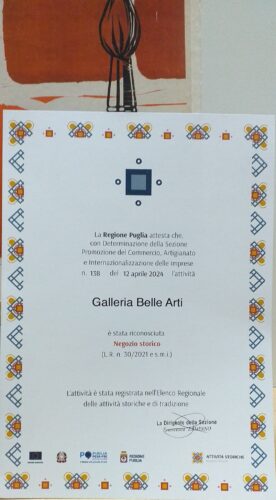
La Regione Puglia ha attribuito il riconoscimento di “Negozio storico” alla Galleria Belle Arti Caiulo per i suoi 60 anni di attività.
di Ylenia Buonviso
Riconoscere l’importante lavoro svolto da quelle attività che costituiscono testimonianza della storia, dell’arte, della cultura e della tradizione imprenditoriale del territorio pugliese e sostenerle attraverso una serie di iniziative, è questo lo scopo che la Regione Puglia vuole realizzare premiando le attività storiche su territorio regionale considerate “Patrimonio di Puglia”. Tra queste recentemente a Lecce il prezioso riconoscimento come Negozio Storico è stato consegnato alla Galleria Belle Arti Caiulo che ha al suo attivo ben 60 anni di storia nel campo dell’arte e della promozione di artisti pugliesi di livello internazionale, un percorso fatto di passione e coraggio.
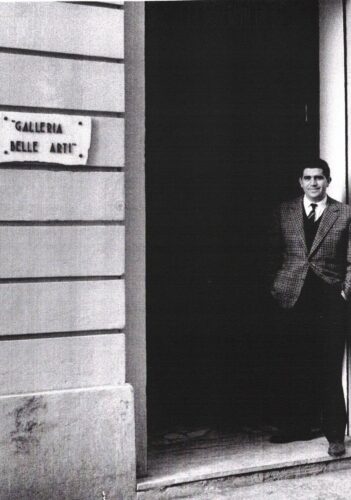
La “Galleria Belle Arti Caiulo” e’ situata in Via A.Grandi nel cuore del centro storico di Lecce, a pochi passi dalle bellezze architettoniche del barocco dove dal 1963 si respira arte e creatività.
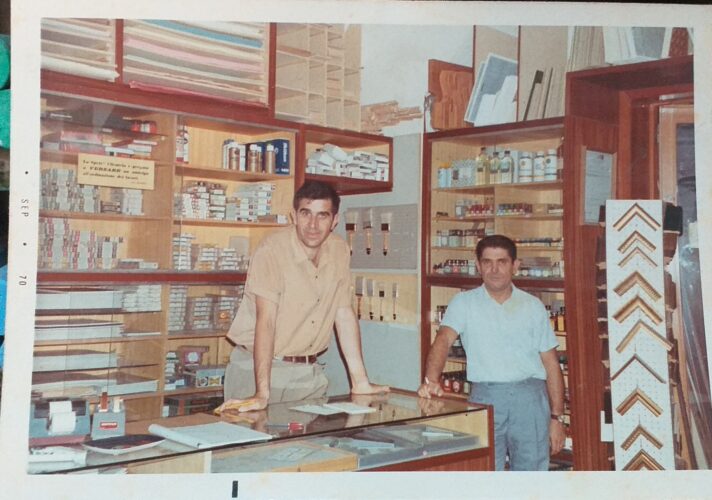
In varie interviste rilasciate a testate locali e del settore specialistico il suo fondatore Salvatore Caiulo ripercorreva i suoi esordi. Ricordava di aver intrapreso quest’avventura su esortazione dello zio pittore di chiara fama Gabriele Caiulo che viveva tra Milano e Parigi (l’Amministrazione Locale gli ha intestato una strada ed e’ citato nel prestigioso dizionario critico di pittura e scultura francese E.Benezit: ”Dictionnaire critique et documentaire des Peintres, Sculpteurs, Dessinnateurs et Graveurs, , Nouvelle Edition, Tome 2 Paris Libraire Grund 1976).
Nel 1960 fu fondata in città l’Accademia di belle Arti; nel settembre del 1961 venne istituito il Liceo Artistico che, inizialmente collegato all’Accademia di Belle Arti di Brera, divenne una scuola a se’ stante; inoltre gia’ dal 1916 vi era la Regia Scuola Artistica Industriale voluta dal sindaco Pellegrino con l’obiettivo di qualificare la formazione di operai ed artigiani sul piano culturale e professionale. Figure di spicco della cultura artistica salentina come Michele Palumbo, Geremia Re, Antonio Bortone grazie alle loro esperienze artistiche contribuirono alla formazione di nuove personalità. La città era una fucina di artisti, ma non vi era ancora un negozio specializzato nel settore, lo zio pittore gli suggerì di aprirne uno. L’occasione venne in seguito alla cessazione dell’attivita’ dei Fratelli De Rinaldis (materiale per calzature) nei due locali in Via Ascanio Grandi n.7 e 9 antistante il laboratorio di cornici e vendita di mobili che gestiva con il padre che si dimostro’ decisamente contrario all’input dello zio pittore ritenendo le belle arti “un ambito di basso profilo”. Detti locali di proprieta’ dell’Istituto Principe Umberto furono messi in locazione a libera offerta-come allora per legge-e riuscì a farsi assegnare una parte pattuendo un canone mensile di L.25.000, piuttosto oneroso in quei tempi anche in considerazione delle spese di ristrutturazione necessarie, a cominciare dal vecchio e malconcio pavimento. Il grande amore per l’Arte, il coraggio e la determinazione di voler creare un’attività in proprio lo hanno spronato a credere nel suo sogno nonostante le molteplici difficoltà.
Infatti gli inizi non furono affatto facili specie per reperire i prodotti di qualità superiore. Lo zio pittore che nella sua quotidiana pratica artistica conosceva bene le marche gli fu di grande aiuto accompagnandolo nei primi contatti con le aziende fornitrici. La Ditta Calcaterra di Milano fu la prima a fornire i colori e vernici del prestigioso marchio francese Lefranc & Bourgeois e i pennelli spagnoli Sovrana. La Ditta Guagnellini fornì le famose tele “Leonardesca” e la Ditta Calba i cavalletti. Nel 1969 si rese disponibile il locale attiguo che dopo una completa ristrutturazione venne adibito a galleria d’arte per mostre di quadri e sculture. L’anno successivo l’inaugurazione con il taglio del nastro da parte dell’Onorevole Ennio Bonea e in contemporanea una personale del Maestro Ercole Pignatelli. Diverse furono le mostre che si susseguirono, solo per citare alcuni: Michele Palumbo, maestro dello zio pittore, Mario Palumbo, gli scultori Vito Russo e Salvatore Bruno, Amerigo e Vincenzo Buscicchio, Edoardo De Candia, Gino Ammassari, Filippo Alto, Don Riccardo, Garusso, Gabriele Caiulo, Auro Salvaneschi, Francesco Rocco.
Animato del sacro fuoco dell’arte viaggia alla scoperta di nuovi talenti e nuovi articoli da proporre.
Cominciavano le prime soddisfazioni nelle belle arti e si consolidava la sua fama nel realizzare cornici di pregio delle migliori aziende- come quelle della famosa Cavalli &Poli di Cremona- arte questa appresa dal padre. Aumentavano le richieste degli artisti e appassionati sempre alla ricerca di nuovi prodotti ma sempre di qualità. Questo ha fornito la necessità di ampliare sempre più l’offerta inserendo non solo prestigiosi marchi italiani come Fabriano, Magnani per le carte, Maimeri e Ferrario per i colori e vernici ma anche aziende estere come le tedesche Schmincke e Vangerow per le prime carte giapponesi da restauro, stampa e incisione, inchiostri e pennelli speciali. Da sempre la ricerca della qualità è stata la base delle sue scelte e la chiave del riconoscimento del suo lavoro, dedizione e professionalità.
L’ampia scelta di prodotti e soprattutto l’inserimento di carte per tutte le tecniche artistiche resero necessario l’utilizzo dello spazio espositivo della Galleria, così quando si presentò l’occasione di un locale in affitto di fianco al teatro Politeama Greco, vi si trasferì tale attività.
Il 5 gennaio 1980, l’onorevole Nicola Quarta inaugurò la nuova Galleria Caiulo con la vernice dell’artista Carlo Toscano. Tantissimi sono stati gli artisti che si sono avvicendati in questo bellissimo spazio espositivo. La cura della galleria richiedeva un impegno totalizzante che sottraeva energie alla gestione sempre più impegnativa del negozio , per questo dopo cinque anni dovette rinunciarci.
Nel 1984 gli fu concesso il locale attiguo in Via Ascanio Grandi 11, resosi libero per la cessata attività delle sorelle Romano (laboratorio orafo); dopo la necessaria ristrutturazione il locale fu adibito a spazio espositivo con l’inaugurazione della personale del Maestro Amerigo Buscicchio. La mostra più coinvolgente a livello personale fu quella del caro zio pittore Gabriele organizzata nel febbraio del 1988 per esaudire il desiderio della vedova Tina Astolfi. Fu inaugurata dall’On. Adriana Poli Bortone che per l’occasione –data l’amicizia col pittore e la stima reciproca con Salvatore– concesse di esporre un prezioso piatto con autoritratto dell’artista eseguito col fumo di candela. Il catalogo della mostra fu presentato da Enzo Panareo. Dieci anni dopo nel nuovo spazio espositivo al n.14 sempre nella stessa via, fu organizzata un’altra mostra dedicata a Gabriele Caiulo e al suo maestro Michele Palumbo con l’inaugurazione dell’On. Adriana Poli Bortone e l’esposizione del prezioso autoritratto.
In occasione dei 35 anni di attività, in un’intervista rilasciata ad una rivista specializzata del settore dichiarò quanto segue:
“Appartengo a quella categoria di imprenditori che ha investito, rischiato, superato tante difficoltà. Ho sempre avuto il coraggio e la capacità di sfruttare le opportunità favorevoli, guardando il cliente con grande rispetto, disponibilità, cortesia ma soprattutto con professionalità. La fiducia del cliente, base indispensabile di ogni attività si conquista lavorando con determinazione e correttezza; sono orgoglioso di dire che oggi, grazie alla preziosa collaborazione dei miei figli Giuseppe e Stefania, il mio negozio è un’istituzione”.
La fama del negozio cresce anche attraverso un’abile campagna pubblicitaria: sponsorizza eventi, competizioni artistiche e manifestazioni culturali.
Grande rilievo sulla stampa locale e nazionale fu la Mostra antologica dedicata al pittore lombardo Gianni Maimeri (1884-1951) “dal notturno alla luce” fortemente voluta da Salvatore che grazie alla disponibilità dei titolari dell’azienda Maimeri e del Museo Provinciale “Sigismondo Castromediano” fecero conoscere al pubblico salentino la maestria di un pittore che insieme al fratello chimico Carlo creò nel 1923 (quest’anno sono cent’anni!) la prestigiosa fabbrica omonima di colori e articoli di belle arti oggi conosciuti e apprezzati in Italia e all’estero.
La mostra inizialmente programmata dal 22 novembre al 21 dicembre 1997 per l’incredibile successo di pubblico, fu prorogata fino al 18 gennaio 1998.
La formazione costante, la frequentazione di fiere del settore italiane ed estere, i corsi e dimostrazioni di diverse tecniche pittoriche avvalendosi della professionalità di esperti del settore, dalla tecnica dell’invetriatura Tiffany alla doratura, dalla pittura batik all’encausto, dalla pittura su stoffa al decorative painting solo per citarne alcuni hanno consolidato il nome nel campo delle belle arti.
Per i quaranta e cinquanta anni di attività il critico Toti Carpentieri ha firmato per la testata “la Gazzetta del Mezzogiorno” degli articoli molto lusinghieri riconoscendone il valore morale, la grande professionalità e umanità.
Nel corso della sua longeva attività tanti sono stati i riconoscimenti: per citarne qualcuno il premio” Eccellenze del territorio” conferito dall’Arcadia Lecce e la targa dell’amministrazione di Lecce come riconoscimento per oltre mezzo secolo di attività.
In occasione del cinquantesimo di attività (ottobre 2013) durante la festa tenutasi nei locali del negozio, numerose sono state le attestazioni di affetto e stima da parte delle autorità locali, aziende fornitrici, artisti e clienti affezionati.
Tanti sarebbero gli aneddoti da raccontare in sessant’anni di “frequentazioni” artistiche. Come dimenticare le tele create apposta per il “genio” Carmelo Bene e la “galleria mobile” costruita personalmente come spazio espositivo itinerante e la genialità con cui riusciva a incorniciare l’impossibile: dalla pelle di serpente ai più delicati e preziosi ventagli, dai delicati ricami ai “buchi” di Fontana.
Salvatore Caiulo e’ venuto a mancare il 4 luglio 2022. I figli Giuseppe e Stefania ne raccolgono l’eredità continuando con la stessa passione, determinazione e professionalità e si apprestano a scrivere nuove pagine di storia all’insegna delle belle arti.
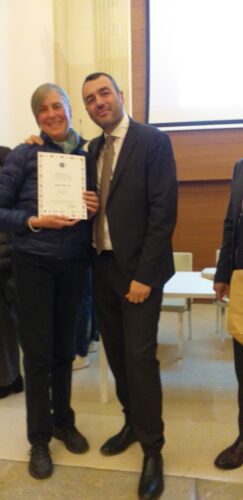
Nell’aprile 2024, la Regione Puglia ha attribuito il riconoscimento di “Negozio storico” per i suoi 60 anni di attività.
Lecce, Galleria Belle Arti Caiulo recognized as “Historic Shop”
The Apulia Region has awarded the recognition of “Historic Shop” to Galleria Belle Arti Caiulo for its 60 years of activity.
Recognizing the important work done by those activities that constitute evidence of the history, art, culture and entrepreneurial tradition of the Apulian territory and supporting them through a series of initiatives, this is the purpose that the Apulia Region wants to achieve by awarding historical activities on regional territory that are considered “Heritage of Apulia.” Among these recently in Lecce the precious recognition as Historical Shop was given to the Caiulo Fine Arts Gallery, which has to its credit a good 60 years of history in the field of art and promotion of Apulian artists of international level, a path made of passion and courage.
The ‘Galleria Belle Arti Caiulo’ is located in Via A. Grandi in the heart of Lecce’s historic centre, just a few steps away from the architectural beauties of the Baroque, where art and creativity have been flourishing since 1963.
In various interviews given to local and specialist publications, its founder Salvatore Caiulo recalled his beginnings. He recalled that he embarked on this adventure at the urging of his uncle, the well-known painter Gabriele Caiulo, who lived between Milan and Paris (the local administration named a street after him and he is quoted in the prestigious French critical dictionary of painting and sculpture by E. Benezit: ‘Dictionnaire critique et documentaire des Peintres, Sculpteurs, Dessinnateurs et Graveurs, , Nouvelle Edition, Tome 2 Paris Libraire Grund 1976).
In 1960, the Academy of Fine Arts was founded in the city; in September 1961, the Liceo Artistico was established, which, initially connected to the Brera Academy of Fine Arts, became a school in its own right; furthermore, as early as 1916, there was the Regia Scuola Artistica Industriale (Royal Industrial Art School), desired by Mayor Pellegrino with the aim of qualifying the training of workers and artisans on a cultural and professional level. Leading figures in the artistic culture of Salento such as Michele Palumbo, Geremia Re and Antonio Bortone contributed to the formation of new personalities through their artistic experiences. The city was a hotbed of artists, but there was still no specialised shop in the sector, so his uncle, a painter, suggested he open one. The opportunity came when Fratelli De Rinaldis’ business (footwear material) closed down in the two premises at 7 and 9 Via Ascanio Grandi in front of the framing and furniture sales workshop that he ran with his father, who was decidedly against his uncle’s painter’s suggestion, considering fine arts to be ‘a low-profile field’. These premises owned by the Principe Umberto Institute were rented out on a free-offer basis – as was the law at the time – and he managed to have a part assigned to him at a monthly rent of 25,000 lire, which was rather expensive at the time, also in view of the necessary renovation costs, starting with the old and battered floor. His great love for Art, his courage and determination to create his own business spurred him to believe in his dream despite the many difficulties.
In fact, the beginnings were not at all easy, especially when it came to finding superior quality products. His uncle the painter, who was familiar with the brands in his daily artistic practice, was of great help to him, accompanying him in his first contacts with supplier companies. The Calcaterra company in Milan was the first to supply colours and varnishes of the prestigious French brand Lefranc & Bourgeois and the Spanish Sovrana brushes. The Guagnellini company supplied the famous ‘Leonardesca’ canvases and the Calba company the easels. In 1969, the adjoining room became available, which after a complete renovation was used as an art gallery for painting and sculpture exhibitions.The following year saw the inauguration with a ribbon-cutting ceremony by the Honourable Ennio Bonea and a simultaneous solo exhibition by Maestro Ercole Pignatelli.Several exhibitions followed, to name but a few: Michele Palumbo, his uncle’s master painter, Mario Palumbo, sculptors Vito Russo and Salvatore Bruno, Amerigo and Vincenzo Buscicchio, Edoardo De Candia, Gino Ammassari, Filippo Alto, Don Riccardo, Garusso, Gabriele Caiulo, Auro Salvaneschi, Francesco Rocco .
Animated by the sacred fire of art, he travelled to discover new talents and new articles to propose.
He began his first satisfactions in the fine arts and consolidated his reputation in making fine frames for the best companies – such as the famous Cavalli &Poli in Cremona – an art he learnt from his father. The demands of artists and enthusiasts always in search of new products, but always of quality, increased. This provided the need to increasingly broaden the offer by including not only prestigious Italian brands such as Fabriano, Magnani for papers, Maimeri and Ferrario for colours and varnishes, but also foreign companies such as the German Schmincke and Vangerow for the first Japanese restoration, printing and engraving papers, inks and special brushes. The search for quality has always been the basis of his choices and the key to the recognition of his work, dedication and professionalism.
The wide choice of products and, above all, the inclusion of papers for all artistic techniques made it necessary to use the Gallery’s exhibition space, so when the opportunity arose for rented premises next to the Politeama Greco theatre, this activity was moved there.
On 5 January 1980, the Honourable Nicola Quarta inaugurated the new Caiulo Gallery with a painting by the artist Carlo Toscano. Many artists have come and gone in this beautiful exhibition space. Taking care of the gallery required a total commitment that took energy away from the increasingly demanding management of the shop, which is why he had to give it up after five years.
n 1984, he was granted the adjoining premises at 11 Via Ascanio Grandi, which had become vacant due to the Romano sisters’ discontinued business (goldsmith’s workshop); after the necessary renovation, the premises were used as an exhibition space with the inauguration of Maestro Amerigo Buscicchio’s solo exhibition.The most personally involving exhibition was that of my dear uncle painter Gabriele organised in February 1988 to fulfil the wish of his widow Tina Astolfi. It was inaugurated by the Honourable Adriana Poli Bortone who, for the occasion – given the friendship with the painter and the mutual esteem with Salvatore – allowed a precious plate with a self-portrait of the artist executed with candle smoke to be exhibited.The exhibition catalogue was presented by Enzo Panareo.Ten years later, in the new exhibition space at No. 14 on the same street, another exhibition dedicated to Gabriele Caiulo and his master Michele Palumbo was organised with the inauguration by the Hon. Adriana Poli Bortone and the display of the precious self-portrait.
On the occasion of his 35th anniversary,in an interview given to a trade magazine, he declared the following:
“I belong to that category of entrepreneurs who have invested, risked, overcome many difficulties. I have always had the courage and the ability to take advantage of favourable opportunities, looking at the customer with great respect, helpfulness, courtesy, but above all with professionalism. Customer trust, the indispensable basis of any business, is won by working with determination and fairness; I am proud to say that today, thanks to the precious collaboration of my children Giuseppe and Stefania, my shop is an institution”.The shop’s fame also grew through a skilful advertising campaign: it sponsored events, artistic competitions and cultural manifestations.
The anthological exhibition dedicated to the Lombard painter Gianni Maimeri (1884-1951) ‘from the night to the light’, strongly desired by Salvatore, was given great prominence in the local and national press. Thanks to the willingness of the owners of the Maimeri company and the ‘Sigismondo Castromediano’ Provincial Museum, the Salento public was introduced to the mastery of a painter who, together with his chemist brother Carlo, created the prestigious Maimeri factory in 1923 (this year is 100 years old! ) the prestigious factory of the same name for paints and fine arts articles now known and appreciated in Italy and abroad.
The exhibition, initially scheduled from 22 November to 21 December 1997 due to its incredible success with the public, was extended until 18 January 1998.
Constant training, attendance at trade fairs in Italy and abroad, courses and demonstrations of various painting techniques using the professionalism of experts in the field, from the Tiffany glazing technique to gilding, from batik painting to encaustic painting, from painting on fabric to decorative painting, to name but a few, have consolidated the name in the field of fine arts. For his forty and fifty years of activity, critic Toti Carpentieri has signed highly flattering articles for the newspaper ‘la Gazzetta del Mezzogiorno’ recognising his moral value, great professionalism and humanity.
Over the course of his long career, he has received many awards: to name but a few, the ‘Eccellenze del territorio’ award conferred by Arcadia Lecce and the plaque from the Lecce administration in recognition of over half a century of activity.
On the occasion of its 50th anniversary (October 2013) during the party held on the shop premises, there were many expressions of affection and esteem from local authorities, supplier companies, artists and loyal customers.
There would be many anecdotes to tell in sixty years of artistic ‘frequentation’.How can we forget the canvases created especially for the ‘genius’ Carmelo Bene and the ‘mobile gallery’ personally built as a travelling exhibition space, and the brilliance with which he managed to frame the impossible: from snakeskin to the most delicate and precious fans, from delicate embroidery to Fontana’s ‘holes’.Salvatore Caiulo passed away on 4 July 2022. His children Giuseppe and Stefania are taking up his legacy, continuing with the same passion, determination and professionalism, waiting to write new pages of history in the name of fine arts.
In April 2024 the Regional Council recognized “Belle Arti Caiulo” as a historic shop.


