
Cinema & Teatro
La dignità è un diritto che troppo spesso viene oltraggiato- Dignity is a right that all too often is forgotten


La dignità è un diritto che troppo spesso viene oltraggiato
Dal 1861 l’Italia è cambiata enormemente, non solo a causa delle massicce ondate di emigrazione, ma anche per i cambiamenti che hanno trasformato l’Italia da quella che era fondamentalmente una società feudale in un paese in cui grandi gruppi finanziari hanno avuto un impatto enorme su molti territori con imponenti progetti edilizi che sarebbero stati impensabili all’epoca dell’unificazione. Purtroppo, non sempre in meglio.
Una categoria di questi sviluppi è la crescita dei centri turistici in varie parti del paese, ma ciò ha avuto un costo, non solo in termini economici, ma anche in termini di vita della popolazione locale.
E nella ricerca dello sviluppo di centri turistici in grado di attrarre non solo turisti italiani ma anche internazionali, una regione italiana è diventata famosa per i suoi resort di lusso per le élite: la Sardegna, con la Costa Smeralda a nord, che è diventata una mecca per i super ricchi e famosi.
Nella fretta di sviluppare imprese potenzialmente molto redditizie, i grandi imprenditori hanno cercato di costruire altri resort simili, acquistando grandi appezzamenti di terreno lungo le bellissime coste per resort in altre parti della regione.
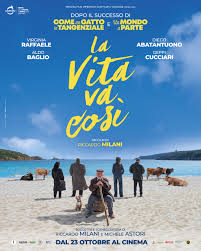
E un nuovo film italiano recentemente uscito su Netflix in Italia, “Così va la vita”, diretto da Riccardo Milani, racconta la storia vera di uno di questi resort che ha affrontato una battaglia che ha dimostrato che lo sviluppo economico sfrenato non è più importante del diritto di ogni essere umano di vivere secondo le proprie convinzioni e tradizioni.
Ovidio Marras, nel film chiamato Efisio Mulas, era un mandriano nel sud della Sardegna che conduceva una vita semplice, caratteristica non solo della Sardegna, ma di ogni regione del Paese. Non parlava italiano, solo il suo dialetto, e non aveva superato il quarto anno di scuola.
Come si vede chiaramente nel film, la spiaggia che frequentava ogni giorno con le sue mucche è bellissima, tanto da attirare l’attenzione di una grande azienda con sede a Milano che ha iniziato ad acquistare terreni nella zona.
La casa di Ovidio, così come il sentiero che percorreva per raggiungere la spiaggia, si trovava proprio al centro dell’area destinata al resort.
Il film inizia nel 1999, quando Ovidio aveva 69 anni, e racconta la storia della sua battaglia durata più di un decennio, non solo contro la società milanese, ma anche contro la popolazione locale che vedeva il suo rifiuto come un ostacolo verso un futuro più prospero.
Mulas è interpretato magnificamente da Giuseppe Loi, che mette in risalto la concisione di un uomo semplice che voleva solo vivere con dignità nella casa che apparteneva alla sua famiglia da molte generazioni, come descrive in una meravigliosa scena del film.
Ma la battaglia non è stata sempre combattuta con mezzi aperti e onesti da parte degli imprenditori, come ha scoperto nell’ufficio di un avvocato, dove ha capito che il documento che stava per firmare non era l’inizio di una causa legale, ma la rinuncia alla proprietà…
Mentre guardiamo il film, vediamo anche gli effetti della migrazione sulla popolazione locale, tra cui Gianni, il figlio di Efisio, che era emigrato in Inghilterra dove aveva sposato una donna del posto.
Le scene con i nipoti bilingue mostrano non solo i costi dei viaggi regolari dal Regno Unito per tornare a casa a Natale, ma anche il vero significato della casa, non solo per Efisio, ma anche per i nipoti. Un messaggio espresso da una semplice conchiglia raccolta sulla spiaggia in questione.
Soprattutto, il film mostra come gli imprenditori avessero sottovalutato la battaglia che li attendeva perché ragionavano solo in termini di costo economico del terreno, senza mai capire che Ovidio/Efisio lottava solo per il diritto alla dignità di vivere la sua vita come voleva…
Ad ogni aumento dell’offerta per il terreno, la sua risposta è sempre un secco “No!”, anche a cifre che stupivano gli altri abitanti del luogo, esasperati da questo rifiuto. E quando gli veniva chiesto perché, la sua risposta era sempre, in dialetto, “Questa è casa mia”.
Come spiega il film, la parola dialettale per indicare il suo tipo di proprietà è furriadroxiu, che significa “tornare a casa”…
Per capire le somme di denaro offerte a Marras, l’offerta finale per il terreno era di dodici milioni di euro.
Nel tentativo di fermare la sua opposizione al progetto, i costruttori decisero addirittura di bloccare il suo accesso alla spiaggia che aveva utilizzato per molti decenni, erigendo una recinzione e iniziando a costruire il resort secondo i loro piani.
Ma nemmeno questa decisione gli ha impedito di continuare a recarsi ogni giorno alla spiaggia con le sue mucche. Anzi, si è rivelata la mossa che ha cambiato le sorti della battaglia tra il mandriano e gli imprenditori…
Si tratta di un film apparentemente semplice, anche perché, come scopriranno gli spettatori, il regista Riccardo Milani ha giocato le sue carte con molta attenzione, mantenendo fino alla fine un segreto che spiegherà la mossa decisiva nella battaglia tra il mandriano e gli imprenditori.
Ottima anche l’attrice/comica Virgina Raffaele nel ruolo della figlia Francesca, costretta a fare da traduttrice per il padre e che, come la madre, subisce le conseguenze con gli abitanti del luogo che non accettano il rifiuto di Efisio delle ingenti offerte per la proprietà, con espressioni che riflettono i suoi sentimenti riguardo alle decisioni del padre, sentimenti che alla fine si trasformeranno in orgoglio per la sua scelta.
Il film è divertente e commovente allo stesso tempo e non vi rovineremo la sorpresa rivelando l’esito della battaglia e come si è arrivati a questo punto.
Ma quello che possiamo dire è che verso la fine del film vediamo la lapide di Efisio (Ovidio Marras è scomparso nel 2024 all’età di 94 anni) e le parole incise sulla pietra, scritte in dialetto, sono: “In sa vida non contada is passusu che faisi, ma s’arrastu chi lassasa” (Nella vita non contano i passi che fai, ma le impronte che lasci).
Un tributo appropriato per un uomo che voleva semplicemente una vita dignitosa.
Dignity is a right that all too often is forgotten
Since 1861 Italy has changed enormously, not just because of the massive waves of Emigration, but also because of the changes that transformed Italy from what was basically a feudal society into a country where large financial groups have had a huge impact on many territories with massive building projects that would have been unheard of when Italy was unified. Unfortunately, not always for the better.
One category of these developments is the growth of tourist centres in various parts of the country, but they have come at a cost, not only in economic terms but also in the cost to the lives of the locals.
And in the quest for development of tourist centres that would attract not only Italian tourists but also international tourists, one Italian region has become famous for luxurious resorts for the elites, Sardinia with the Costa Smeralda in the north that has become a mecca for the ultra-rich and famous.
In the rush to develop potentially highly profitable enterprises, major entrepreneurs sought to build other such resorts, buying up large tracts of land along beautiful coastlines for resorts in other parts of the region.
And a new Italian film recently released on Netflix in Italy “Così va la vita” (Life goes this way) directed by Riccardo Milani, tells the true story of one such resort that faced a battle that showed that unfettered economic development is not more important than the right of any human being to live according to his own beliefs and traditions
Ovidio Marras, in the film called Efisio Mulas, was a cowherd in the south of Sardinia who lived a simple life, one that characterized life not just in Sardinia, but in every region of the country. He did not speak Italian, only his dialect, and he did not go beyond the fourth year of education.
As can be seen quite clearly in the film, the beach he frequented every day with his cows is beautiful, so beautiful that it had drawn the attention of a very large company based in Milan that started buying land in the area
And Ovidio’s home, as well as the path that he took to the beach, was in the middle of the area destined for the resort.
The film begins in 1999, when he was 69, and tells the story of his battle over more than a decade, not just against the Milan based company but also against the locals who saw his refusal as a stumbling block towards a more prosperous future.
Mulas is played beautifully by Giuseppe Loi who brings out the terseness of a simple man who only wanted to live with dignity in the home that had belonged to his family for many generations, as he describes in one wonderful scene of the film.
But the battle was not always fought by open or honest means by the entrepreneurs, as he discovered in a lawyer’s office where he understood that the document that he was about to sign was not the start of a court case, but the relinquishment of the property…
While we watch the film, we also see the effects of migration on the local population, including Gianni, Efisio’s son, who had migrated to England where he married a local woman.
The scenes with the bilingual grandchildren show not just the costs of travelling regularly home from the UK for Christmas, but also the real meaning of the home, not only for Efisio, but also for the grandchildren. A message expressed by a simple seashell from the beach in question.
Above all, the film shows how the entrepreneurs had underestimated the battle ahead of them because they thought only in terms of the economic cost of the land, without ever understanding that Ovidio/Efisio only fought for the right to the dignity to live his life as he wanted…
With every increase of the offer for the land his answer is always a quick “No!”, even to figures that astonished the other locals who were exasperated at this refusal. And when asked why now his answer was, always in dialect, “This is my home”.
As the film explains, the dialect word for his type of property is furriadroxiu, which means to “return home”…
And to understand the amounts of money offered to Marras, the final offer made for the land was twelve million euros.
In an attempt to stop his obstruction of the project, the builders even decided to block his path to the beach that he had used for many decades, they put up a fence and started to construct the resort as per their plans.
And not even this decision stopped him from making his daily walk to the beach with his cows. Indeed, it would turn out to be the move that turned the tide of the battle between cowherd and the entrepreneurs…
This is a deceptively simple film, also because, as the viewers will discover, the director Riccardo Milani played his cards very carefully, keeping until the end a secret that will explain the decisive move in the battle between the cowherd and the entrepreneurs.
Actress/comedienne Virgina Raffaele is also excellent as his daughter Francesca who is forced to translate for her father, and who. like her mother, suffers the consequences with the locals who cannot accept Efisio’s refusals to the huge offers for the property with her expressions reflecting her feelings about her father’s decisions, feelings that would, in the end, become pride in his choice.
The film is funny and moving at the same time and we will not spoil the film be revealing the outcome of the battle and how it came to be.
But what we can say is that towards the end of the film we see Efisio’s tombstone (Ovidio Marras passed away in 2024 at the age of 94) and the words on the stone, written in dialect, are: “In sa vida non contada is passusu che faisi, ma s’arrastu chi lassasa” (In life, it’s not the steps you take that count, but the footprints you leave behind).
A fitting tribute for a man who simply wanted to a life of dignity.


