
Arte & Cultura
DaI fuoco sacro al fuoco olimpionico – Light the sacred fire of the Olympic flame


DaI fuoco sacro al fuoco olimpionico
di Antonio Virgili – vicepresidente Lidu onlus
La fiamma del fuoco è uno dei simboli più importanti dei Giochi olimpici e quest’anno i tedofori, partiti da Olimpia, stanno attraversando l’Italia per portare il fuoco sino a Milano, ove ci sarà l’inizio dei giochi olimpici invernali. Le origini della simbologia del fuoco olimpico risalgono all’antica Grecia, quando un fuoco veniva tenuto acceso ad Olimpia per tutto il periodo di celebrazione delle Olimpiadi antiche. Va precisato che il reale simbolo è solo il fuoco (o fiamma) non la torcia, introdotta invece solo successivamente. Perché il fuoco? Per gli antichi greci, come in altre culture, il fuoco aveva una caratteristica divina, era uno degli elementi fondamentali che si associa a luce, aria e calore. Elemento e simbolo importante pure nella tradizione alchemica. La mitologia greca classica descriveva che il fuoco fosse stato rubato agli Dei e donato agli uomini da Prometeo (ci sono diverse versioni del mito ma il senso è identico). Per gli antichi Greci, il fuoco era un elemento sacro, per questo motivo il fuoco era presente anche in molti santuari. Era più di una semplice fiamma: rappresentava la luce e la conoscenza. Plutarco affermò: “la mente non è un vaso da riempire ma un fuoco da accendere”. Con il fuoco si segnò l’inizio della civiltà, della conoscenza e del progresso tecnologico. La sacralità del fuoco era impersonata da Hestia, corrispettiva della romana Vesta. I romani adoravano il fuoco come una divinità familiare, raffigurato da una vestale presso un altare sopra il quale ardeva il fuoco, oppure una donna che teneva un vaso pieno di fuoco. Numa Pompilio istituì il culto del fuoco, dedicato al “focolare” familiare. Le Vestali dovevano alimentare continuamente la fiamma nel tempio circolare senza lasciare mai che il fuoco si spegnesse, pagando con la loro vita se ciò fosse accaduto. Molti rituali religiosi del mondo hanno usato e usano il fuoco. Per le religioni indiane il fuoco è il simbolo del dio del sole e del Dio che governa i mutamenti; nella tradizione induista, Dio del fuoco è Agni, termine che in sanscrito sta per “fuoco”, affine al latino ignis. Agni è una delle più importanti divinità vediche. Secondo l’Ayurveda, Agni è il fuoco vitale, che anima tutti i processi biologici, e rappresenta il metabolismo digestivo.
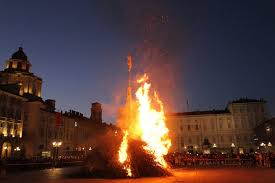
Per i Cinesi il fuoco rappresenta il colore rosso, il cuore, l’estate e le passioni umane. In Europa durante la Notte di San Giovanni in molte comunità c’è ancora l’abitudine, tipica delle società tradizionali legate al ciclo della natura, di accendere falò e bruciare legna per raccogliersi intorno al fuoco rituale. Il fuoco è di fatto il sole, il suo sostituto sulla terra, che riconduce a fecondità, purificazione, illuminazione. Ha un suo negativo, la distruzione, il divorare, bruciare che è allo stesso tempo modalità di rigenerazione. Gli stessi fuochi di San Giovanni sono tradizionalmente legati alla fecondità perché aprono e annunciano il periodo della mietitura. Anche nella religione cattolica il fuoco è un simbolo importante: l’inferno è rappresentato come un luogo in cui ardono fiamme eterne per punire i peccatori, ma il fuoco è anch’esso sacro. Shakespeare osservò che: “Eretico non è colui che brucia nel fuoco ma colui che lo accende”. Lo Spirito Santo è rappresentato da un fuoco e nelle chiese si accendono candele per rendere omaggio a Dio. Nel simbolo del fuoco, Dio si rivela come il Santo, il Giudice, colui che illumina, purifica e trasforma il cuore dell’uomo, nell’esperienza cristiana esso è collegato all’azione dello Spirito, che agisce nella Chiesa, brucia la paura e accende l’amore.
Tuttavia, il fuoco è intrinsecamente ambivalente: il fuoco è un vettore di progresso ma anche di grandi pericoli. L’eredità del fuoco e della conoscenza richiama la dualità del progresso e le responsabilità che ne derivano. Esso, pur così familiare, appare inafferrabile, perché non è costituito da altro che luce e calore sprigionati durante la combustione. «Laudato si’, mi’ Signore, per frate focu, per lo quale ennallumini la nocte: ed ello è bello et iocundo et robustoso et forte.» affermava Francesco d’Assisi (Cantico delle creature). Delle caratteristiche del fuoco, le prime, (cioé portatore di luce, bello e giocondo) dovrebbero prevalere sulle altre (robusto e forte) di per sé non negative. Il fuoco simboleggia quindi una miriade di significati contrastanti, rappresentando sia la creazione che la distruzione, la passione e il pericolo. È un elemento trasformativo, un simbolo di cambiamento, di purificazione e della vitalità della vita. Il calore e la luce del fuoco rappresentano guida, conoscenza e illuminazione, allontanando l’oscurità dell’ignoranza e della paura. Il fuoco è il primo dei quattro elementi fondamentali, secondo le cosmogonie occidentali e le tradizioni sapienziali dell’antichità. Nella tradizione alchemica il fuoco è associato al numero 1, in quanto simbolo dell’Unità da cui hanno avuto origine gli altri tre elementi per successive condensazioni: esprime perciò attività, creatività, ed espansività, incarnando il polo positivo. Il fuoco è inoltre l’agente di relazione naturale tra il microcosmo e il macrocosmo, è un elemento dinamico, in quanto genera trasformazioni. In particolare, il fuoco tende a purificare tutte le cose, elevandole ad un livello di perfezione maggiore.
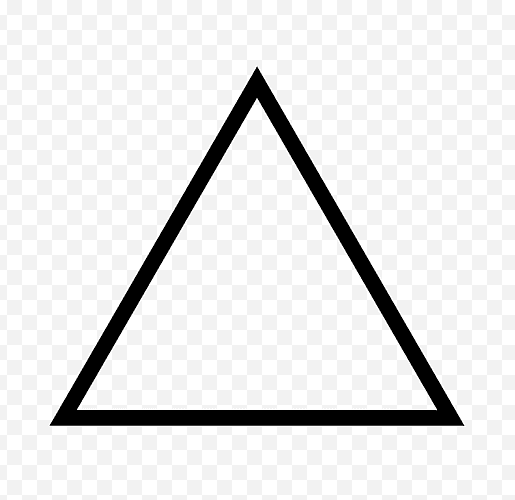
La rappresentazione alchemica di questo elemento è data dalla figura geometrica di un triangolo equilatero con il vertice verso l’alto, allude quindi ad un moto ascendente, di crescita o dilatazione, ad un’azione centrifuga, invadente e conquistatrice. Gli eventi internazionali contemporanei, sia dal punto di vista materiale (conflitti e distruzioni) che di approccio teorico (le forme e i contenuti delle comunicazioni) hanno analogie con la forza cieca e invadente del fuoco, con richiami neanche tanto velati ad eventi storici dei primi del Novecento. Come con il fuoco, le situazioni possono però sfuggire al controllo, mostrandosi dimentichi dell’ammonimento di Gustav Mahler: “La tradizione è custodire il fuoco non adorare la cenere”.

Il fuoco olimpionico è testimonianza di questa tradizione remota, non solo olimpica, cioè del tempio di Olimpia, ma molto più ampia e diffusa. Trasformarlo in uno dei temi mediatici superficiali e ad effetto ne snatura le caratteristiche, pur conservando esso parte della forza primordiale di attrazione (l’uso del fuoco e della musica nella propaganda nazista lo testimonia ampiamente). Al fuoco olimpionico si attribuisce, per la sua origine sacra e seguendo in parte l’uso greco, l’anelito ad una interruzione delle ostilità belliche. Violenza, brutalità ed interessi -che pure sono l’altra faccia della simbologia del fuoco- hanno però spesso prevalso nella storia rispetto ai valori positivi del sacro, ed il simbolo è stato svuotato del significato integrale, reso artificiale e monco. Oscar Wilde rifletteva che: “Il grande vantaggio del giocare col fuoco è che non ci si scotta mai. Sono solo coloro che non sanno giocarci che si bruciano del tutto”. Parafrasando Wilde potremmo dire che non sono il progresso o la scienza che sono pericolosi se si sanno usare ma, se mal applicati o usati da persone fanatiche, ottuse o con deficit mentali, sono -e sono sempre stati- potenzialmente molto distruttivi, in grado di bruciare tutto. Auguriamoci che i giochi olimpionici invernali in Italia possano essere, al di là dello spettacolo e del marketing, un momento di riflessione più alta. Nell’articolo “L’acquisizione del fuoco”, del 1931, Freud nota come l’acquisizione e l’utilizzo del fuoco comportino un fondamentale passaggio di rinuncia. La rinuncia pulsionale risulta un elemento fondamentale e benefico per l’umanità (come già Freud aveva indicato nel saggio “Il disagio della civiltà”).
Light the sacred fire of the Olympic flame
di Antonio Virgili – vicepresidente Lidu onlus
The flame of fire is one of the most important symbols of the Olympic Games and this year the torchbearers, who set off from Olympia, are crossing Italy to bring the flame to Milan, where the Winter Olympic Games of Milano-Cortina will begin. The origins of the symbolism of the Olympic flame date back to ancient Greece, when a fire was kept burning in Olympia throughout the period of the ancient Olympic Games. It should be noted that the real symbol is only the fire (or flame) and not the torch, which was introduced later. Why fire? For the ancient Greeks, as in other cultures, fire had a divine characteristic; it was one of the fundamental elements associated with light, air and heat. It was also an important element and symbol in the alchemical tradition. Classical Greek mythology described how fire was stolen from the gods and given to men by Prometheus (there are different versions of the myth, but the meaning is the same). For the ancient Greeks, fire was a sacred element, which is why it was also present in many sanctuaries. It was more than just a flame: it represented light and knowledge. Plutarch, who also was a priest at the Temple of Apollo in Delphi, stated: “The mind is not a vessel to be filled, but a fire to be kindled”. Fire marked the beginning of civilisation, knowledge and technological progress. The sacredness of fire was personified by Hestia, the counterpart of the Roman Vesta. The Romans worshipped fire as a household deity, depicted by a vestal virgin at an altar above which the fire burned, or by a woman holding a vase full of fire. Numa Pompilius established the cult of fire, dedicated to the family “hearth”. The Vestals had to continuously feed the flame in the circular temple without ever letting the fire go out, paying with their lives if this happened. Many religious rituals around the world have used and continue to use fire. For Indian religions, fire is the symbol of the sun god and the god who governs change; in the Hindu tradition, the god of fire is Agni, a term that in Sanskrit means “fire”, similar to the Latin ignis. Agni is one of the most important Vedic deities. According to Ayurveda, Agni is the vital fire that animates all biological processes and represents the digestive metabolism.
For the Chinese, fire represents the colour red, the heart, summer and human passions. In Europe, during St. John’s Night, many communities still have the custom, typical of traditional societies linked to the cycle of nature, of lighting bonfires and burning wood to gather around the ritual fire. Fire is in fact the sun, its substitute on earth, which leads back to fertility, purification and enlightenment. It has its own which leads back to fertility, purification and enlightenment. It has its negative side, destruction, devouring and burning, which is at the same time a form of regeneration. The fires of St John are traditionally linked to fertility because they open and herald the harvest season. Fire is also an important symbol in the Catholic religion: hell is represented as a place where eternal flames burn to punish sinners, but fire is also sacred. Shakespeare observed that: “The heretic is not the one who burns in the fire, but the one who lights it”. The Holy Spirit is represented by fire, and candles are lit in churches to pay homage to God. In the symbol of fire, God reveals himself as the Holy One, the Judge, the one who illuminates, purifies and transforms the human heart. In the Christian experience, it is linked to the action of the Spirit, who acts in the Church, burns away fear and ignites love.
However, fire is inherently ambivalent: fire is a vector of progress but also of great danger. The legacy of fire and knowledge recalls the duality of progress and the responsibilities that come with it. Although so familiar, it seems elusive, because it consists of nothing more than light and heat released during combustion. ‘Praised be You, my Lord, through Brother Fire, through whom You light the night: and he is beautiful and playful and robust and strong,’ wrote Francis of Assisi (Canticle of the Creatures). Of the characteristics of fire, the first (i.e. bringer of light, beautiful and playful) should prevail over the others (robust and strong), which are not negative in themselves. Fire therefore symbolises a myriad of contrasting meanings, representing both creation and destruction, passion and danger. It is a transformative element, a symbol of change, purification and the vitality of life. The heat and light of fire represent guidance, knowledge and enlightenment, dispelling the darkness of ignorance and fear. Fire is the first of the four fundamental elements, according to Western cosmogonies and the wisdom traditions of antiquity. In the alchemical tradition, fire is associated with the number “1”, as a symbol of Unity from which the other three elements originated through successive condensations: it therefore expresses activity, creativity, and expansiveness, embodying the positive pole. Fire is also the natural agent of connection between the microcosm and the macrocosm; it is a dynamic element, as it generates transformations. In particular, fire tends to purify all things, elevating them to a higher level of perfection. The alchemical representation of this element is given by the geometric figure of an equilateral triangle with its apex pointing upwards, thus alluding to an upward motion, growth or expansion, a centrifugal, invasive and conquering action. Contemporary international and social events, both from a material point of view (conflicts and destruction) and from a theoretical approach (the forms and contents of communications), have similarities with the blind and intrusive force of fire, with not-so-veiled references to historical events of the early 20th century. As with fire, however, situations can get out of control, showing disregard for Gustav Mahler’s warning: “Tradition is to keep the fire burning, not to worship the ashes”.
The Olympic flame is a testament to this ancient tradition, which is not only Olympic, i.e. from the temple of Olympia, but much broader and more widespread. Turning it into one of the superficial and sensationalist media themes distorts its characteristics, while retaining part of its primordial power of attraction (the use of fire and music in Nazi propaganda amply testifies to this). Due to its sacred origins and partly following Greek custom, the Olympic flame is associated with the desire for a cessation of hostilities. However, violence, brutality and self-interest – which are the other side of the symbolism of fire – have often prevailed throughout history over the positive values of the sacred, and the symbol has been emptied of its full meaning, rendered it artificial and incomplete. Oscar Wilde reflected that: “The great advantage of playing with fire is that you never get burnt. It is only those who do not know how to play with it who get burnt to a crisp”. To paraphrase Wilde, we could say that it is not progress or science that are dangerous if they are used properly, but if misapplied or used by fanatics, narrow-minded people or those with mental deficits, they are – and have always been – potentially very destructive, capable of burning everything. Let us hope that the Winter Olympics in Italy will be, beyond the spectacle and marketing, a moment of higher reflection. In his 1931 article “The Acquisition of Fire”, Freud notes how the acquisition and use of fire involves a fundamental act of renunciation. The renunciation of instinctual drives is a fundamental and beneficial element for humanity (as Freud had already indicated in his essay “Civilisation and Its Discontents”).


