
Attualità
Health. Italian-American Scientist Dario Crosetto: 3D-CBS Can Change Early Cancer Diagnosis

The 3D-CBS (3-D Complete Body Screening) project was created with the goal of detecting cancer at an extremely early stage.
The real challenge in the fight against cancer is to detect the disease before it progresses. This is the conviction of Prof. Dario Crosetto, an Italian-American scientist with extensive experience in particle physics gained over many years at CERN, who has been conducting his research in Texas (USA) for the past 35 years.
Supported by decades of clinical and experimental evidence, Crosetto emphasizes that, for many cancers, the earlier a tumor is detected, the greater the likelihood of successful treatment. For this reason, he argues that research should continue investing in diagnostic tools that are more sensitive, accessible, and cost-effective. With this objective, he conceived and patented the revolutionary 3D-CBS (3-D Complete Body Screening) system.
Following our initial discussions, DAILYCASES MAGAZINE published a first interview in Italian ([available here]). To build on that conversation and provide deeper technical detail, we conducted this second interview in English. The Conference of Italian Researchers in the World (https://www.texasic.org/) brought together scientists, university leaders, government officials, and research institutions from all seven continents — so this expanded edition aims to reach not only researchers and decision-makers, but the broader public whose taxes fund scientific research and who stand to benefit from it.
You do not need to be a scientist to follow the core question this interview raises. When calculations and evidence have gone unrefuted for decades, the fair and honest path is simple: run the experiment, and let the result — not opinion, authority, or prior belief — decide who is right. That is a principle anyone can recognize and support, whether or not they understand the physics or the medical imaging behind it.
Professor Crosetto, how did the idea for 3D-CBS originate?
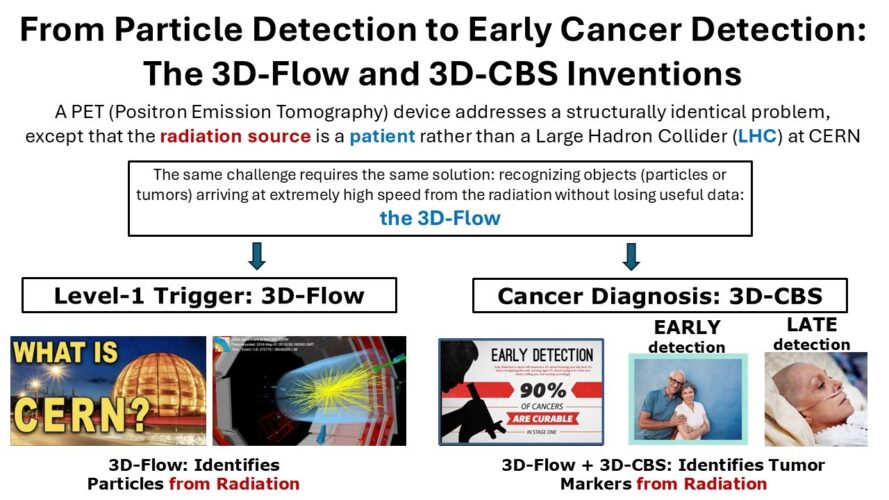
Several years ago, drawing on my experience as a researcher, I wondered whether my 3D-Flow invention — originally developed to extract valuable signals from radiation in subatomic particle detection — could be applied to medical imaging systems based on extracting useful signals from radiation, just as is done at CERN (signals from tumor markers and signals used to discover the Higgs boson). From that reflection, the 3D-CBS project — based on the 3D-Flow architecture — was born, with the goal of detecting cancer at an extremely early stage.
To benefit both fields, particle detection and cancer detection, the Non-Recurring-Engineering (NRE) needed to be funded to fabricate the 3D-Flow Integrated Circuit (IC). The 3D-Flow architecture was formally recognized as a breakthrough invention during an international public review at Fermilab in 1993. Following this, I received $1 million to conduct a feasibility study — proven in a 45-page peer-reviewed article, with a “tapeout” generated by Synopsys, a global leader in electronic design automation that I engaged, ready to be sent to the TSMC silicon foundry for fabrication — but the funding was never provided. For 30 years now, the required NRE has remained unfunded. As a result, the 3D-Flow IC has never been fabricated, preventing both the particle-detection and cancer-detection applications from being built, experimentally validated, and ultimately delivering their intended benefits to science and medicine.
Because the 3D-Flow architecture is technology-independent, its performance and cost across semiconductor technology generations can be calculated from real measured data: the actual Field Programmable Gate Array (FPGA) circuit implementation, tested at €500 per processor, shows that porting the same design to 20 nanometer technology would reduce the cost to just €0.50 per processor. To enable the implementation of both projects, it is urgent to fund the estimated €3 million NRE of the 3D-Flow IC for porting the Synopsys 300-nanometer technology design to 20-nanometer technology, which delivers a 500-fold increase in performance and a 99% reduction in power consumption.
What exactly is the 3D-CBS?
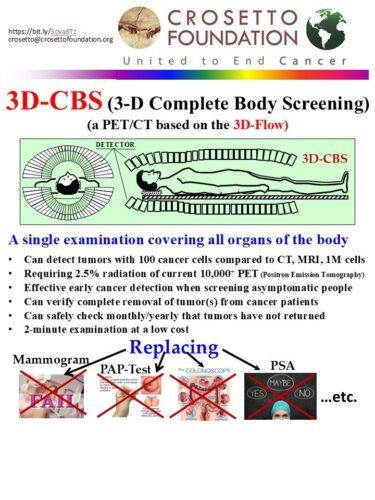
The 3D-CBS is a total-body imaging system designed to simultaneously acquire information from signals emitted from the entire body. Its objective is to increase sensitivity and efficiency compared with conventional PET (Positron Emission Tomography) systems while at the same time reducing the radiation dose, the examination time, and the examination cost.
What advantages could it offer compared to the technologies available today?
The project achieves three fundamental results: a very early diagnosis, lower radiation exposure, and a lower cost per examination. Survival rates with early detection of breast and prostate cancer, for example, are about 98%, falling to 27% when diagnosis is delayed. With 3D-CBS, many cancers can be detected while they are still readily treatable.
It must be emphasized, however, that these benefits require clinical validation. This can be achieved by using this technology in a specific territory with a population of fewer than 300,000 people, then demonstrating a reduction in cancer mortality in that territory before the technology is deployed to millions of people. Without such validation, its effectiveness would be imperceptible if used on a large scale, patients could be given false hope for benefits that might be unattainable, and enormous resources would be wasted if the technology proved ineffective and failed to significantly reduce mortality rates nationally and globally.
I should also point out that my task is to detect the disease. You should ask me how cancer can be diagnosed at an early stage and how false positives can be avoided. Experimental evidence has already demonstrated that early cancer detection saves lives; therefore, successful treatment exists when cancer is diagnosed early. It is then the oncologist’s responsibility to figure out how best to treat cancers detected at such an early stage.
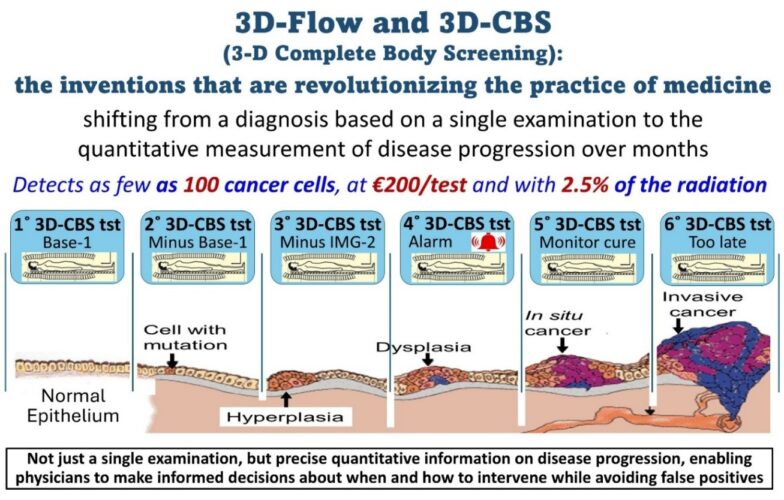
Furthermore, the high sensitivity of 3D-CBS creates a paradigm shift in the way medicine is practiced, moving from diagnosis based on a single PET examination to a trend—monitoring the evolution of disease through multiple 3D-CBS examinations over time.
To explain further: because 3D-CBS is highly sensitive and uses a very low radiation dose, the first examination serves as a baseline reference. The physician prescribes a second examination after one year, six months, three months, or one month, depending on the findings of the first exam, but, in most cases, no immediate decision is made. Because the system is so sensitive, it can identify activities that may appear anomalous in various parts of the body that could turn out to be false positives.
Only by comparing a second and third examination—subtracting the information from the previous exam so that only significant changes in metabolic activity in a given organ emerge—is it possible to precisely assess the activity of any tumors and make an informed decision about when intervention is justified. It is precisely this comparison between successive exams — not a single isolated exam — that makes it possible to reliably distinguish between true tumor activity and false positives, thereby justifying additional multimodal examinations and, ultimately, biopsy confirmation.
Why isn’t this technology being used today?
Despite my efforts, I have not been able to obtain funding to conduct a complete clinical trial. It would have been appropriate for the scientific community to evaluate the project exclusively on the basis of calculations, engineering demonstrations, and experimental evidence.
Instead, in my experience, the path has been much more difficult than expected, and many opportunities for verification have been lost.
Yet, by collecting with very high sensitivity the signals associated with molecules that nourish cells, the 3D-CBS can signal to the doctor and patient any difference in metabolic activity, even just a hundred cells—long before the abnormality reaches the million cells required for a mammogram or CT scan to detect it through a morphological change in tissue density.
Question 5: What are your hopes for the future of the project? What studies do you still consider necessary to definitively convince the scientific community, and what obstacles have so far prevented them from being carried out?
The studies already exist, as does the experimental verification in hardware circuits demonstrated the feasibility, functionality, and advantages of the 3D-Flow/3D-CBS system in accurately extracting all useful signals from radiation associated with tumor markers at low cost and low radiation dose, enabling cost-effective early cancer diagnosis.
A scientific, public, and transparent discussion is needed — like the one that took place at FERMILAB in 1993, which recognized the advantages of my 3D-Flow invention — followed by the release of funding for the clinical trial that was approved in 2004 by the Italian Health Minister Sirchia, but subsequently halted, based on a belief by some reviewers that a PET device with a long detector wasn’t needed — an assumption recognized incorrect in 2024, when the Italian healthcare system purchased two long-detector EXPLORER systems for 42 million euros.
By contrast, based on 59 industry quotes — covering the cost to develop and produce each component of the 3D-CBS, including electronic boards, cables, connectors, software, and assembly — building two 3D-CBS prototypes would cost only 20 million euros, with commercial units subsequently priced at 3.5 million euros each.
A cost-efficiency study indicates that, based on a 0.5% baseline mortality rate for ages 55–74 and a conservative 58% survival benefit from early detection — drawn from WHO, NCI, and ACS survival data — each 3D-CBS unit could save over 260 lives per year. It has been 26 years since I distributed free of charge 200 copies of my book “400+ Times Improved PET Efficiency for Lower-Dose Radiation, Lower-Cost Cancer Screening” to colleagues at the 2000 IEEE-NSS-MIC-RTSD Conference and patented the technology (U.S. patent 7,180,074 and European patent EP 1 328 189); its value has since been confirmed by industry and colleagues who have incorporated 3D-CBS features into their own systems. Since 42 million euros were found to fund two EXPLORER systems — which are less efficient and use more expensive thin-crystal detectors — funding at this scale is clearly achievable.
After 26 years without any refutation of my calculations and scientific evidence that would substantially invalidate my claims, the time has come to fund two 3D-CBS devices and then compare the EXPLORER systems against 3D-CBS, letting the experimental results determine which technology reduces more cancer deaths and healthcare costs, tested in two comparable territories with stable cancer mortality rates over the past decade.
Science advances through objective verifications. If the technology demonstrates the results we anticipate, the benefit will be for millions of patients.
A collaboration will also be valuable between specialists like myself, who can provide physicians with information about cancer activity at its earliest molecular phase of development, and chemists or biologists who understand the body’s biological processes and can indicate which component provides the useful information for understanding how to intervene. If one wants to know an anomaly in the metabolism of glucose, oxygen, ammonia, or carbon, the radioisotope can be attached to the corresponding molecule. If tracing a protein or another biological component is more useful, the radioisotope can be attached to that component instead, and so forth.
Furthermore, it is essential to distinguish roles clearly. A private company aims to increase profits for its shareholders. Public institutions, however, have the primary and overriding duty to use taxpayers’ money in the public interest—to improve health and reduce healthcare costs.
Researchers and scientists have the responsibility to advance science in service of society, not to enrich themselves or others—just as judges and magistrates must uphold the law, physicians must care for patients, and attorneys must protect citizens’ rights. The most eloquent demonstration that my objective is not personal profit, but the advancement of science and the saving of human lives, is my offer of a permanent, free license to CERN and the free transfer of my most recent 400-page patent to the Italian State and the European Union — so that the benefits go to science and citizens, rather than mainly for private profit.
I have nothing against pharmaceutical companies or industry in general, but their role comes afterward: once it has been established what truly improves health, industry should make those innovations available to as many people as possible while earning a reasonable profit.
At the Conference of Italian Researchers in the World on 18 June 2026, the organizers distributed your request to the participants, and you also handed out a two-page document. What was it about? Have you received any responses from the Government, researchers, or the media?
“Does there exist another project like 3D-Flow and 3D-CBS that demonstrates orders-of-magnitude improvements, could save many lives and billions of euros, has received scientific recognition, has remained unrefuted for decades, yet has still not been funded for experimental validation?”
Since for more than two decades, after publishing hundreds of scientific articles —one recent example here, summarized in a two-page paper submitted at 2026 IEEE-NSS-MIC-RTSD conference— and have also reaching the general public through press releases republished by over 100,00 media outlets, reaching a potential audience of more than 800 million readers. All six papers of my research were recently accepted by the 2024 IEEE-NSS-MIC conference, which allotted nearly two hours to present the 102 slides. In more than two decades, no one has identified another project with these characteristics against which 3D-Flow/3D-CBS can be objectively compared. It is crucial to fund the 3D-CBS project and let the judgment rest solely on the experimental results—not on authority or exclusion.
Beyond journal publications and media press releases, since 2014 I have personally distributed my documents to more than 1,700 scientists attending the IEEE-NSS-MIC-RTSD conferences, as well as at RSNA in Chicago and at CERN.
One significant example is a four-page Focus Daily News article (FDN) — also available in HTML — comparing 3D-CBS with other approaches. With the authorization of the General Chair, 1,200 copies were distributed on-site at the 2017 IEEE-NSS-MIC-RTSD Conference in Atlanta, Georgia.
Another significant example, also distributed in 1,200 copies is a two-pages document distributed at the 2025 IEEE-NSS-MIC-RTSD in Yokohama, Japan. The first page technically explains why the FPGA architecture used by CERN for the past three decades could never meet the requirements of the LHC Level-1 Trigger, while the 3D-Flow architecture does. The second page summarizes my inventions and the chronology of their evolution over the past three decades.
This record demonstrates that the scientific community has been informed. And on a matter of this scale — the advancement of science, and millions of lives and billions of dollars that could be saved — silence is not neutral. To stay silent in the face of unrefuted evidence is itself a choice, and it carries the same responsibility as any other decision made, or not made, with knowledge of the facts. For those entrusted with public funds and the duty to act on behalf of citizens, funding the experiment to let the truth emerge is not merely an option — it is an obligation.
This is the message I delivered at the Conference of Italian Researchers in the World, held at the Presidency of the Council of Ministers on 18 June 2026, in the presence of scientists, government representatives, and journalists, including Italy’s public broadcaster RAI.
The conference received prestigious institutional patronage, including that of the Italian Senate, the Chamber of Deputies, the Ministries of University and Research (MUR), Foreign Affairs and International Cooperation (MAECI), and Defense, as well as the European Commission, the Istituto Superiore di Sanità (ISS), ENEA, and RAI.
Among the participants—attending either in person or remotely from all seven continents (click here for the full program and list of participants)—were Vincenzo Arcobelli, President of the Conference; Incoronata Boccia, moderator, RAI journalist and Director of the Press Office; Valentino Valentini, Deputy Minister for Enterprise and Made in Italy; Antonella Polimeni, Rector of Sapienza University of Rome; Angela Lombardi, representing Andrea Giuffrida, President of the Texas Scientific Italian Community; Ignazio La Russa, President of the Senate of the Italian Republic; Lorenzo Fontana, President of the Chamber of Deputies; Anna Maria Bernini, Minister of University and Research; Francesca Mariotti, President of ENEA; Carla Molteni, Association of Italian Scientists in the United Kingdom (AISUK); Fernando Ciaramitaro, Associazione Ricercatori Italiani in Messico (ARIM); Ignazio Scimemi, Association of Italian Researchers in Spain (ARIS); Vincenzo Di Bartolo, Rete dei Ricercatori Italiani in Francia (RÉCIF); Chiara Saracini, Associazione Ricercatori e Studiosi Italiani in Cile (ARSIC); Walter Villadei, astronaut, Colonel of the Italian Air Force, and Head of ITAF, the Representative Office for Commercial Spaceflight and Access to Space at Axiom, Houston, Texas; Gabriele Carugati, Station Leader and Glaciologist; Erika Rea, Astronomer; Andrea Galletto, ICT Manager; Andrea Traverso, Scientific Electronics, all from Concordia Scientific Station, Antarctica; Maria Giovanna Dainotti, National Astronomical Observatory of Japan; Stefano Boccaletti, Director of Research at the Institute of Complex Systems of the Italian CNR, Florence. Member of the Academia Europea. Fellow of the American Physical Society; Ludovico Minati, Director of the Interdisciplinary Nonlinear Dynamics Laboratory (INDLab), School of Life Science and Technology, University of Electronic Science and Technology of China, Chengdu; Georgia Cardosi, researcher at RESAUD-Alioune Badiane (Réseau d’Échange Stratégique pour une Afrique Urbaine Durable), Faculty of Environmental Design and Planning, Université de Montréal, Canada; Simona Martorana, Australian National University, Canberra, Australia; Giuseppe Ciccarone, Vice-Rector, Deputy Rector for Internationalization Policies, Sapienza University of Rome; David Della Morte Canosci, Personal Adviser to the Minister of University and Research (MUR) and Director of Hepatology, Clinical Nutrition and Geriatrics at the University Hospital of Tor Vergata, Rome; Flavia Riccardo, Coordinator of the External Relations Office and Centre for International Affairs, Istituto Superiore di Sanità; Marco Silvi, Head of the Bilateral Scientific Cooperation Office (MAECI); Massimo Dell’Utri, Undersecretary of State for Foreign Affairs and International Cooperation with responsibility for Italians abroad; and Marco Peronaci, Italy’s Ambassador to the United States.
The Organizing Committee also paid tribute to the memory of Professor Antonino Zichichi and Professor Fabio Ubertini, who recently passed away. Both had enthusiastically supported previous editions of the conference and firmly believed in the value of this initiative.
Professor Zichichi’s support for my work dates back to 2008. Following one of his lectures in Cuneo, in a one-to-one meeting, I presented my 3D-Flow and 3D-CBS inventions to him. He arranged for Horst Wenninger, former CERN Director of Research, and his team to organize a review meeting at CERN in March 2008. They were impressed by my work: Wenninger requested a copy of my 3D-CBS book for the CERN Library, and Professor Zichichi invited me to present a seminar at the Planetary Emergencies workshop, held from 19 to 24 August 2008 at the Center for Scientific Culture in Erice, Italy. The workshop was attended by Nobel Laureates and senior scientists from around the world, and my article was subsequently published by World Scientific in the conference volume edited by Professor Zichichi.
Following the 2025 edition in Brussels, the conference returned to Rome. The institutions and authorities participating, either in person or remotely, in the 2025 Conference in Brussels included Gabriele Andreoli, President of the Institute for Advanced Studies and Cooperation; Antonella Sberna, Vice-President of the European Parliament; Anne Weyembergh, Vice-Rector of the Université libre de Bruxelles; Andrea Giuffrida, President of the Texas Scientific Italian Community; Federica Favi, Italy’s Ambassador to Belgium; and Orazio Schillaci, Italian Minister of Health.
The following authorities, although unable to attend the 2025 Conference, sent official messages: Ignazio La Russa, President of the Senate of the Italian Republic; Lorenzo Fontana, President of the Chamber of Deputies; Antonio Tajani, Minister of Foreign Affairs and International Cooperation; Anna Maria Bernini, Minister of University and Research; and Adolfo Urso, Minister of Enterprises and Made in Italy. Representatives of associations of Italian researchers from around the world also participated.
Four days before the 18 June 2026 conference, the organizers distributed to all speakers, researchers, institutional representatives, and participants two documents I had prepared—one concise version intended for policymakers and a more detailed version for researchers—so they could review them before the meeting.
During the conference, I personally distributed the two-page document and, in approximately twenty minutes, presented the main results in 14 slides concerning 3D-Flow, 3D-CBS, Public Peer Review, and the Known Dataset Test, proposing that the validity of scientific and technological innovations should ultimately be determined by experimental evidence.
I was interviewed by several media organizations. A six-minute interview is available through 9colonne, an 80-minute interview conducted by Alessandro Giordano on Binario Unico explaining the technology—which was viewed more than 95,000 times in nine days, and an 80-minute video report on the 18 June 2026 event has received more than 27,000 views.
I also personally handed the document to the Director of the RAI Press Office, Dr. Incoronata Boccia, requesting that the matter be brought to the public’s attention. To date, I have received no response either from her, from the Government, or from the individuals I contacted. Therefore, I invite newspapers and the media to interview the counter-parties to foster an open and verifiable debate to bring out the scientific truth for the benefit of taxpayers.
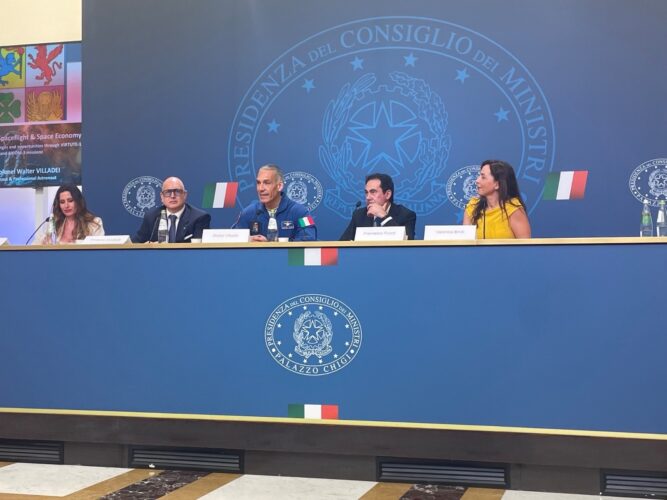
From left: Incoronata Boccia, moderator, RAI journalist and Director of the Press Office; Vincenzo Arcobelli, President of the Conference; Walter Villadei, astronaut, Colonel of the Italian Air Force, and Head of ITAF, the Representative Office for Commercial Spaceflight and Access to Space at Axiom, Houston, Texas; Francesco Fusco, FISE – Executive Director Foundation for International Space Education-USA; Veronica Bindi, Chair of Physics and Astronomy Department, University of Hawaii.
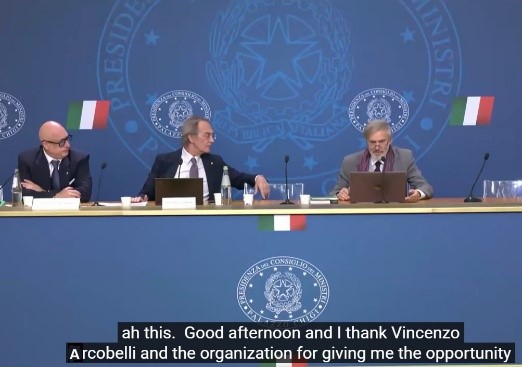
Vincenzo Arcobelli, President of the Conference; Giuseppe Ciccarone, Vice-Rector, Deputy Rector for Internationalization Policies, Sapienza University of Rome; Dario Crosetto, Italian-American scientist, inventor of the 3D-Flow and 3D-CBS, President of the Crosetto Foundation for the Reduction of Cancer Deaths.
What message would you like to convey to young researchers?
Never give up on your ideas when they are supported by solid scientific foundations. Innovation requires competence, perseverance, and openness to constructive debate. Criticism is an essential part of research, but every new technology should ultimately be evaluated through rigorous and reproducible experiments.
Editorial Note — DAILYCASES MAGAZINE
The following closing section reflects the editorial position of DAILYCASES MAGAZINE, based on the evidence and history discussed in this interview.
A call to action to everyone
After reading this interview, do you agree that the fair path forward is to let an experiment settle the question? In support of scientific integrity and transparency, we would like to know whether you support the following two principles:
- Letting the experiment decide. Should public research funding be used to allow the inventor to be judged by the result of an experiment — by funding the construction of his invention — rather than by the opinion of an influential scientist?
- A Public Scientific Review at CERN: To convene an open, international technical scientific review at CERN—similar to the 1993 public, international review at Fermilab—providing a public forum in the CERN auditorium and online where Prof. Crosetto can address any technical objections, demonstrate his calculations, and show how his inventions can provide a powerful tool to experimental physicists and drastically reduce costs for high-energy physics experiments while delivering a transformative medical imaging tool, both based on cost-effectively extracting all valuable information from radiation.
It matters that any funding go directly to the inventor, not to third parties who did not create these technologies. This is not a technicality — it reflects real, documented history. In 2015, the U.S. National Institutes of Health (NIH) funded three U.S. universities with $15.5 million to pursue this technology; the researchers did not know how to build the 3D-CBS, and the funding ultimately went to a Chinese company that replicated Crosetto’s design instead, when they built the EXPLORER. In Italy, Crosetto presented his invention to government officials in 2004 and 2008, an exchange documented in a 42-page article published at the time, in which Italian decision-makers argued that a long-detector PET was unnecessary — a position they were later forced to retract when, in 2024, Italy purchased two EXPLORER systems, built by the Chinese for €42 million: long-detector machines less efficient than the 3D-CBS. At CERN, three decades were spent developing a Level-1 Trigger system that ultimately failed, as acknowledged in a 2016 article written by the very physicists who built it. In each case, funding and credit went to people other than the inventor who had already solved the problem — which is precisely the pattern that funding the inventor directly would prevent.
Whether you agree or disagree with one, two, or all three of the above, we invite you — scientist, policymaker, taxpayer, or reader — to share your opinion, technical feedback, or official position by writing to DAILYCASES MAGAZINE.
What is being decided is not just the fate of one invention, but whether evidence or inertia determines whether millions of future cancer patients — hopefully not you — get the cost-effective early diagnosis that could save them, or the late one that won’t.


