
Ambiente & Turismo
Tecnologie di guerra, Intelligenza Artificiale e quesiti ambigui – War technologies, Artificial Intelligence and ambiguous questions



Tecnologie di guerra, intelligenza artificiale e quesiti ambigui
di Antonio Virgili – vicepresidente Lidu onlus
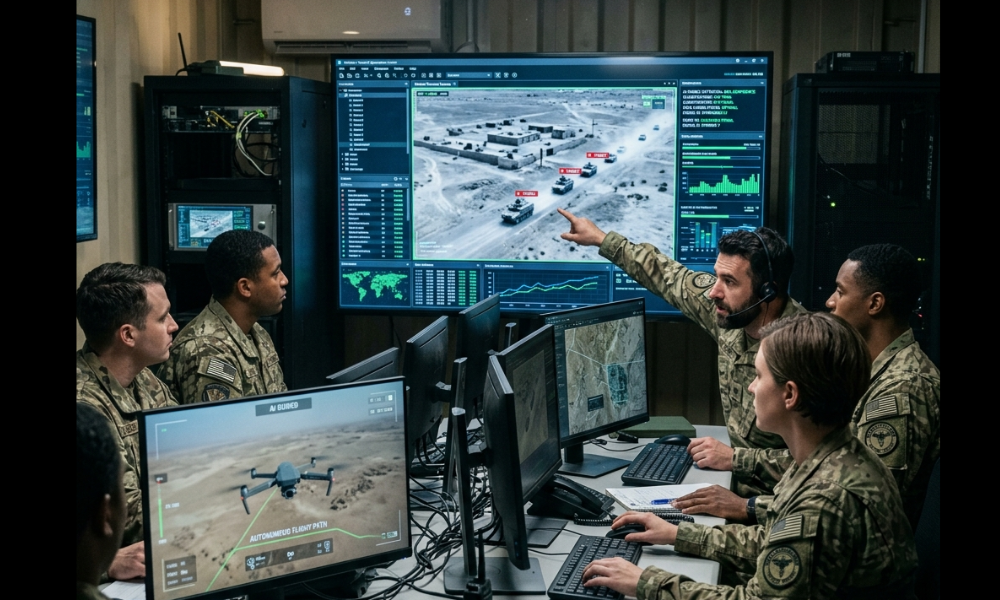
Le guerre in corso, specialmente quelle in Ucraina ed Iran, sono state descritte come nuovi tipi di guerra, ad alta tecnologia, nelle quali la capacità di colpire a distanza e di intercettare gli attacchi nemici prevale nettamente sulle tradizionali operazioni terrestri. Tutte le semplificazioni sono riduttive e solo parzialmente rispondenti alla realtà, ma è pur vero che ci si trova di fronte ad una modalità diversa di conflitto che si è aggiunta alle precedenti. L’uso di droni, mezzi robotici comandati a distanza, missili intercettori, apparati radar e satellitari di ultime generazioni sono oramai massicciamente presenti, non ultime le applicazioni dell’Intelligenza Artificiale. Il confronto è anche tra armi sofisticate ed estremamente costose ed armi sofisticate robotiche ma molto meno costose. Il tema dell’impatto delle nuove tecnologie robotiche e dell’IA sulle guerre, pur avendo un contenuto tecnico destinato maggiormente ad addetti ai lavori, è invece emerso tra quelli di attualità perché lo si è intrecciato con alcuni, veri o presunti, errori dell’IA nel colpire obiettivi civili e con riferimenti all’etica. Alcuni casi specifici di veri o presunti errori nel colpire dei bersagli civili e la competizione nelle capacità di intercettazione ed azione guidate dall’IA stanno quindi suscitando un dibattito più ampio. A fronte della enorme capacità di elaborazione dei dati in tempi estremamente rapidi, dati aggiornati costantemente grazie alle rilevazioni sia satellitari che sul terreno, ci si è interrogati sulla opportunità o meno di lasciare a tali complessi sistemi una serie di scelte e di opzioni che, tradizionalmente, erano adottate da personale militare umano. Si è anche fatto riferimento a motivazioni etiche che dovrebbero essere presenti anche in caso di conflitti. Ѐ forse bene chiedersi il senso di tali interrogativi e commenti, che appaiono poco consoni al contesto e alle tecnologie stesse, se non parzialmente manipolatori.
Il primo aspetto riguarda le scelte e le opzioni selezionate dai sistemi di IA che in realtà dipendono, nella quasi totalità, dalle informazioni disponibili e dalle programmazioni ricevute. La correttezza delle informazioni è probabilmente data per scontata, o è considerata con percentuale di errore estremamente basso. Ad esempio, se il sistema di elaborazione e intercettazione riceve informazioni su dieci mezzi corazzati in movimento si regola su tale dato, non in base al nome delle persone che li guidano, a meno che non sia stato previsto anche questo criterio e solo qualora ci siano tali ulteriori dati. Nel caso riportato dalle cronache, se i dati dicono che in una scuola sono concentrati armi e militari è normale che la scuola risulti ordinario obiettivo da colpire. La macchina è cinica e priva di etica? Non sono piuttosto cinici e privi di etica coloro che usano i civili come scudi umani? Le guerre recenti sciaguratamente hanno riportato diversi casi di scuole, case, ospedali utilizzati come scudo per depositarvi armi, munizioni o come base. Da quello che si legge, lo hanno fatto Hamas e Hezbollah più volte, sembra lo stiano facendo anche in Iran le milizie armate. E certo non sono gli unici.
Il secondo aspetto “anomalo” di questi quesiti relativi alle tecnologie è il ritenere che in contesti bellici il rispetto delle regole sia sempre e comunque attuato. E che quindi anche l’IA sarebbe tenuta ad applicare le regole (se non è stata indirizzata in altro modo). Ciò ignora le numerose azioni che, purtroppo, in tutte le guerre, hanno scopi terroristici, cioè di incutere il terrore e fiaccare la resistenza avversaria. Violenze di ogni tipo, contro i militari e spesso contro la popolazione civile sono periodicamente registrati dalle cronache non manipolate. Nel Sudan, in questi mesi, migliaia di donne e bambini sono stuprati, decine di villaggi incendiati, i massacri sono quasi quotidiani, e tutto è realizzato senza il minimo intervento dell’Intelligenza Artificiale o di tecnologie sofisticate. Ma non si leggono interrogativi sul “rischio etico” nel fornire armi di qualsiasi tipo o nell’alimentare i conflitti. Il cadavere della giornalista ucraina Roshchyna, palesemente e brutalmente torturato, è stato opera di un errore dell’IA? Andando indietro nel tempo, i campi di sterminio nazisti e i gulag sovietici, erano forse effetto di qualche tecnologia che aveva preso il controllo? Per non parlare degli atti terroristici degli scorsi anni realizzati da fanatici in Europa. L’elenco, purtroppo, sarebbe lunghissimo.
Il terzo aspetto che alimenta dubbi sugli interrogativi circa i rischi dell’IA in guerra è la reiterata tendenza a immaginare di poter scaricare sulle tecnologie gli errori e le colpe umane. Giocando con le parole, si è detto (ma forse non abbastanza) che un computer è stupido, esegue operazioni così come è stato programmato, con tutti i limiti posti dai programmatori. La definizione di “intelligenza” artificiale si presta invece ad attribuire ad essa scelte ed opzioni che sono invece il frutto di scelte ed opzioni sia di chi ha costruito ed addestrato l’IA sia di chi la utilizza. Gran parte dell’IA (anzi delle IA, perché ce ne sono di diversi tipi e potenzialità) non è ancora autonoma nel senso corrente del termine, non decide, potrà probabilmente farlo in un prossimo futuro, ma non è detto che ciò sia di per se un fattore negativo se potrà salvare delle vite in campo medico attraverso decisioni più celeri o controllare la sicurezza dei trasporti con maggiore efficienza. Come Carl Gustav Jung affermò in una intervista, il più grosso problema contemporaneo non sono tanto le tecnologie potenti ma la persistente incapacità delle persone di usarle in modo corretto ed appropriato assumendosene le responsabilità. Cercare di trasferire sulle tecnologie la causa della violenza e della violazione di quelle che dovrebbero essere regole, semplicemente umane, di rispetto reciproco è un vizio che torna nella storia, sin dalle prime tecnologie rudimentali, si pensi al mitico martello di Thor. Se le tecnologie hanno e avranno in se della violenza sarà solo per riflesso di quella umana cui non si è riusciti a, o voluto, porre limiti.
War technologies, Artificial Intelligence and ambiguous questions
by Antonio Virgili – vicepresidente Lidu onlus
The ongoing wars, particularly those in Ukraine and Iran, have been described as new forms of high-tech warfare, in which the ability to strike from a distance and intercept enemy attacks clearly outweighs traditional ground operations. All such simplifications are reductive and only partially reflect reality, but it is nonetheless true that we are facing a different form of conflict that has been added to the existing ones. The use of drones, remotely controlled robotic vehicles, interceptor missiles, and state-of-the-art radar and satellite systems is now widespread, not least the applications of Artificial Intelligence. The comparison is also between sophisticated and extremely expensive weapons and sophisticated robotic weapons that are much less expensive. The issue of the impact of new robotic technologies and AI on warfare, whilst having a technical content intended primarily for specialists, has instead emerged as a topical issue because it has become intertwined with certain—real or alleged—errors of AI in striking civilian targets and with references to ethics. Specific cases of real or alleged errors in striking civilian targets, and the competition in AI-guided interception and action capabilities, are therefore sparking a wider debate. Given the enormous capacity to process data at extremely high speeds – data that is constantly updated through both satellite and ground-based observations – questions have been raised as to whether it is appropriate to entrust such complex systems with a range of decisions and options that were traditionally made by human military personnel. Reference has also been made to ethical considerations that should apply even in the event of conflict. It is perhaps worth questioning the significance of such queries and comments, which seem somewhat out of place in this context and in relation to the technologies themselves, if not somewhat manipulative.
The first point concerns the choices and options selected by AI systems, which depend almost entirely on the information available and the programming they have received. The accuracy of the information is probably taken for granted or is considered to have an extremely low margin of error. For example, if the processing and interception system receives information about ten armoured vehicles on the move, it adjusts to that data, not based on the names of the people driving them, unless this criterion has also been programmed in and only if such additional data is available. In the case reported in the news, if the data indicates that weapons and military personnel are concentrated in a school, it is normal for the school to be treated as a standard target. Is the system cynical and unethical? Are not those who use civilians as human shields the ones who are cynical and unethical? Recent wars have, unfortunately, seen several cases of schools, homes and hospitals being used as cover to store weapons and ammunition or as bases. From what we read, Hamas and Hezbollah have done this on several occasions, and it seems that armed militias in Iran are doing so too. And they are certainly not the only ones.
The second ‘anomalous’ aspect of these questions regarding technology is the assumption that, in wartime contexts, the rules are always and, in all circumstances adhered to. And that, therefore, AI would also be required to apply the rules (unless otherwise programmed). This ignores the numerous actions which, unfortunately, in all wars, have terrorist aims, that is, to instil terror and weaken the enemy’s resistance. Violence of every kind, against the military and often against the civilian population, is regularly reported in unbiased news accounts. In Sudan, in recent months, thousands of women and children have been raped, dozens of villages set alight, massacres are almost a daily occurrence, and all this is carried out without the slightest intervention from Artificial Intelligence or sophisticated technologies. Yet one reads no questions about the ‘ethical risk’ of supplying weapons of any kind or of fuelling conflicts. Was the body of the Ukrainian journalist Roshchyna, clearly and brutally tortured, the result of an AI error? Looking back in time, were the Nazi extermination camps and Soviet gulags perhaps the result of some technology that had taken control? Not to mention the terrorist acts of recent years carried out by fanatics in Europe. The list, unfortunately, would be very long.
The third factor fuelling doubts about the risks of AI in warfare is the persistent tendency to imagine that human errors and faults can be blamed on technology. To put it simply (though perhaps not quite enough), a computer is stupid, it carries out operations exactly as it has been programmed, with all the limitations imposed by its programmers. The definition of ‘artificial’ intelligence, however, lends itself to attributing to it choices and options that are in fact the result of choices and options made both by those who built and trained the AI and by those who use it. Much of AI (or rather, AIs, as there are different types and capabilities) is not yet autonomous in the current sense of the term; it does not make decisions, though it will likely be able to do so in the near future. However, this is not necessarily a negative factor if it can save lives in the medical field through faster decisions or monitor transport safety more efficiently. As Carl Gustav Jung stated in an interview, the biggest contemporary problem is not so much powerful technologies but people’s persistent inability to use them correctly and appropriately whilst taking responsibility for them. Attempting to shift the blame for violence and the violation of what should be basic, human rules of mutual respect onto technology is a flaw that runs through history, right back to the earliest rudimentary technologies – think of Thor’s legendary hammer. If technology contains, or will contain, violence, it will only reflect human violence, which we have failed or refused to place limits upon.


