
Arte & Cultura
Il 14 luglio 1789, una data che ha veramente cambiato il mondo – 14 July 1789, a date that truly changed the world

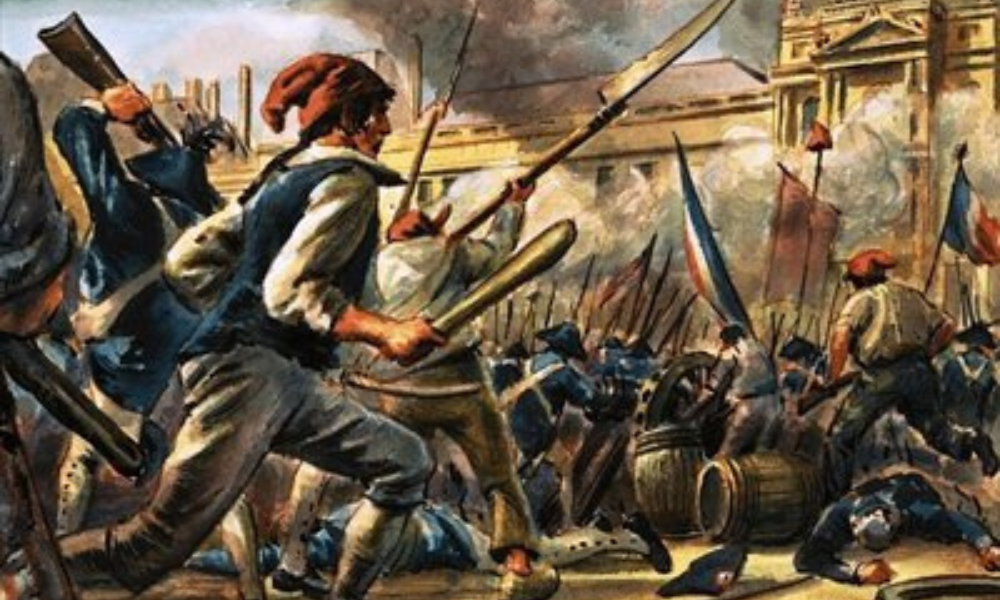


Il 14 luglio 1789, una data che ha veramente cambiato il mondo
235 anni fa, il 14 luglio, 1789, una data diventata una delle più importanti nella Storia del mondo a causa della caduta del carcere della Bastiglia a Parigi quella sera, Luigi XVI, Re (assoluto) della Francia, chiese al Duca di Liancourt, “È una rivolta?” e la risposta del Duca riassunse la serietà della situazione con cinque parole che ogni studente di Storia Moderna conosce alla perfezione, “No, sire, è una rivoluzione”.
A scuola, quando abbiamo sentito quelle parole per la prima volta, abbiamo chiesto, “Come ha fatto il Re di Francia a non capire l’arrivo della Rivoluzione?”
La risposta è semplice, fu la prima Rivoluzione vera, e quindi nessuno capiva quel che stava per accadere in Francia che stava per deporre il re, seguito poi da una “dittatura del Popolo” in un periodo tempestoso accompagnato dagli innumerevoli morti della ghigliottina ricordato con il titolo da brividi “Il Terrore”.
In seguito a questa rivoluzione il mondo vide il Re rimpiazzato prima dal popolo, poi da un Imperatore, un soldato di origine italiana di nome Napoleone Bonaparte che formò un nuovo “Impero” in Europa, ed infine sconfitto da un’alleanza degli altri grandi poteri europei. Una sequenza di episodi epocali che nessuno nel mondo poteva prevedere, tanto meno un re debole, prima della presa della Bastiglia.
Mentre Luigi XVI avrebbe potuto avere come scusante l’ignoranza, lo Zar Nicola II di Russia non poteva dire altrettanto, perché ebbe un preavviso sanguinoso di quel che sarebbe poi accaduto con la Rivolta cruenta del 1905.
Poi la Russia subì ben due Rivoluzioni, la prima nel febbraio 1917 che depose l’Imperatore, principalmente a causa della partecipazione disastrosa alla Grande Guerra, e poi con la Rivoluzione di Ottobre dello stesso anno dai Bolscevichi, una corrente del comunismo capeggiato da Vladimir Lenin, che portò poi alla Dittatura di Stalin.
Un caso classico delle conseguenze di non aver capito le lezioni della Storia.
Inoltre, quella prima Rivoluzione nel 1789 fu il risultato diretto dell’Illuminismo che diede al mondo grandi filosofi, che concepirono i diritti universali dell’Uomo che sono la base delle Democrazie Moderne, partendo dal diritto più importante, il diritto di libertà d’espressione che è sempre la prima vittima di queste rivoluzioni e delle dittature militari, non importa da quale parte.
Difatti, diventò il modello delle Rivoluzioni che ne seguirono nel corso degli ultimi 235 anni.
Sorprendentemente, uno dei rivoluzionari in Francia fu il Marchese Gilbert du Moitier de la Fayette che aveva comandato una spedizione militare negli Stati Uniti per aiutare gli americani a ottenere la loro libertà dalla corona inglese.
Lui tornò in Francia con idee repubblicane. Però, l’effetto più grande di questa partecipazione fu tra i soldati che capirono che era possibile per il popolo deporre un re.
E infatti, fu quel che il mondo vide partendo dal 14 luglio 1789. E il colmo di questa partecipazione è che era stato proprio Re Luigi XVI a dare il permesso per la spedizione che anni dopo portò alla sua morte sotto la ghigliottina…
Però, la Rivoluzione francese ebbe effetti inaspettati da parte dei rivoluzionari, e il primo di questo fu la vittoria francese alla Battaglia di Valmy nel 20 settembre 1792.
L’Austria e la Prussia erano preoccupate dai possibili effetti della presenza di una repubblica in Europa. Anche questo fu un presagio degli sviluppi moderni.
Queste manovre politiche e militari portarono alla Battaglia Valmy dove l’esercito rivoluzionario vinse. La prima vittoria di un esercito “popolare” contro una monarchia assoluta nella Storia.
Uno dei testimoni della battaglia fu un giornalista che sarebbe poi diventato uno dei poeti europei più importanti di quell’epoca, Wolfgang Goethe che disse di Valmy, “Da oggi si apre una nuova pagina nella storia del mondo”.
E non ebbe torto, perché senza Valmy non ci sarebbe stato Napoleone, e tutto il resto che ne è seguito.
Il secondo effetto importantissimo della Rivoluzione francese si trova in una parola utilizzata per riempire il vuoto politico lasciato dalla mancanza del Re.
Nelle monarchie europee, tutte assolute, tranne in Inghilterra che ha una sua Storia particolare legata alle lotte tra Cattolici e Protestanti che portarono al loro sistema di governo, il Re rappresentava la Gloria e il Potere del paese.
E con la rimozione di Luigi XVI questo venne a mancare in Francia.
Di conseguenza, questo vuoto venne riempito dal concetto di “Nazione”. Non era una parola nuova, ma ottenne un significato ben più importante con gli sviluppi in Francia.
Per questo motivo, non sarebbe affatto uno sbaglio dire che senza la Rivoluzione Francese l’Italia e la Germania non esisterebbero nella loro forma attuale, come anche molti altri paesi in giro per il mondo che videro nel nazionalismo la possibilità della loro indipendenza, compresa la democrazia più grande del mondo, l’India, che nel 1789 non era una colonia inglese, bensì addirittura una tenuta enorme di una società privata inglese, la East India Company (Compagnia delle Indie Orientali).
E vediamo ancora oggi altri effetti della Rivoluzione Francese. Il primo si trova nel linguaggio politico mondiale. Quando parliamo di “sinistra” e “destra” in politica riconosciamo il dibattito nella Assemblea Nazionale della Rivoluzione dove i rivoluzionari radicali si sedevano alla sinistra della Camera, mentre i conservatori si radunavano alla destra.
La risposta alle rivoluzioni che abbiamo descritto avrebbe dovuto essere le Democrazie moderne. ma la Storia ha dimostrato che anche loro hanno avuto un ruolo nel ciclo di rivoluzioni e contro-rivoluzioni che abbiamo visto nel corso degli anni, comprese le interferenze di potenze straniere per cercare di rimuovere il nuovo regime.
Questo è il motivo per cui vediamo ancora gli effetti politici diretti della Rivoluzione Francese, particolarmente dopo la Rivoluzione Bolscevica del 1917.
In effetti, dal 1917 la politica internazionale è stata dominata dagli scontri tra le potenze occidentali con gli Stati Uniti in testa a una coalizione variabile di paesi europei e altre potenze del mondo, contro le due superpotenze di origini comuniste, la Russia (prima del 1989 (sotto il nome di Unione Sovietica) e la Cina, ossia il totalitarismo vero, con la scusa di vari contenuti nelle opere di Karl Marx che non avrebbe mai immaginato le conseguenze vere delle sue idee soprattutto economiche e non politiche.
E c’è un continente che da troppi anni soffre ancora il ciclo di rivolta, repressione e contro rivolta, con morti che non possiamo immaginare, l’America Latina.
Dobbiamo solo leggere i giornali regolarmente per vedere rivolte anche in altri continenti per capire che la Rivoluzione Francese cambiò il mondo e in modo irreversibile per un motivo semplice, sin dal 14 luglio 1789 sentiamo ancora gli effetti delle ideologie, perché, purtroppo, gli odi di vario tipo che hanno caratterizzato le Rivoluzioni, esistono ancora.
La Rivoluzione Francese doveva essere il modo di poter mettere in azione le ideologie bellissime dell’Illuminismo, ma non fece altro che fomentare odio e violenza e non sappiamo ancora cosa fare per prevenire finalmente queste esplosioni politiche bestiale, anche perché oggigiorno in alcune zone del mondo il motivo dell’odio non è la politica, ma la religione.
Riconosciamo la verità, questo stato eterno di lotte sanguinose è un’onta per noi tutti perché, come società che si vanta d’essere moderna, non siamo ancora riusciti a trovare il modo non militare per risolvere le tragedie nel mondo che vediamo ogni giorno nei giornali e alla televisione. E quando finalmente cerchiamo di fare qualcosa, fin troppo spesso il “rimedio” è peggiore della “malattia”.
E chissà cosa direbbero i rivoluzionari della Bastiglia se sapessero che a 235 anni dalla presa del carcere, il mondo sente ancora gli effetti delle loro azioni. E che non tutti sono buoni…
14 July 1789, a date that truly changed the world
235 years ago, on July 14, 1789, a date that became one of the most important in history due to the Storming of the Bastille prison that evening, Louis XVI asked the Duke of Liancourt, “Is it a revolt?” and the Duke’s reply summarises the seriousness of the situation with six words that every student of modern history knows perfectly well, “No sire, it is a revolution”.
When we heard the words at school for the first time we asked, “How did the King not understand that a Revolution was coming?”
The answer is simple, it was the first true Revolution, and therefore nobody understood what was going to happen in France, which was about to depose a King, followed by a “dictatorship of the People” during a stormy period accompanied by countless deaths by the guillotine remembered with the title “The Terror”.
Following the revolution the world saw the King replaced first by the “People”, then by an Emperor, a French soldier of Italian origin, Napoleon Bonaparte, and then finally defeated by an alliance of other great European powers. A sequence of monumental events that nobody in the world could have foreseen, much less a weak King before the fall of the Bastille.
While Louis XVI may have had the excuse of ignorance, Tsar Nicholas II of Russia could not have said the same, because he had a bloody forewarning of what was to come with the bloody Revolt in 1905.
And then Russia underwent two Revolutions, the first in February 1917 that deposed the Tsar, mainly due to the disastrous participation in the Great War, and then with the October Revolution in the same year by the Bolsheviks, a current of communism led by Vladimir Lenin, that eventually led to Stalin’s dictatorship.
A classic case of the consequences of not understanding the lessons of history.
Furthermore, that first Revolution in 1789 was the direct result of the Enlightenment that gave the world great philosophers who created the Universal Rights of Man which are the basis for Modern Democracies, starting with the most important right, the right to freedom of expression that is always the first casualty of these revolutions and the military dictatorships, no matter of which side.
In fact, it became the model of the Revolutions that followed over the last 235 years.
Surprisingly, one of the revolutionaries in France was the Marquis Gilbert du Moitier de la Fayette who had commanded the French military expedition in the United States to assist the Americans gain their freedom from the English crown.
He returned to France with Republican ideas. But the greatest effect of this participation was amongst the soldiers who understood that it was possible for the people to depose a King.
And indeed, this is what the world saw starting on July 14 July 1789. And the paradox of this participation was that it had been precisely King Louis XVI who gave permission for the expedition that years later led to his death under the guillotine.
However, the French Revolution has unexpected effects on the part of the revolutionaries and the first of these was the French victory at the Battle of Valmy on 20 September 1792.
But the French Revolution had unexpected effects on the part of the revolutionaries, and the first of these was the French victory in the Battle of Valmy on September 20, 1792.
Austria and Prussia were worried by the possible effects of the presence of a republic on Europe. So, they decided to initiate military action to overturn the Revolution. This too was a portent of the modern developments below.
These political and military manoeuvres led to the Battle of Valmy where the revolutionary army won.
It was the first victory of a “People’s” army against an absolute monarchy in history.
One of the witnesses to the battle was a journalist who later became one of Europe’s most important poets of the period, Wolfgang Goethe, who said of Valmy, “From this day forth begins a new era in the history of the world.”
And he was not wrong, because without Valmy there would not have been a Napoleon, and everything that followed.
The second very important effect of the French Revolution is found in a word used to fill the political vacuum left by the lack of a King.
In the European Monarchies, all absolute, except for England that had it own particular history connected to the battles between Catholics and Protestants that led to their form of government, the King represented the Glory and Power of the country.
And with the removal of Louis XVI this was lacking in France.
Subsequently, this vacuum was filled by the concept of “Nation”. It was not a new word, but it obtained a much more important meaning with the developments in France.
For this reason, it would not be wrong to say that without the French Revolution Italy and Germany would not exist in their present form, just like many other countries around the world that saw in nationalism the chance for their independence, including the world’s biggest democracy, India, that in 1789 was not even an English colony but was literally the huge holding of a private English company, the East India Company.
And today we still see other effects of the French Revolution. The first is found in the world’s language of politics. When we talk about the “left” and right” in politics we recognize the debate in the Revolution’s National Assembly where the radical revolutionaries sat at the left of the Chamber, while the conservatives gathered together on the right.
The answer to the revolutions that we have described should have been the modern Democracies, but history has demonstrated that they too have played a role in the cycle of revolutions and counter-revolutions that we have seen over the years, including the interference of foreign powers to try to remove the new regime.
That is why we still see direct political effects of the French Revolution, particularly after the Bolshevik Revolution of 1917.
Effectively, since 1917 international politics has been dominated by clashes between the Western powers with the United States at the head of a variable collation of European countries and other world powers, against the two superpowers of communist origins, Russia (before 1989 under the name of the Soviet Union) and China, in other words, true totalitarianism under the guise of various contents of the work of Karl Marx who could not have imagined the true consequences of his ideas which were above all economic and not political.
And there is a continent that for too many years has suffered, and still suffers, the cycle of revolt, repression, and counter-revolt, with deaths we cannot imagine. Latin America.
We only have to read the newspapers regularly to see revolts also in other continents to understand that the French Revolution changed the world irreversibly for a simple reason.
Since July 14, 1789, we still feel the effects of the ideologies because, unfortunately, the various forms of hatred which characterized the Revolutions still exist.
The French Revolution should have been the way to put into action the wonderful ideologies of the Enlightenment, but all it did was foment hatred and violence, and we still do not know what to do to finally prevent these bestial political eruptions, not least because today in some parts of the world the reason for the hatred is not politics, but religion.
Let us recognize the truth, this endless state of bloody battles is a disgrace for all of us because, as a society that claims to be modern, we still have not yet managed to find non-military ways to resolve tragedies in the world that we see every day in the newspapers and on TV. And when we finally try to do something, all too often the “remedy” is worse than the “disease
And who knows what the revolutionaries of the Bastille would say if they knew that 235 years after the Storming of the Bastille, the world still feels the effects of their actions. And not all of them are good…


