
Attualità
Acqua informata: rivoluzione scientifica o illusione? -Informed Water: Scientific Revolution or Illusion?



Acqua informata: rivoluzione scientifica o illusione?
Può una semplice molecola d’acqua registrare parole, musica, emozioni o persino pensieri? Un’ipotesi che per alcuni rappresenta una rivoluzione scientifica ancora tutta da comprendere e che per altri appartiene esclusivamente al mondo della pseudoscienza. In mezzo, decenni di studi, polemiche e interrogativi ancora aperti.
di Laura Marà
L’acqua è la sostanza più studiata sulla Terra e, allo stesso tempo, una delle più enigmatiche. Pur essendo composta da una molecola apparentemente semplice – due atomi di idrogeno e uno di ossigeno (H₂O) – continua ancora oggi a sorprendere i ricercatori per le sue proprietà fisiche e chimiche, molte delle quali risultano uniche nel panorama delle sostanze naturali.
Costituisce circa il 60-70% del corpo umano, ricopre oltre il 70% della superficie terrestre ed è il presupposto indispensabile per l’esistenza della vita così come la conosciamo. Ma proprio la sua apparente semplicità nasconde una complessità che da decenni alimenta studi, dibattiti e interrogativi ancora aperti.
Tra questi, uno dei più controversi riguarda la cosiddetta memoria dell’acqua, una teoria secondo cui questo liquido sarebbe in grado di conservare informazioni relative alle sostanze con cui è entrato in contatto o, secondo alcune ipotesi ancora più estreme, persino di registrare l’influenza di parole, musica, campi elettromagnetici, emozioni e intenzioni umane.
È davvero possibile che un bicchiere d’acqua conservi una sorta di “ricordo” invisibile?
Esiste un meccanismo fisico capace di spiegare un simile fenomeno oppure si tratta di un’ipotesi incompatibile con le attuali conoscenze della chimica e della fisica?
Sono domande che, negli ultimi quarant’anni, hanno coinvolto immunologi, chimici, fisici teorici, biologi e persino un Premio Nobel, dando origine a uno dei dibattiti più affascinanti e controversi della ricerca contemporanea.
Da una parte troviamo ricercatori che hanno ipotizzato l’esistenza di proprietà dell’acqua ancora poco comprese e potenzialmente rivoluzionarie; dall’altra, una vasta parte della comunità scientifica ritiene che gli studi finora pubblicati non abbiano fornito prove sufficientemente solide, indipendenti e riproducibili per dimostrare l’esistenza della memoria dell’acqua.
Come spesso accade nella storia della scienza, tuttavia, la questione non può essere ridotta a un semplice confronto tra “vero” e “falso”. Esistono dati sperimentali consolidati, ipotesi teoriche ancora oggetto di studio, risultati mai replicati e interpretazioni che continuano ad alimentare il confronto tra discipline diverse.
Ma la scienza ha davvero detto l’ultima parola? Oppure esistono aspetti del comportamento dell’acqua che non siamo ancora in grado di descrivere completamente?
Per rispondere a queste domande è necessario intraprendere un percorso multidisciplinare, che attraversa chimica, biofisica, elettrodinamica quantistica, biologia, psicologia e filosofia della scienza, distinguendo con rigore ciò che è stato dimostrato sperimentalmente da ciò che, almeno allo stato attuale delle conoscenze, rimane un’ipotesi suggestiva ma ancora priva di conferme definitive.
Che cos’è l’acqua informata?
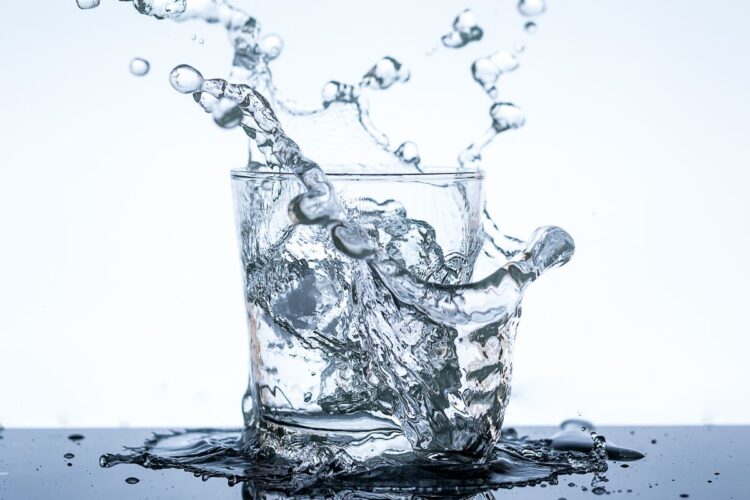
L’espressione acqua informata, spesso utilizzata come sinonimo di acqua programmata, acqua strutturata o memoria dell’acqua, indica una teoria secondo cui l’acqua non sarebbe soltanto un semplice composto formato da due atomi di idrogeno e uno di ossigeno (H₂O), ma un sistema capace di acquisire, conservare e trasmettere informazioni.
Secondo questa ipotesi, ogni sostanza con cui l’acqua entra in contatto lascerebbe una sorta di “impronta” invisibile.
Non solo.
Alcuni sostenitori ritengono che anche elementi non materiali, come parole, musica, preghiere, campi elettromagnetici, cristalli, intenzioni o perfino pensieri, possano modificarne l’organizzazione interna.
In pratica, “programmare” l’acqua significherebbe sottoporla a determinati stimoli affinché immagazzini un’informazione benefica che, una volta ingerita, sarebbe in grado di influenzare l’organismo.
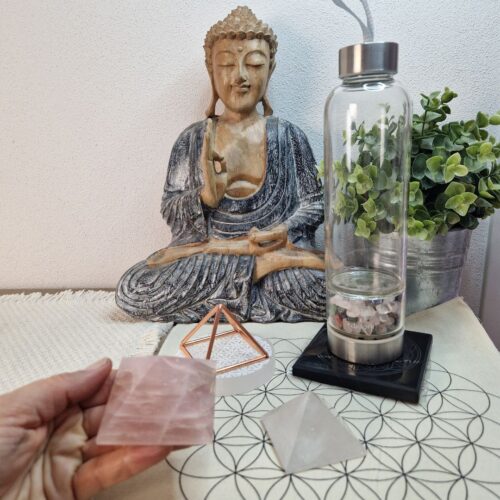
Nasce così una lunga serie di pratiche oggi molto diffuse nel mondo della crescita personale e della spiritualità: bottiglie con simboli geometrici, contenitori magnetizzati, dischi informativi, frequenze sonore, cristalli immersi nell’acqua, parole scritte sulle bottiglie e persino meditazioni dedicate alla “programmazione” dell’acqua potabile.
Ma è davvero possibile?
La prima domanda che un ricercatore si pone è semplice quanto fondamentale.
Esiste un meccanismo fisico che permetta all’acqua di immagazzinare informazioni in modo stabile?
Ed è proprio da questa domanda che nasce uno dei dibattiti scientifici più accesi degli ultimi decenni.
Jacques Benveniste e l’esperimento che sconvolse la comunità scientifica
Il primo grande protagonista di questa vicenda è l’immunologo francese Jacques Benveniste, allora direttore di un laboratorio dell’INSERM, il principale istituto francese dedicato alla ricerca medica.
Nel 1988 Benveniste pubblicò sulla prestigiosa rivista scientifica Nature uno studio destinato a suscitare un dibattito senza precedenti.
L’obiettivo della ricerca era comprendere il comportamento di alcune cellule del sistema immunitario, i basofili, coinvolte nelle reazioni allergiche. Per attivarle, i ricercatori utilizzarono particolari anticorpi chiamati immunoglobuline E (IgE), normalmente in grado di provocare una risposta biologica ben precisa.
La parte più sorprendente dell’esperimento riguardava però il procedimento di diluizione.
Gli anticorpi vennero diluiti ripetutamente in acqua fino a raggiungere concentrazioni così estreme da superare il cosiddetto numero di Avogadro, il limite oltre il quale, secondo le leggi della chimica, è estremamente improbabile che nella soluzione rimanga anche una sola molecola della sostanza iniziale. Si tratta dello stesso principio sul quale si basano molte preparazioni omeopatiche.
Secondo quanto riportato da Benveniste, nonostante l’assenza delle molecole originarie, i basofili continuavano a comportarsi come se gli anticorpi fossero ancora presenti, reagendo allo stesso modo osservato prima delle diluizioni.
L’interpretazione proposta dal ricercatore era tanto semplice quanto rivoluzionaria: l’acqua sembrava aver conservato una sorta di “memoria” della sostanza con cui era entrata in contatto, trasmettendone gli effetti biologici anche quando la sostanza stessa non era più rilevabile.
Se confermata, questa scoperta avrebbe messo in discussione alcuni dei principi fondamentali della chimica moderna.
Proprio per questo motivo la pubblicazione suscitò immediatamente entusiasmo, ma anche un profondo scetticismo.
Il direttore di Nature, John Maddox, ritenne i risultati talmente straordinari da accompagnare l’articolo con un editoriale in cui invitava alla massima prudenza, ricordando che affermazioni così eccezionali richiedono prove altrettanto eccezionali.
Pochi giorni dopo organizzò una verifica indipendente direttamente nel laboratorio francese insieme al ricercatore Walter Stewart e al celebre illusionista e investigatore scientifico James Randi, noto per la sua attività nel verificare fenomeni apparentemente inspiegabili.
Gli esperimenti furono ripetuti seguendo rigorosi protocolli in doppio cieco, una metodologia che impedisce agli sperimentatori di sapere quali campioni contengano realmente la sostanza da analizzare, eliminando così possibili condizionamenti inconsapevoli.
Questa volta, però, i risultati positivi non vennero confermati.
Negli anni successivi numerosi laboratori internazionali tentarono di replicare l’esperimento senza ottenere gli stessi esiti.
Per la maggior parte della comunità scientifica questo rappresentò un elemento decisivo: nel metodo scientifico una scoperta non può essere considerata affidabile se non è riproducibile in modo indipendente.
Benveniste, tuttavia, non rinunciò alle proprie convinzioni. Continuò a studiare il fenomeno per molti anni, arrivando a ipotizzare che le informazioni biologiche potessero essere trasmesse attraverso segnali elettromagnetici digitalizzati, dando origine a quella che definì Digital Biology. Anche questa teoria, però, non ha trovato conferme sperimentali indipendenti.
L’acqua può davvero conservare informazioni? Le teorie che hanno acceso il dibattito

Dopo la controversia legata agli esperimenti di Jacques Benveniste, altri ricercatori cercarono di comprendere se dietro la teoria della memoria dell’acqua potesse esistere un fondamento fisico.
Tra questi figurano i fisici italiani Emilio Del Giudice e Giuliano Preparata, che affrontarono il problema da una prospettiva completamente diversa.
Anziché concentrarsi sugli aspetti biologici, ipotizzarono che l’acqua potesse organizzarsi in particolari regioni chiamate domini di coerenza, all’interno delle quali milioni di molecole oscillerebbero in modo sincronizzato grazie ai principi dell’elettrodinamica quantistica (QED).
Secondo questa teoria, tali domini potrebbero spiegare alcune proprietà anomale dell’acqua e la sua capacità di interagire con campi elettromagnetici.
È importante sottolineare, tuttavia, che si tratta di un modello teorico, non di una dimostrazione sperimentale della memoria dell’acqua. Sebbene il lavoro di Del Giudice e Preparata abbia suscitato interesse nella biofisica teorica, le conclusioni più estreme non sono oggi considerate confermate dalla maggior parte della comunità scientifica.
Luc Montagnier e i segnali elettromagnetici del DNA
Il dibattito tornò alla ribalta alcuni anni dopo grazie al virologo francese Luc Montagnier, insignito del Premio Nobel per la Medicina nel 2008 per la scoperta del virus HIV.
Negli ultimi anni della sua carriera, Montagnier pubblicò una serie di studi nei quali sosteneva che soluzioni altamente diluite contenenti frammenti di DNA fossero in grado di emettere particolari segnali elettromagnetici.
Secondo la sua ipotesi, tali segnali avrebbero potuto essere registrati e, in determinate condizioni sperimentali, persino trasferiti ad altre soluzioni acquose.
Anche in questo caso, tuttavia, gli esperimenti non sono stati replicati con successo da laboratori indipendenti e le conclusioni restano fortemente controverse.
Masaru Emoto: I cristalli dell’acqua raccontano davvero le nostre emozioni?
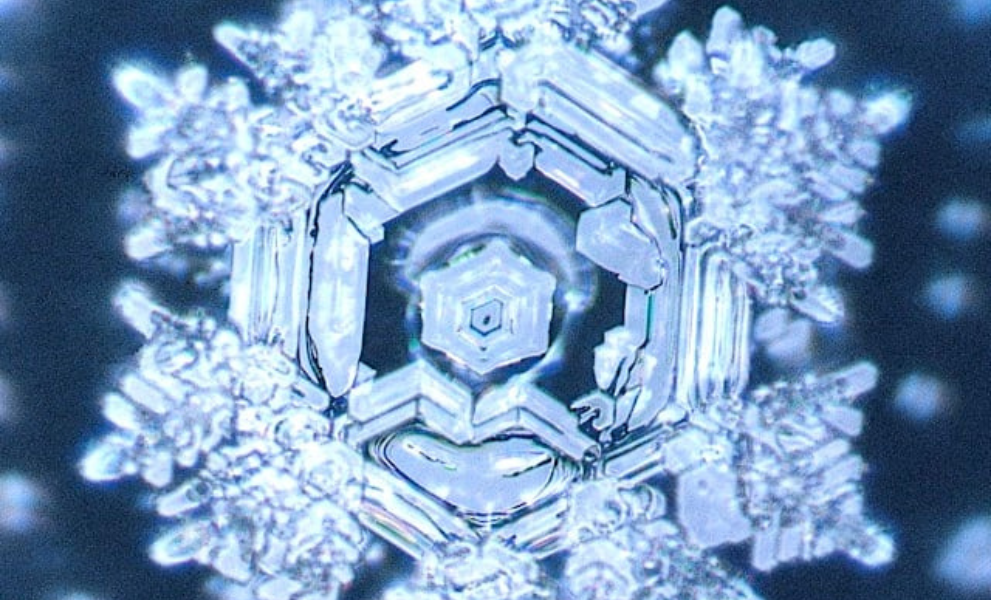
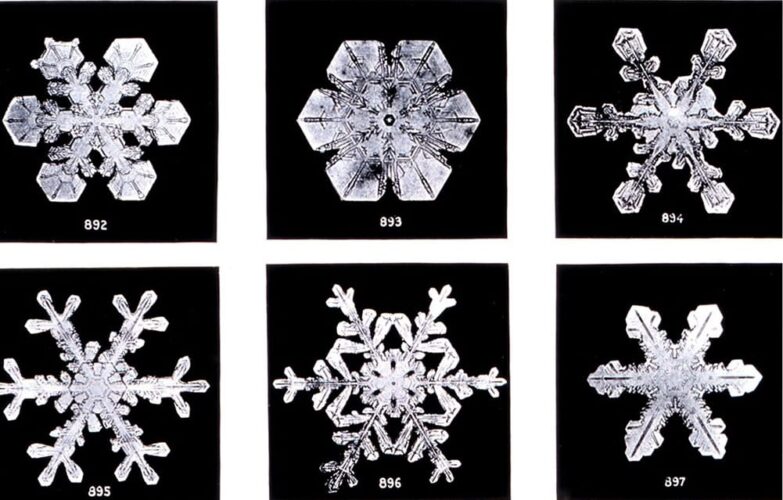
Se Benveniste e Montagnier cercavano risposte nei laboratori, il giapponese Masaru Emoto rese popolare la teoria della memoria dell’acqua attraverso immagini che fecero il giro del mondo.
Nei suoi esperimenti l’acqua veniva esposta a parole, musica, preghiere o messaggi offensivi prima di essere congelata.
Secondo Emoto, i campioni trattati con parole positive come “Amore” o “Grazie” producevano cristalli armoniosi e simmetrici, mentre quelli esposti a messaggi negativi generavano forme irregolari.
Le fotografie ebbero un enorme impatto mediatico, ma gli studi furono criticati per l’assenza di protocolli in doppio cieco, per la selezione soggettiva delle immagini e per la mancata riproducibilità dei risultati.
Per questo motivo non sono considerati una prova scientifica della memoria dell’acqua.
Cosa sappiamo oggi sull’acqua?
È qui che occorre distinguere le ipotesi dalle conoscenze consolidate.
La chimica moderna conferma che l’acqua è una sostanza estremamente dinamica.
Le sue molecole sono continuamente unite da legami a idrogeno, che si rompono e si riformano nell’arco di pochi femtosecondi, creando strutture temporanee chiamate cluster molecolari.
Questi fenomeni sono reali e osservabili.
Ciò che, invece, non è stato dimostrato è che tali strutture possano conservare informazioni biologiche o “ricordi” delle sostanze con cui l’acqua è venuta in contatto.
Anche dal punto di vista della fisica, non esiste attualmente un modello sperimentale condiviso che dimostri la possibilità di immagazzinare informazioni complesse nell’acqua liquida per tempi sufficientemente lunghi.
Questo non significa che l’acqua sia stata compresa in ogni suo aspetto. Al contrario, continua a rappresentare uno dei sistemi più complessi studiati dalla fisica della materia condensata.
Effetto placebo e psicologia dell’intenzione
Se gli esperimenti sulla memoria dell’acqua continuano a dividere la comunità scientifica, esiste invece un fenomeno ampiamente documentato dalla ricerca: l’effetto placebo.
Quando una persona è convinta che un trattamento possa produrre benefici, il cervello può attivare meccanismi biologici reali, come il rilascio di endorfine e di altri neurotrasmettitori, influenzando la percezione del dolore, dello stress e, in alcuni casi, alcuni parametri fisiologici.
Questo non significa che una sostanza priva di principio attivo possa curare qualsiasi malattia, ma dimostra quanto mente e corpo siano profondamente interconnessi.
In questo contesto, il gesto di “programmare” un bicchiere d’acqua con parole positive, una preghiera o un momento di meditazione potrebbe rappresentare, per alcune persone, un rituale capace di favorire concentrazione, consapevolezza e benessere psicologico.
Ciò che la ricerca non ha dimostrato è che questi eventuali benefici derivino da una modifica delle proprietà fisiche dell’acqua stessa.
L’acqua custodisce ancora molti segreti
Nel corso della storia della scienza, non sono mancate idee inizialmente considerate improbabili che, grazie a nuove prove sperimentali, hanno cambiato profondamente il nostro modo di comprendere la natura. Altre, invece, sono state progressivamente abbandonate perché gli esperimenti non ne hanno confermato la validità.
La teoria della memoria dell’acqua si trova oggi in una posizione particolare. Da oltre trent’anni continua a suscitare curiosità, nuove ipotesi e tentativi di spiegazione, ma non dispone ancora di evidenze sperimentali sufficientemente solide e riproducibili per essere accettata come conoscenza scientifica consolidata.
Questo, però, non significa che il dibattito debba essere liquidato con superficialità.
La storia insegna che la scienza non è un insieme di verità immutabili, ma un percorso in continua evoluzione. Ogni nuova scoperta nasce da una domanda, da un’intuizione e, soprattutto, dalla volontà di metterla alla prova. Ciò che oggi non trova conferma potrebbe essere definitivamente smentito domani oppure, al contrario, essere reinterpretato alla luce di nuove conoscenze e di strumenti tecnologici più avanzati. È proprio questo il motore del progresso scientifico.
Al tempo stesso, è importante distinguere tra ciò che rappresenta un’esperienza personale, una convinzione filosofica o spirituale e ciò che, invece, può essere dimostrato attraverso il metodo scientifico. Sono piani diversi, entrambi significativi, ma che rispondono a domande differenti.
Forse il fascino dell’acqua informata risiede proprio qui.
Non tanto nella pretesa di offrire risposte definitive, quanto nella capacità di ricordarci che esistono ancora fenomeni della natura che non comprendiamo pienamente e che la conoscenza umana è, per definizione, un cammino in continua costruzione.
L’acqua, la sostanza più comune e allo stesso tempo una delle più straordinarie del nostro pianeta, continua ancora oggi a essere oggetto di ricerca. E forse la lezione più importante non è stabilire chi abbia ragione, ma mantenere vivo ciò che ha sempre guidato ogni grande scoperta: la curiosità, il senso critico e la disponibilità a rimettere in discussione le proprie certezze quando le prove lo richiedono.
Informed Water: Scientific Revolution or Illusion?
Can a simple water molecule record words, music, emotions, or even thoughts? For some, this hypothesis represents a scientific revolution that has yet to be fully understood; for others, it belongs exclusively to the realm of pseudoscience. Between these opposing views lies decades of research, controversy, and questions that remain unanswered.
by Laura Marà
Water is the most extensively studied substance on Earth and, at the same time, one of the most enigmatic. Although it consists of an apparently simple molecule—two hydrogen atoms and one oxygen atom (H₂O)—it continues to surprise researchers with its physical and chemical properties, many of which remain unique among naturally occurring substances.
It makes up approximately 60–70% of the human body, covers more than 70% of the Earth’s surface, and is the essential prerequisite for life as we know it. Yet its apparent simplicity conceals a complexity that has fueled scientific studies, debates, and unanswered questions for decades.
Among the most controversial is the so-called water memory theory, according to which water may be capable of retaining information about the substances with which it has come into contact or, according to even more far-reaching hypotheses, of recording the influence of words, music, electromagnetic fields, emotions, and human intentions.
Is it really possible that a glass of water could preserve a kind of invisible “memory”?
Is there a physical mechanism capable of explaining such a phenomenon, or is this hypothesis fundamentally incompatible with our current understanding of chemistry and physics?
Over the past forty years, these questions have engaged immunologists, chemists, theoretical physicists, biologists, and even a Nobel Prize laureate, giving rise to one of the most fascinating and controversial debates in contemporary scientific research.
On one side are researchers who have suggested that water may possess properties that are still poorly understood and potentially revolutionary. On the other is a large portion of the scientific community, which argues that the studies published so far have failed to provide sufficiently robust, independent, and reproducible evidence to demonstrate the existence of water memory.
As is often the case in the history of science, however, the issue cannot simply be reduced to a confrontation between “true” and “false.” There are well-established experimental findings, theoretical hypotheses that remain under investigation, results that have never been successfully replicated, and interpretations that continue to stimulate debate across different scientific disciplines.
Has science truly delivered its final verdict? Or are there still aspects of water’s behavior that we are not yet able to describe completely?
Answering these questions requires a multidisciplinary journey through chemistry, biophysics, quantum electrodynamics, biology, psychology, and the philosophy of science, carefully distinguishing what has been experimentally demonstrated from what, at least according to current knowledge, remains an intriguing yet unconfirmed hypothesis.
What Is Informed Water?
The term informed water, often used interchangeably with programmed water, structured water, or water memory, refers to the theory that water is not merely a simple compound composed of two hydrogen atoms and one oxygen atom (H₂O), but rather a system capable of acquiring, storing, and transmitting information.
According to this hypothesis, every substance that comes into contact with water leaves behind a kind of invisible “imprint.”
But the theory goes even further.
Some proponents believe that non-material influences—including words, music, prayers, electromagnetic fields, crystals, intentions, and even thoughts—can alter water’s internal organization.
In practical terms, “programming” water means exposing it to specific stimuli so that it stores beneficial information which, once ingested, is believed to influence the human body.
This concept has inspired a wide range of practices that have become increasingly popular within the fields of personal development and spirituality: bottles decorated with sacred geometric symbols, magnetized containers, informational discs, sound frequencies, crystals immersed in water, written affirmations attached to bottles, and even meditation sessions specifically intended to “program” drinking water.
But is any of this scientifically plausible?
The first question any researcher asks is both simple and fundamental:
Is there a physical mechanism capable of allowing water to store information in a stable way?
It is precisely this question that has fueled one of the most heated scientific debates of recent decades.
Jacques Benveniste and the Experiment That Shook the Scientific Community
The first major figure in this story is the French immunologist Jacques Benveniste, then director of a laboratory at INSERM, France’s leading medical research institute.
In 1988, Benveniste published a paper in the prestigious scientific journal Nature, sparking an unprecedented scientific controversy.
The purpose of the study was to investigate the behavior of basophils, immune cells involved in allergic reactions. To activate them, the researchers used specific antibodies known as Immunoglobulin E (IgE), which normally trigger a well-defined biological response.
The most surprising aspect of the experiment, however, concerned the dilution process.
The antibodies were repeatedly diluted in water until they reached concentrations so extreme that they exceeded Avogadro’s number, the theoretical limit beyond which, according to the laws of chemistry, it becomes extraordinarily unlikely that even a single molecule of the original substance remains in the solution. This is the same principle on which many homeopathic preparations are based.
According to Benveniste’s findings, despite the apparent absence of the original molecules, the basophils continued to behave as though the antibodies were still present, responding in the same way they had before the successive dilutions.
The interpretation proposed by the researcher was as simple as it was revolutionary: water appeared to have retained a kind of “memory” of the substance with which it had previously come into contact, preserving its biological effects even after the substance itself could no longer be detected.
If confirmed, such a discovery would have challenged some of the fundamental principles of modern chemistry.
For this very reason, the publication immediately generated both excitement and profound skepticism.
The editor of Nature, John Maddox, considered the findings so extraordinary that he accompanied the paper with an editorial urging extreme caution, reminding readers that extraordinary claims require extraordinary evidence.
A few days later, Maddox organized an independent investigation directly at Benveniste’s laboratory, together with researcher Walter Stewart and the renowned magician and scientific investigator James Randi, who was well known for examining apparently inexplicable phenomena.
The experiments were repeated under rigorous double-blind protocols, a methodology designed to prevent researchers from knowing which samples actually contained the substance being tested, thereby eliminating unconscious bias.
This time, however, the positive results could not be reproduced.
Over the following years, numerous international laboratories attempted to replicate the experiment but failed to obtain the same findings.
For the vast majority of the scientific community, this became a decisive point: under the scientific method, a discovery cannot be considered reliable unless it can be independently reproduced.
Benveniste, however, never abandoned his convictions. He continued studying the phenomenon for many years, eventually proposing that biological information could be transmitted through digitized electromagnetic signals, giving rise to what he called Digital Biology.
This theory, too, has never received independent experimental confirmation.
Can Water Really Store Information? The Theories That Sparked the Debate
Following the controversy surrounding Jacques Benveniste’s experiments, other researchers sought to determine whether the theory of water memory might have a legitimate physical foundation.
Among them were the Italian physicists Emilio Del Giudice and Giuliano Preparata, who approached the issue from an entirely different perspective.
Rather than focusing on biological phenomena, they proposed that water could organize itself into special regions known as coherence domains, within which millions of molecules would oscillate synchronously according to the principles of quantum electrodynamics (QED).
According to this theoretical model, these coherence domains could account for some of water’s anomalous properties and its ability to interact with electromagnetic fields.
It is important to emphasize, however, that this remains a theoretical framework, not an experimental demonstration of water memory.
Although the work of Del Giudice and Preparata generated considerable interest within theoretical biophysics, its more far-reaching conclusions have not been confirmed by the majority of the scientific community.
Luc Montagnier and the Electromagnetic Signals of DNA
The debate returned to the spotlight several years later thanks to the French virologist Luc Montagnier, who was awarded the 2008 Nobel Prize in Physiology or Medicine for the discovery of the HIV virus.
During the final years of his career, Montagnier published a series of studies claiming that highly diluted solutions containing DNA fragments were capable of emitting specific electromagnetic signals.
According to his hypothesis, these signals could be recorded and, under certain experimental conditions, even transferred to other aqueous solutions.
Once again, however, independent laboratories have been unable to reproduce these experiments successfully, and Montagnier’s conclusions remain highly controversial.
Masaru Emoto: Do Water Crystals Really Reflect Our Emotions?
While Benveniste and Montagnier sought answers in the laboratory, the Japanese author Masaru Emoto popularized the concept of water memory through a series of striking photographs that attracted worldwide attention.
In his experiments, water samples were exposed to words, music, prayers, or insulting messages before being frozen.
According to Emoto, samples exposed to positive words such as “Love” or “Thank You” produced harmonious, symmetrical crystals, whereas those exposed to negative messages formed irregular and chaotic structures.
These images received enormous media attention.
However, the studies were widely criticized for lacking double-blind protocols, relying on subjective image selection, and failing to produce reproducible results.
For these reasons, they are not regarded as scientific evidence supporting the existence of water memory.
What Do We Actually Know About Water Today?
This is where it becomes essential to distinguish between hypotheses and established scientific knowledge.
Modern chemistry confirms that water is an extraordinarily dynamic substance.
Its molecules are continuously connected by hydrogen bonds, which break and reform within just a few femtoseconds, creating temporary structures commonly referred to as molecular clusters.
These phenomena are real, well documented, and experimentally observable.
What has not been demonstrated is that these transient structures can preserve biological information or retain “memories” of substances with which the water has previously come into contact.
From a physical perspective, there is currently no widely accepted experimental model demonstrating that liquid water can store complex information over sufficiently long periods.
This does not mean that science has fully understood water.
On the contrary, water continues to represent one of the most fascinating and complex systems studied in condensed matter physics, and many aspects of its behavior remain the subject of ongoing research.
The Placebo Effect and the Psychology of Intention
While experiments on water memory continue to divide scientific opinion, there is another phenomenon that has been extensively documented through decades of research: the placebo effect.
When people genuinely believe that a treatment will benefit them, the brain can activate measurable biological mechanisms, including the release of endorphins and other neurotransmitters, influencing the perception of pain, reducing stress, and, in some cases, affecting certain physiological parameters.
This does not mean that an inactive substance can cure every disease.
Rather, it demonstrates the profound interconnectedness of the human mind and body.
Within this context, the act of “programming” a glass of water through positive affirmations, prayer, or meditation may, for some individuals, function as a meaningful ritual that promotes mindfulness, emotional well-being, and psychological focus.
What scientific research has not demonstrated, however, is that any such benefits result from an actual alteration of water’s physical properties.
Water Still Holds Many Secrets
Throughout the history of science, there has been no shortage of ideas that were initially dismissed as improbable, only to transform our understanding of nature once supported by new experimental evidence. Others, by contrast, have gradually been abandoned because subsequent experiments failed to confirm their validity.
Today, the theory of water memory occupies a unique position.
For more than three decades, it has continued to inspire curiosity, new hypotheses, and attempts at explanation. Yet it still lacks the robust, reproducible experimental evidence required to be accepted as established scientific knowledge.
This does not mean, however, that the debate should be dismissed lightly.
History teaches us that science is not a collection of immutable truths, but a constantly evolving process. Every major discovery begins with a question, an intuition, and—above all—the willingness to put that intuition to the test. What remains unconfirmed today may ultimately be disproven tomorrow or, conversely, reinterpreted in the light of new discoveries and more advanced technologies.
This is precisely what drives scientific progress.
At the same time, it is essential to distinguish between personal experience, philosophical or spiritual belief, and what can actually be demonstrated through the scientific method. These are different domains of human inquiry, each meaningful in its own way, but each answering different kinds of questions.
Perhaps this is where the true fascination of informed water lies.
Not so much in the claim that it already provides definitive answers, but in its ability to remind us that nature still contains phenomena we do not fully understand, and that human knowledge is, by its very nature, always a work in progress.
Water—the most common substance on our planet and, at the same time, one of its most extraordinary—continues to challenge researchers across multiple scientific disciplines.
Perhaps the most valuable lesson is not to determine who is ultimately right, but to preserve the qualities that have always driven humanity’s greatest discoveries: curiosity, critical thinking, intellectual humility, and the willingness to revise our conclusions whenever the evidence demands it.


