
Italiani nel Mondo
Cesena e la biblioteca che ci riporta indietro nel tempo- Cesena and the library that takes us back in time


Cesena e la biblioteca che ci riporta indietro nel tempo
Una delle vere gioie di vivere in Italia è la vasta scelta di luoghi da visitare in una gita di un giorno, e per noi che viviamo a Faenza una delle destinazioni è Cesena, poco conosciuta al di fuori del Paese e che quindi non attira l’attenzione dei turisti internazionali desiderosi di evitare i luoghi con lunghe code, che spesso sono il ricordo più vivido di chi visita città come Firenze, Roma e Venezia in estate.
Cesena un tempo apparteneva alla famiglia Malatesta, che controllava vaste aree della Romagna e delle Marche. La famiglia era una delle grandi Signorie, le famiglie dominanti che hanno lasciato il segno nel Paese, non solo in termini di fortificazioni, ma anche di opere artistiche e, in un caso, persino di letteratura.
Infatti, un tragico episodio che coinvolse la famiglia Malatesta è ora parte indimenticabile della più grande opera letteraria italiana, la Divina Commedia di Dante.
Francesca e Paolo erano infatti i famosi amanti sfortunati che Dante incontra nell’Inferno e che sono poi diventati soggetti di molti dipinti nel corso dei secoli.
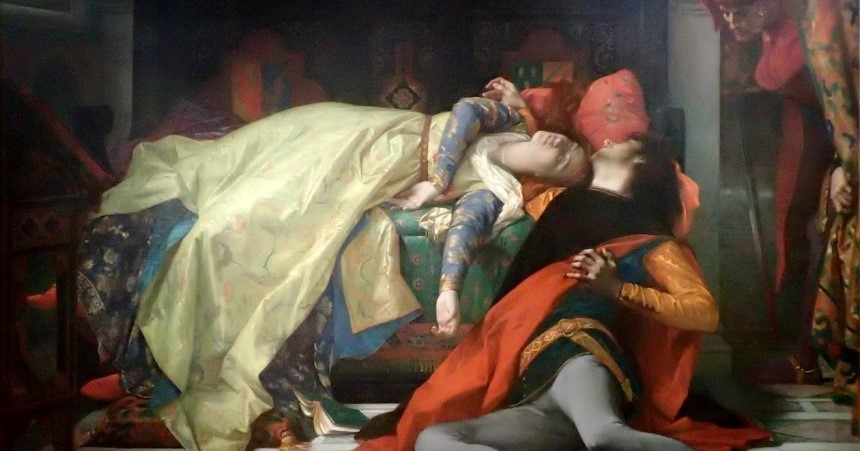
La morte di Francesca e Paolo di Alexandre Cabanel
Francesca da Rimini era sposata con Gian Ciotto (Giovanni lo Zoppo) Malatesta, signore di Gradara, ma si innamorò di suo cognato Paolo Malatesta.
Quando Gian Ciotto scoprì il loro incontro segreto, li uccise dopo essere entrato nella camera da letto attraverso una botola. La stanza in cui avvenne il fatto è oggi una delle principali attrazioni del castello di Gradara, non lontano da Pesaro, nelle Marche.
Ma il patrimonio culturale di questa famiglia non si limita ai tragici amanti, ma si estende anche agli edifici che hanno lasciato, due dei quali hanno ottenuto il riconoscimento dell’UNESCO: il Tempio Malatestiano a Rimini e la Biblioteca Malatestiana a Cesena.
La Biblioteca Malatestiana Antica fu fondata nel 1447 da Malatesta Nuovo all’interno di un convento che oggi ospita la biblioteca della città di Cesena.
La biblioteca è inserita nella lista della Memoria del Mondo dell’UNESCO perché «il suo edificio, l’arredamento e la collezione di manoscritti costituiscono un complesso monumentale e bibliografico di eccezionale importanza ed è riconosciuta in tutto il mondo come l’unica biblioteca del XV secolo ancora intatta».
Anche la porta d’ingresso della biblioteca (foto sotto) è quella originale e reca ancora le iniziali di Malatesta Nuovo.
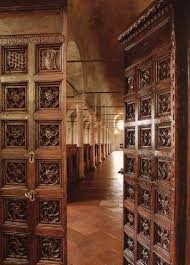
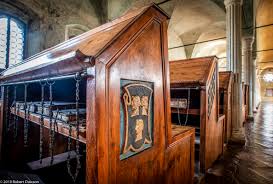
Quando siamo entrati nella biblioteca, abbiamo sentito il profumo delle pergamene sugli scaffali sotto ogni panca. Come testimonianza del passato, sono ancora fissate alle catene che garantiscono, non tanto che non possano essere rubate, quanto piuttosto, come era consuetudine all’epoca, che rimangano sempre al loro posto per una rapida consultazione, secondo il ragionamento che «i libri non potevano muoversi, ma le persone sì».
Sebbene non fosse uno scriptorium, entrare nella biblioteca era come varcare la soglia della biblioteca che ha fatto da sfondo al “Nome della rosa” di Umberto Eco.
Ma la biblioteca di Cesena non comprende solo la Biblioteca Malatestiana Antica, ma anche altre collezioni, due delle quali sono importanti e sorprendenti testimonianze di due affascinanti episodi della storia italiana e mondiale.
Cesena ha anche l’onore di essere la città natale di due Papi. Il primo fu Pio VI (Giovanni Angelo Braschi) al quale, incredibilmente, succedette il secondo Papa cesenate, Pio VII (Barnaba Chiaramonti). Ancora più incredibilmente, entrambi furono arrestati dai francesi in seguito alla Rivoluzione francese.
Pio VI, estremo oppositore dell’Illuminismo, fu condotto in Francia insieme alla sua vasta collezione di libri, dove molti di essi furono venduti a collezionisti privati. Alcuni dei libri rimasti furono infine restituiti a Cesena e donati alla biblioteca.
Il Papa morì in esilio nel 1799 e, poiché la Francia era ancora in preda alla rivoluzione, fu sepolto in una fossa comune con la semplice, ma eloquente iscrizione: “Cittadino Giovanni Angelo Braschi, in arte Papa”. Il suo corpo sarebbe stato riportato in Vaticano nel 1802.
Il suo successore fu arrestato e condotto in Francia nel 1809 per la sua opposizione alla riorganizzazione forzata della Chiesa voluta da Napoleone.
Pio VII fu liberato nel 1814 dagli Alleati che sconfissero Napoleone e, durante il suo ritorno a Roma, soggiornò a Cesena dove donò la propria vasta collezione di libri alla biblioteca della città per assicurarsi che non andasse dispersa, arricchendo ulteriormente l’importanza culturale di Cesena.
La triste verità è che le vite di questi due Papi costituiscono un eccellente esempio di come gran parte del patrimonio culturale italiano sia finito in altri paesi, e non solo in Francia.
Un’ulteriore prova di questa dispersione è data dal destino della famiglia Malatesta, che soccombette alla violenza dei tempi e si estinse nel XVI secolo.
Ma il loro patrimonio vive ancora.
Cesena non è solo la biblioteca. Il suo elegante centro storico è un ammirevole esempio di ciò che le Signorie d’Italia realizzarono nelle città che governavano. Passeggiando per Cesena è facile immaginare la gente del Rinascimento che camminava per queste strade.
Inoltre, Cesena e Rimini non erano le uniche città controllate dalla famiglia Malatesta, che governava anche Ascoli Piceno, Pesaro, Jesi, Fano e Gradara nelle Marche, Bertinoro, Santarcangelo, Rimini e Cervia in Romagna, e Sansepolcro in Toscana. Oltre alle fortezze strategiche di Verrucchio (dove nacque Paolo Malatesta), Montefiore Conca e Montegridolfo.
Eppure, la famiglia Malatesta era solo una delle Signorie che non solo cambiarono il volto dell’Italia, ma, attraverso il loro mecenatismo a favore di grandi artisti, scrittori e compositori, ebbero anche un enorme impatto sul patrimonio culturale mondiale; questo è uno dei motivi principali per cui l’Italia occupa un posto d’onore tra le culture più importanti del mondo, come si può vedere in ogni categoria culturale dell’UNESCO.
Quindi, se qualcuno dei nostri lettori all’estero desidera trascorrere una piacevole vacanza in Italia, farebbe bene a prendere in considerazione i territori controllati dalla famiglia Malatesta, perché non solo eviterebbe le lunghe code delle principali attrazioni turistiche, ma soprattutto inizierebbe a comprendere che la storia e la cultura dell’Italia sono molto più vaste di quanto pensino molte persone che hanno frequentato le scuole all’estero.
Inoltre, possiamo aggiungere anche altre grandi signorie come i Medici, gli Este, i Gonzaga, gli Sforza e molte altre famiglie, ognuna delle quali offrirebbe un itinerario affascinante per qualsiasi turista in Italia.
E poiché questi territori sono facilmente raggiungibili l’uno dall’altro, garantirebbero una vacanza affascinante e piacevole per i turisti internazionali.
Cesena and the library that takes us back in time
One of the true joys of living in Italy is the vast selection of places to visit on one day jaunt, and for us who live in Faenza one of the destinations is Cesena that is little known outside the country and so it does not draw the attention of international tourists wishing to avoid places with long queues that are often the biggest memories of those who visit cities like Florence, Rome and Venice in summer.
Cesena once belonged to the Malatesta family that controlled vast areas of the Romagna and the Marche. The family was one of the great Signorie, the ruling families that left their mark on the country, not just in terms of fortifications, but also in artistic works and in one case, even in Literature.
And fact, a tragic episode involving the Malatesta family is now an unforgettable part of Italy’s greatest piece of Literature, Dante’s Divina Commedia (Divine Comedy).
In fact, Francesca and Paolo were the famous star-crossed lovers that Dante meets in the Inferno, and who then became the subject the subject of many paintings over the centuries.
The death of Francesca and Paolo by Alexandre Cabanel
Francesca da Rimini was married to Gian Ciotto (John the lame) Malatesta, the lord of Gradara, but she falls in love with her brother-in-law Paolo Malatesta.
When Gian Ciotto discovers their tryst, he kills them after entering the bedroom through a trapdoor. The room where this happened is now a major attraction of the castle of Gradara not far from Pesaro in the Marche.
But the cultural heritage of this family is not limited to the tragic lovers, it also extends to the buildings they left behind, two of which have achieved recognition by UNESCO, the Malatesta Temple in Rimini, and the Malatesta Library in Cesena.
The Biblioteca Malatestiana Antica (known in English as the Malatesta Novello Library) was founded in 1447 by Malatesta Nuovo within a convent that is now the library of the city of Cesena.
The library is listed as one of UNESCO’s Memoire du Monde (Memories of the world) because “its building, furnishings and manuscript collection, constitute a monumental and bibliographical complex of outstanding importance and is acknowledged the world over as the only fifteenth-century library still intact”.
Even the library’s entry door (photo below) is the original door, and it still bears the initials of Malatesta Nuovo.
When we entered the library recently, we could smell the parchments on the shelves under each bench. As a testimony to the past, they are still held in the chains that ensure, not so much that they could not be stolen, but, as was the habit at the time, that they would always be in their correct places for quick consultation with the reasoning that “the books could not move, but people could”.
Although it was not a scriptorium, entering the library was like stepping into the library that was the setting for Umberto Eco’s “The Name of the Rose”.
But Cesena’s library does not contain only the Malatesta Novello Library, it also has other collections, two of which are important, and surprising, reminders of two fascinating episodes of Italian and world history.
Cesena also has the honour of being the birthplace of two Popes. The first was Pius VI (Giovanni Angelo Braschi) who, incredibly, was succeeded by the second Pope from Cesena, Pius VII (Barnaba Chiaramonti). Even more incredibly, both were arrested by the French following the French Revolution.
Pius VI, an extreme opponent of the Enlightenment, together with his vast collection of books, was taken to France where many of the books were sold to private collectors. Some of the remaining books were eventually returned to Cesena and donated to the library.
The Pope died in exile in 1799, and since France was still in the throes of the revolution, he was buried in a poor man’s grave with the simple, but telling inscription, “Citizen Giovanni Angelo Braschi, known as the Pope.” His body would be returned to the Vatican in 1802.
His successor was arrested and taken to France in 1809 for his opposition to Napoleon’s forced reorganization of the Church.
Pius VII was freed in 1814 by the Allies who defeated Napoleon and during his return to Rome, he stayed in Cesena where he donated his own large collection of books to the city’s library to ensure that it was not dispersed, further enriching the cultural importance of Cesena.
The sad truth is that the lives of these two Popes give an excellent example of how too much of Italy’s Cultural Heritage ended up in other countries, and not just in France.
Further proof of this dispersion came from the fate of the Malatesta family that succumbed to the violence of their times and became extinct in the 16th century.
But their heritage lives on.
Cesena is not just the library. Its elegant city centre is an admirable example of what the Signorie of Italy achieved in the cities they ruled. While you walk through Cesena it is easy to imagine the people of the Renaissance walking through these cities.
In addition, Cesena and Rimini were not the only cities controlled by the Malatesta family, they also ruled Ascoli Piceno, Pesaro, Jesi, Fano and Gradara in the Marche, Bertinoro, Santarcangelo, Rimini, and Cervia in the Romagna, and Sansepolcro in Tuscany. As well the strategic fortresses of Verrucchio (where Paolo Malatesta was born), Montefiore Conca and Montegridolfo.
And also, the Malatesta family was just one of the Signorie that changed not just the face of Italy, but, through their patronage of great artists, writers and composers, they also had an enormous impact on the world’s Cultural heritage, and this is one on the main reasons that Italy has a proud place among the world’s most important Cultures, as can been seen in every UNESCO category of Culture.
So, if any of our readers overseas want to have an enjoyable holiday in Italy, they would do well to consider the territories controlled by the Malatesta family because not only would they avoid the long queues of the major tourists attractions, but above all they would begin to understand that Italy’s history and Culture are much bigger than many people who attended schools overseas think.
Furthermore, we can also add other great Signorie such as the de Medici, d’Este, Gonzaga, Sforza, and many other families, each of which would provide a fascinating itinerary for any tourist to Italy.
And since these territories are within easy travelling time from each other, they would provide a fascinating and enjoyable holiday for international tourists.


