
Diritti umani
La 21ª edizione del Festival Internacional de Cine de Derechos Humanos de Buenos Aires presenta il documentario Identidad- The 21st edition of the Festival Internacional de Cine de Derechos Humanos de Buenos Aires presents the documentary Identidad

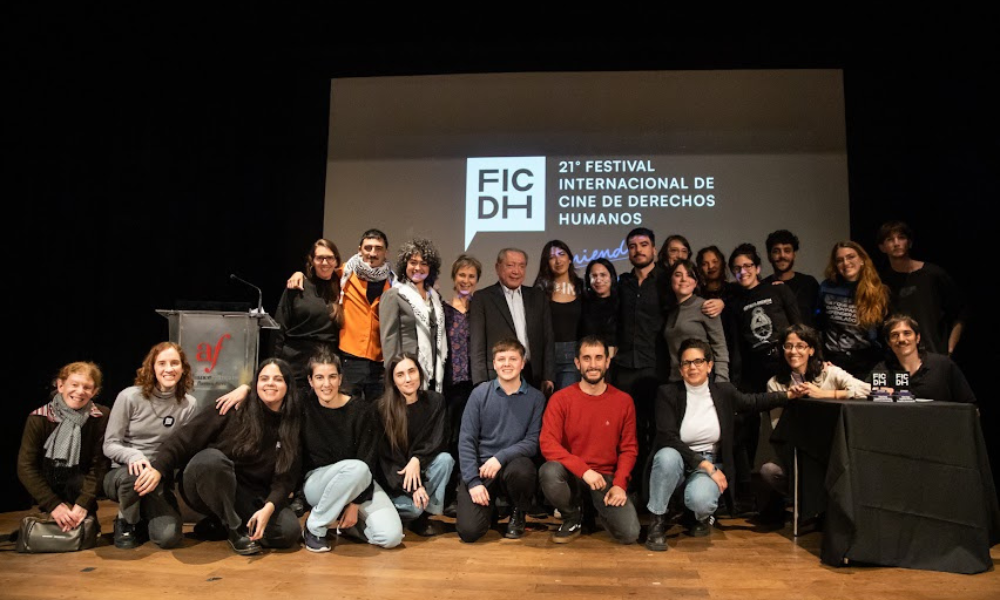


La 21ª edizione del Festival Internacional de Cine de Derechos Humanos de Buenos Aires presenta il documentario Identidad
di Edda Cinarelli
Il 15 giugno, nella cornice della 21ª edizione del Festival Internacional de Cine de Derechos Humanos de Buenos Aires, si è svolta la Prima mondiale del documentario Identidad di Florencia Santucho e Rodrigo Vasquez – Salessi.

Un lungometraggio che come un grido squarcia la presunta normalità della vita quotidiana per riportare alla coscienza collettiva il tema dell’identità e il problema dei neonati sottratti alle madri durante la loro prigionia nell’ultima dittatura militare (24 marzo 1976 – 10 dicembre 1983).

Daniel Santucho, il nipote recuperato numero 133 parla della sua vita, l’insicurezza, i dubbi vissuti sulla sua identità fino alla scoperta della verità, l’incontro con il padre e con tutta la sua famiglia.

E’ una storia individuale ma anche la cronaca corale di una vicenda che riguarda una grande famiglia, numericamente parlando, con molti zii, cugini, protagonista di un periodo storico di cui alcuni non vogliono parlare e di cui altri vogliono sapere la verità.

Daniel è figlio di Julio Santucho e di Cristina Navajas, entrambi militanti dell’Ejercito Revolucionario del Pueblo (ERP). È nato il 10 gennaio 1977, nel Pozo de Banfield, nel primo cordone industriale della città di Buenos Aires, dove sua madre l’ha dato a luce dopo essere stata sequestrata il 13 luglio 1976, incinta di due mesi.

I militari se ne sono appropriati appena nato e lo hanno consegnato alla famiglia di un poliziotto. Julio Santucho era responsabile delle Relazioni Internazionali dell’ERP, il maggior gruppo guerrigliero di orientamento marxista dell’Argentina, fondato nel 1970 da Mario Roberto Agustín Santucho (12 agosto 1936, Santiago del Estero – 19 luglio 1976, Villa Martelli, Buenos Aires), zio di Daniel.

Il lungometraggio, che è la narrazione di una dura vicenda personale e familiare intrecciata con la storia argentina, per esplorare il tema dell’identità e della storia include video degli anni Settanta, brevi filmati della grande famiglia Santucho, foto di Julio con Cristina ed i figli Camilo e Miguel.

Nei filmati girati per la strada si nota che i giovani del tempo si sentivano attratti dal marxismo più che dal peronismo probabilmente perché il clima sociale era influenzato dal successo della Rivoluzione Cubana (26 luglio 1953 – 1 gennaio 1959).

Daniel nel documentario racconta che, prima di aver scoperto la verità e recuperato la sua identità, era insicuro, infelice. Ai 46 anni ha trovato la sua famiglia biologica grazie alla banca genetica delle Abuelas de Plaza de Mayo, dove era andato per cercare una risposta ai suoi dubbi e alla sua angoscia. Ora è felice, sa chi è ed é circondato dall’affetto della sua famiglia.

La madre è desaparecida, la nonna Nélida Gómez Navajas, che si è battuta durante tutta la vita per ritrovare la figlia e il nipote non c’è più, ma è ricordata dai nipoti: Camilo, Miguel e Florencia con amore e profondo rispetto, lei è un punto di riferimento forte e determinante, la sua presenza aleggia durante tutto il documentario e Daniel, che non l’ha mai conosciuta, sa che si era mai stancata di cercarlo.

Julio Santucho dice che In Argentina c’è stata una delle dittature più sanguinarie e oscure dell’America Latina e del mondo cui è seguito un processo di riparazione molto significativo. Una parte importante di questo processo è costituita dalla recuperazione dei bambini sottratti all’epoca dei militari e dati in adozione: “Questo documentario ci mostra che con ogni nipote che si recupera, si recupera un poco della nostra identità collettiva”.

Tante fotografie a significare la gioia della famiglia Santucho per il figlio e fratello ritrovato dopo tanto dolore!
The 21st edition of the Festival Internacional de Cine de Derechos Humanos de Buenos Aires presents the documentary Identidad
by Edda Cinarelli
On June 15, in the setting of the 21st edition of the Festival Internacional de Cine de Derechos Humanos de Buenos Aires, the World Premiere of the documentary Identidad by Florencia Santucho and Rodrigo Vasquez – Salessi took place.
A feature-length film that like a cry rips through the supposed normality of daily life to bring back to the collective consciousness the issue of identity and the problem of babies taken from their mothers during their imprisonment in the last military dictatorship (March 24, 1976-December 10, 1983).
Daniel Santucho, the recovered grandson number 133 talks about his life, the insecurity, the doubts experienced about his identity until the discovery of the truth, the meeting with his father and his whole family. It is an individual story but also the choral chronicle of a story about a large family, numerically speaking, with many uncles, cousins, protagonist of a historical period that some do not want to talk about and others want to know the truth about.
Daniel is the son of Julio Santucho and Cristina Navajas, both militants of the Ejercito Revolucionario del Pueblo (ERP). He was born on January 10, 1977, in Pozo de Banfield, in the first industrial cordon of the city of Buenos Aires, where his mother gave birth to him after being kidnapped on July 13, 1976, two months pregnant.
He was appropriated by the military as soon as he was born and handed over to a policeman’s family. Julio Santucho was head of International Relations for the ERP, Argentina’s largest Marxist-oriented guerrilla group, founded in 1970 by Mario Roberto Agustín Santucho (August 12, 1936, Santiago del Estero-July 19, 1976, Villa Martelli, Buenos Aires), Daniel’s uncle.
The feature film, which is a narrative of a tough personal and family story intertwined with Argentine history, to explore the theme of identity and history includes videos from the 1970s, short clips of the large Santucho family, photos of Julio with Cristina and sons Camilo and Miguel. In the footage shot on the street, it is noted that the young people of the time were attracted to Marxism rather than Peronism probably because the social climate was influenced by the success of the Cuban Revolution (July 26, 1953-January 1, 1959).
Daniel tells in the documentary that before he discovered the truth and recovered his identity, he was insecure, unhappy. At 46, he found his biological family through the genetic bank of the Abuelas de Plaza de Mayo, where he had gone to seek an answer to his doubts and anguish.
Now he is happy, knows who he is and is surrounded by the affection of his family. His mother is desaparecida, his grandmother Nélida Gómez Navajas, who fought throughout her life to find her daughter and grandson is gone, but she is remembered by her grandchildren: Camilo, Miguel and Florencia with love and deep respect, she is a strong and decisive reference point, her presence hovers throughout the documentary and Daniel, who never knew her, knows that she was ever tired of looking for him.
Julio Santucho says that In Argentina there was one of the bloodiest and darkest dictatorships in Latin America and the world which was followed by a very significant process of reparation. An important part of this process is the recovery of children taken from the military era and given up for adoption: “This documentary shows us that with each grandchild that is recovered, a little bit of our collective identity is recovered.”
So many photographs to signify the Santucho family’s joy for their son and brother found after so much pain!


