
Diritti umani
Social e minori-Social Media and Minors



Social e minori
di Antonio Fugazzotto
La situazione da noi in Italia? Cosa si sta facendo su questo spinoso tema? Sull’uso dei social da parte dei minori in teoria le regole ci sarebbero. Per accedere a piattaforme come Facebook, Instagram o TikTok la legge fissa il limite a 14 anni (o 13 anni se c’è il consenso dei genitori). Ma le barriere per iscriversi sono facilmente superabili: ai ragazzi basta dichiarare una data di nascita falsa per entrare dove sono attesi e diventare dipendenti ed esposti a cyberbullismo e all’isolamento sociale. Sull’uso dei social da parte dei minori sono circolati dati allarmanti da uno studio commissionato dal governo australiano che ha rilevato che il 96% dei bambini tra i 10 e i 15 anni usa i social media e che sette su dieci sono stati esposti a contenuti dannosi, dal materiale misogino ai video sui disturbi alimentari, fino ai contenuti che normalizzano l’idea del suicidio. Più del 50% ha praticato cyberbullismo e circa il 15% ha subito tentativi di adescamento.
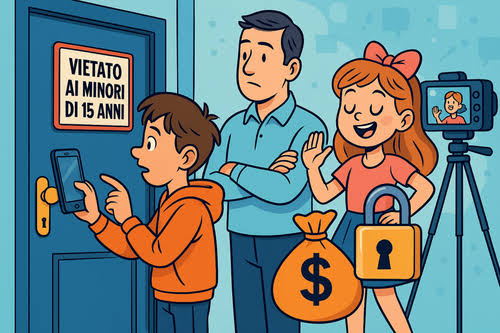
E’ fresca la notizia che in Italia la maggioranza di governo introduce un emendamento al DL Sicurezza che vieta i social ai minori di 13 anni e prevede un profilo fino ai 16 anni da condividere con i genitori. Così essa decide di seguire in gran parte le linee guida dell’EU Kids Act del settembre scorso, ancora da approvare, con il quale Bruxelles intende aumentare la sicurezza dei minori online su social media, piattaforme video, videogiochi e sistemi di intelligenza artificiale. Ma già Meta e altri soggetti coinvolti alzano gli scudi temendo una frammentazione di provvedimenti nazionali. O l’esempio francese che ha visto il governo bocciato dalla Corte Costituzionale secondo cui vietare i social network ai minori di 15 anni significa non rispettare due principi fondamentali, la libertà di espressione ed il diritto alla privacy. Ma la stessa Corte ammonisce che non si debbano considerare tutti i social ugualmente pericolosi e mette in guardia dal proibire ad ampio raggio senza distinguere per non scadere nella violazione della libertà di espressione garantita dalla costituzione. C’è anche chi alza la voce mettendo in guardia da una controindicazione al divieto che è quella del rischio concreto della non protezione dei minori ma dell’ incentivo alla curiosità che stimolerebbe la ricerca di ripieghi sottobosco che fatalmente porterebbero ad un ulteriore distacco dei giovani dalla famiglia e dalle istituzioni scolastiche.
Questi provvedimenti devono fare i conti con lo sterminato popolo i dei patiti dei social media. “Followers” è una parola che piace molto pronunciare. “Social” altra parola che è diventata familiare. Faccio parte di un social. Posso pubblicare, mi leggono. Sono finalmente qualcuno. Ma soprattutto sono in compagnia. Non sono solo. Ma troppo spesso questo porta i giovani alla rinuncia dell’individualismo per rifugiarsi nel conformismo al fine di sentirsi parte di un grande gruppo, per identificarsi in qualcosa di importante e di esteso.
Ma poi, fatalmente, la forte percezione dell’omologazione lo porta allo scontento verso sé stesso, esponendosi talora anche alla depressione.
Sono questi i tipici effetti devastanti della spersonalizzazione e della consapevolezza di uno status effimero, illusorio e ingannevole. Forse non aveva torto Eugenio Montale quando diceva che viviamo in città “abitate da milioni di eremiti.”
Social Media and Minors
by Antonio Fugazzotto
What’s the situation here in Italy? What’s being done about this thorny issue? In theory, there are rules governing minors’ use of social media. To access platforms like Facebook, Instagram, or TikTok, the law sets the age limit at 14 (or 13 with parental consent). But the barriers to signing up are easily circumvented: all kids have to do is provide a false date of birth to gain access to the platforms where they’re welcomed—only to become addicted and exposed to cyberbullying and social isolation. Alarming data on minors’ use of social media has emerged from a study commissioned by the Australian government, which found that 96% of children between the ages of 10 and 15 use social media and that seven out of ten have been exposed to harmful content—ranging from misogynistic material to videos about eating disorders, to content that normalizes the idea of suicide. More than 50% have engaged in cyberbullying, and about 15% have been the target of grooming attempts.
News has just broken that in Italy, the governing majority is introducing an amendment to the Security Decree that bans social media for children under 13 and requires users up to age 16 to share their profiles with their parents. In doing so, it has decided to largely follow the guidelines of last September’s EU Kids Act—which has yet to be approved—through which Brussels aims to increase the online safety of minors on social media, video platforms, video games, and artificial intelligence systems. But Meta and other stakeholders are already pushing back, fearing a fragmentation of national measures. Or take the example of France, where the government’s proposal was struck down by the Constitutional Court, which ruled that banning social media for children under 15 violates two fundamental principles: freedom of expression and the right to privacy. However, the Court itself cautions that not all social media platforms should be considered equally dangerous and warns against sweeping bans without distinction, lest they violate the freedom of expression guaranteed by the constitution. There are also those who speak out, warning of a potential drawback to such a ban: the real risk that, rather than protecting minors, it would actually encourage their curiosity—prompting them to seek out underground alternatives that would inevitably lead to a further estrangement of young people from their families and educational institutions.
These measures must contend with the vast army of social media enthusiasts. “Followers” is a word people love to say. “Social” is another word that has become familiar. I’m part of a social network. I can post; people read what I write. I’m finally somebody. But above all, I’m part of a community. I’m not alone. But all too often, this leads young people to abandon individualism and take refuge in conformity in order to feel part of a large group, to identify with something important and widespread.
But then, inevitably, the strong sense of conformity leads to dissatisfaction with oneself, sometimes even exposing them to depression.
These are the typical devastating effects of depersonalization and the awareness of a fleeting, illusory, and deceptive status. Perhaps Eugenio Montale wasn’t wrong when he said that we live in cities “inhabited by millions of hermits.”


