
Italiani nel Mondo
Perché l’Australia è così severa riguardo a ciò che le persone possono portare nel Paese?- Why is Australia so strict about what people can bring into the country?


Perché l’Australia è così severa riguardo a ciò che le persone possono portare nel Paese?
Recentemente un lettore mi ha contattato per chiedermi perché l’Australia fosse così severa riguardo a ciò che viene introdotto nel Paese, e si è sorpreso nell’apprendere le ragioni. Ho quindi deciso di spiegare agli altri lettori all’estero l’importanza della dichiarazione doganale che devono firmare quando si recano in Australia.
L’Australia è enorme, ma è stata anche isolata dal resto del mondo per migliaia di anni. Prima della colonizzazione, le uniche parti dell’Australia conosciute dagli esploratori erano quelle sulla costa occidentale del paese, al confine con i deserti, e quindi non presentavano alcun interesse per ulteriori esplorazioni da parte delle potenze coloniali in espansione e certamente non lasciavano intuire le vaste dimensioni della massa continentale.
Per questi motivi, il paese era anche isolato da molte malattie, animali e piante che devastavano altri continenti.
Quando il capitano Cook scoprì Botany Bay nel 1770, chiamò l’area New South Wales (Nuova Galles del Sud) perché era così verde e fertile. Questa zona divenne poi importante dopo lo scoppio della guerra d’indipendenza americana, quando divenne sede della prima colonia penale che sostituì le colonie precedentemente situate in quello che oggi è gli Stati Uniti.
Fu solo dopo la circumnavigazione del continente/paese da parte di Matthew Flinders nel 1798 che si scoprì che l’area della prima colonia e la costa desertica conosciuta a ovest facevano tutte parte di un unico enorme continente insulare.
Con l’arrivo dei primi soldati e detenuti britannici, e poi di coloro che desideravano un “nuovo inizio” nel nuovo continente, giunsero anche gli invasori biologici che hanno causato così tanti problemi alla biosfera del Paese, a cominciare dal coniglio.
Come si può vedere nel documentario qui sotto della rete televisiva australiana ABC, a causa della mancanza di predatori naturali, il coniglio si diffuse rapidamente e devastò vaste aree di ogni stato.
Sfortunatamente, l’uomo che introdusse il coniglio cercò poi di porre rimedio al problema introducendo le volpi, e questi animali devastarono a loro volta la popolazione animale autoctona del continente. Problemi che si verificano ancora oggi con un altro animale introdotto, il gatto domestico che cresce enormemente in natura (foto sotto).
https://youtu.be/778Da7NCF6s?si=la74k2AGH4BVOOXL
Anche le nuove specie vegetali hanno causato problemi, in particolare una pianta che ha devastato vaste aree della campagna australiana: il fico d’India, che in Australia non aveva predatori naturali. Il problema causato dal fico d’India è stato infine risolto con l’introduzione della falena Cactoblastis cactorum, ma la pianta è ancora considerata un parassita da molti comuni in tutto il Paese.
Queste invasioni sono il motivo per cui le autorità australiane sono così severe riguardo a ciò che può essere importato nel Paese, non solo dagli importatori di prodotti commerciali, ma anche dai turisti e da altri visitatori.
Ora possiamo tornare alla dichiarazione doganale che i turisti e gli altri visitatori in Australia devono firmare al loro arrivo nel Paese.
Il primo indizio della procedura che molti viaggiatori percepiscono quando si recano in Australia è quando il personale di bordo inizia a distribuire la dichiarazione doganale che ogni turista o visitatore è tenuto a firmare.
Queste dichiarazioni possono sembrare semplici, ma chi le firma deve assicurarsi che nel modulo siano indicati tutti gli elementi che potrebbero causare problemi durante i controlli doganali all’arrivo.
Non menzioneremo prodotti ovvi, come medicinali, alcolici, armi, droghe, ecc., ma quei prodotti che minacciano la biosicurezza dell’Australia, che sono quelli più suscettibili di causare problemi ai nuovi arrivati.
Sebbene i turisti possano pensare che la dichiarazione si applichi solo a frutta, semi (che devono essere nella confezione originale non aperta), ecc., essa si applica anche a molte altre categorie di prodotti.
Quindi, se un turista ha acquistato un prodotto a base di erbe in un altro paese, il contenuto delle confezioni potrebbe essere considerato illegale in Australia, causando così problemi al nuovo arrivato.
Inoltre, i passeggeri che scendono dagli aerei possono vedere chiaramente i contenitori per la frutta o il cibo che potrebbero avere, anche quelli forniti dal personale di cabina durante il volo.
Questi contenitori non sono un servizio di cortesia, ma sono obbligatori, e i passeggeri devono riporvi qualsiasi frutto, cibo, ecc., in particolare se la dichiarazione che hanno appena firmato prima dell’arrivo attesta che non hanno portato frutta o cibo nel Paese…
E i problemi possono derivare anche dalle calzature, sia indossate che nel bagaglio. La dichiarazione richiede ai visitatori di indicare se hanno visitato fattorie, ecc., mentre erano all’estero.
Se la dichiarazione dice di no, e poi gli ispettori trovano scarpe ricoperte di fango ed erba provenienti da una fattoria, o anche se il visitatore indossa scarpe in tali condizioni, ciò potrebbe causare gravi difficoltà alla persona.
E il caso di una scuderia di Formula Uno che si recò in Australia circa 40 anni fa, dopo il Gran Premio del Giappone di pochi giorni prima in cui una delle sue auto era uscita di pista, dimostra quanto questa questione sia considerata seria in Australia.
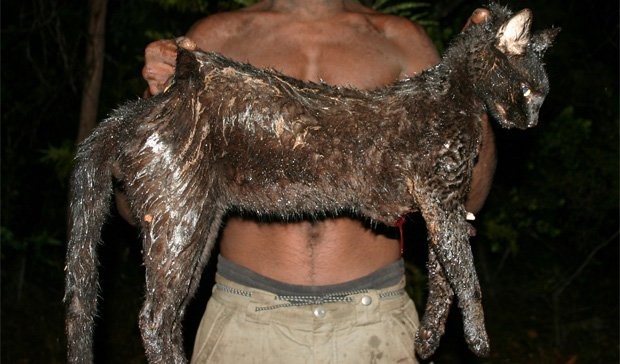
Un gatto selvatico in Australia
In effetti, il team ha corso il serio rischio di non poter partecipare alla gara perché, all’arrivo in Australia, gli ispettori doganali hanno trovato gli pneumatici dell’auto ricoperti di fango ed erba. Alla fine l’auto è stata ammessa alla gara, ma solo dopo essere stata accuratamente disinfettata, e la decisione definitiva è arrivata solo uno o due giorni dopo…
E le restrizioni si applicano anche ai souvenir provenienti da altri paesi che turisti, visitatori, ecc. possono portare in Australia. Qualsiasi oggetto in legno, trattato o non trattato, animali imbalsamati o qualsiasi oggetto organico deve essere indicato nella dichiarazione, e la mancata indicazione potrebbe comportare gravi conseguenze legali.
Infatti, il modulo che si firma sull’aereo non è una semplice formalità, ma una dichiarazione legale con sanzioni penali per chi effettua una dichiarazione falsa.
E ovviamente, il ritrovamento di qualsiasi oggetto nelle valigie e nel bagaglio a mano che possa essere stato omesso dalla dichiarazione porterà a ulteriori ispezioni, a volte perquisizioni personali, e persino all’arresto per chi effettua dichiarazioni false…
Peggio ancora, uscire dall’area arrivi passando dal cancello “nulla da dichiarare” è considerato dalle autorità australiane come una tacita dichiarazione doganale. Pertanto, gli ispettori doganali controllano regolarmente alcune delle persone che escono da quell’uscita e, se vengono trovati in possesso di merci proibite, piante, ecc., dovranno affrontare conseguenze concrete per le loro azioni.
Quindi, come ho detto al lettore che mi ha contattato, quando si compila il modulo, se una persona ha qualche dubbio su un oggetto, sarebbe meglio dichiararlo e poi mostrarlo all’ispettore all’arrivo. In questo modo, la conseguenza peggiore che il passeggero potrebbe subire è la confisca del prodotto.
Infine, per chi pensa di poter far passare qualcosa di nascosto, non è raro che altri passeggeri segnalino agli ispettori doganali attività sospette da parte di altri passeggeri…
In breve, evitare questi problemi all’arrivo in Australia è facile: siate onesti nella dichiarazione all’arrivo, perché la scoperta di qualsiasi cosa non inclusa nella dichiarazione comporterà gravi conseguenze legali e la colpa ricadrà esclusivamente sulla persona che ha effettuato la falsa dichiarazione…
Why is Australia so strict about what people can bring into the country?
A reader recently contacted me to ask why Australia was so strict about what is brought into the country, and he was surprised to know the reasons. So, I have decided to explain to other readers overseas the importance of the customs declaration they must sign when they go to Australia.
Australia is huge, but it was also isolated from the rest of the world for thousands of years. Before colonization the only parts of Australia known to explorers were on the west coast of the country bordering deserts, and therefore of no interest for further exploration by the expanding colonial powers and certainly did not hint at the vast size of the landmass.
For these reasons, the country was also isolated from many diseases, animals and plants that ravaged other continents.
When Captain Cook discovered Botany Bay in 1770, he called the area New South Wales because it was so green and fertile. This area then became important after the outbreak of the American War of Independence when it became the site of the first penal colony that replaced the colonies formerly in what is now the United States.
It was only after Matthew Flinders’ circumnavigation of the continent/country in 1798 that it was discovered that the area of the first colony and the known desert coast in the west were all part of one huge island continent.
With the arrival of the first British soldiers and convicts, and then those who wanted a “new beginning” in the new continent, the biological invaders that have caused so many problems for the country’s biosphere also came, starting with the rabbit.
As can be seen in the documentary below by Australia’s ABC TV network, because of the lack of natural predators, the rabbit spread quickly and devasted large areas of every state.
Unfortunately, the man who introduced the rabbit then tried to remedy the problem by introducing foxes, and these animals then ravaged the continent’s native animal population. Problems that are still occurring with another introduced animal, the domestic cat that grow enormously in the wild (photo below).
https://youtu.be/778Da7NCF6s?si=la74k2AGH4BVOOXL
And new plants also caused problems, particularly one plant that devastated enormous tracts of Australia’s countryside, the prickly pear that had no natural predator in Australia. The devastation by the prickly pear was eventually resolved by the introduction of the Cactoblastis cactorum moth, but the plant is still considered a pest by many local councils around the country.
These invasions are the reason why the Australian authorities are so strict about what can be imported into the country, not just by importers of commercial products, but also by tourists and other visitors.
Now we can return to the customs declaration tourists and other visitors to Australia must sign when they arrive in the country.
The first hint of the procedure that many travellers have when they go to Australia is when the cabin crew starts to distribute the customs declaration that every tourist/visitor must sign.
This declarations may seem easy, but the people signing it must ensure that everything that may cause problems during customs inspections on arrival are mentioned on the form.
We will not mention obvious products, such as medicines, alcohol, guns, drugs, etc, but those products that threaten the biosecurity of Australia which are the ones most likely to cause problems for the new arrivals.
Although tourists may think the declaration applies only to fruits, seeds (which must be in unopened original packaging), etc, they also apply to many other categories of products.
So, if a tourist had bought a herbal product in another country, the contents inside the packages may be considered illegal in Australia, thus causing problems for the new arrival.
In addition, passengers exiting the airplanes can clearly see containers for any fruit or food they may have, even those given by cabin staff during the flight.
These containers are not a courtesy, they are compulsory, and the passengers must place any fruit, food, etc, into them, particularly if the declaration they had just signed before arrival says that they have brought no fruit or food into the country…
And problems may even be caused by footwear, either worn or in their baggage. The declaration requires visitors to state whether they have visited any farms, etc, while overseas.
If the declaration says no, and then the inspectors find shoes covered in mud and grass from a farm, or even if the visitor is wearing shoes in such a state, this cause could lead to serious difficulties for the person.
And the case of a Formula One team going to Australia about 40 years ago after the Japanese Grand Prix days before where one of its cars crashed out of the race, shows how serious this matter is considered in Australia.
A feral cat in Australia
In fact, the team seriously risked not being allowed to race the car because, on arrival in Australia, the customs inspectors found the car’s tyres covered in mud and grass. Eventually the car was allowed to enter the race, but only after being thoroughly sanitised, and the final decision only came a day or two later…
And restrictions also apply to souvenirs from other countries that tourists, visitors, etc, may bring into Australia. Anything made of wood, treated or untreated, stuffed animals, or anything organic must be listed on the declaration, and failure to do so could have serious legal consequences.
In fact, the form they sign on the plane is not a mere formality but a legal declaration with criminal penalties for those who make a false declaration.
And obviously, the discovery of anything in the suitcases and hand luggage that may have been omitted from the declaration will lead to further inspections, sometimes body searches, and even arrest for those who make false declarations…
Worse still, leaving the arrival area through the “nothing to declare” gate is considered a tacit customs declaration by the Australian authorities. Thus, customs inspectors routinely check a few of the people exiting through that exit, and if they are found to have prohibited goods, plants, etc, they will face real consequences for their actions.
So, as I told the reader who contacted me, when filling in the form, if a person has any doubt about an item, it would be best to declare it and then show it to the inspector on arrival. In that way the worst that the passenger could face is confiscation of the product.
And finally, for people who think they can pass something through sneakily, it is not unusual for other passengers to advice the customs inspectors of suspicious activities by other passengers…
In brief, avoiding these problems on arrival in Australia is easy, be honest with the declaration on arrival because the discovery of anything not included on the declaration will lead to serious legal consequences and the fault will lie solely with the person who made the false declaration…


