
Italiani nel Mondo
L’Italia, le regioni e i festival italiani nel mondo- Italy, the regions and Italian Festivals around the world



L’Italia, le regioni e i festival italiani nel mondo
Questa settimana su una pagina social degli italiani di Adelaide, in Australia, si è svolta una discussione online sul Festival italiano della città. Era evidente che la maggior parte dei partecipanti alla discussione non sapesse che quest’anno ricorre il 50° anniversario del primo Festival italiano tenutosi in città e che la sua storia fosse stata piuttosto movimentata. La prima edizione del Festival riscosse un grande successo, ma la seconda subì un’enorme perdita finanziaria a causa della decisione degli organizzatori di espandersi troppo rapidamente, il che danneggiò la reputazione della comunità italiana della città agli occhi dei potenziali sponsor. Tuttavia, il Festival riuscì alla fine a riaffermarsi come un appuntamento fondamentale nel calendario della comunità italiana della città.
Questo dibattito ha attirato la mia attenzione perché ho fatto parte del comitato organizzativo di alcuni di questi Festival e in seguito sono stato presidente di un’associazione italiana che partecipa regolarmente a tali eventi.
La discussione online ha ripreso i temi principali dei dibattiti svoltisi negli ultimi cinquant’anni, quali: chi organizza il Festival, quale sede utilizzare – a partire dalla principale via dello shopping della città, sede dei primi due Festival, oppure un parco lungo il fiume, o ancora altre sedi – e poi quale tipo di intrattenimento offrire, ecc. Si è inoltre dato per scontato che il cibo sarebbe stato fornito dai club e dalle associazioni italiane locali, come è sempre avvenuto.
Ma il Festival Italiano di Adelaide, di per sé, non è il motivo per cui ho deciso di scrivere questo articolo, perché Adelaide non è l’unica città ad avere un Festival Italiano.
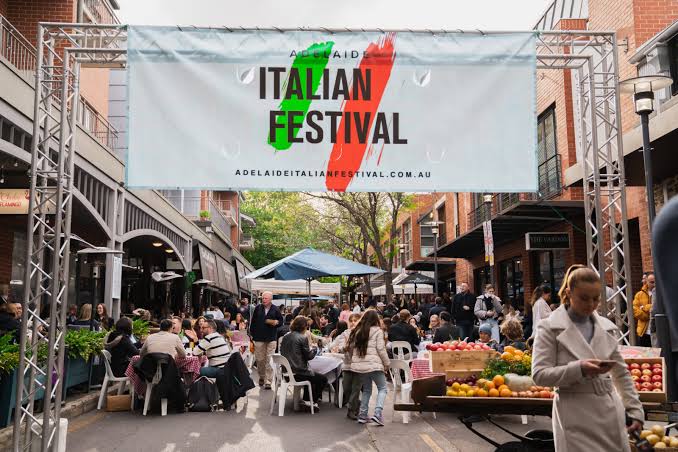
Esistono innumerevoli eventi di questo tipo in paesi di tutto il mondo, ovunque vi siano grandi comunità italiane, e vedo regolarmente post sulle loro pagine social con foto; tutti questi eventi hanno una cosa in comune: nessuno di essi vede la partecipazione attiva e regolare di organizzazioni italiane, non solo a livello nazionale, ma anche delle regioni italiane, e questo è un fatto triste perché la stragrande maggioranza delle organizzazioni italiane che prendono parte a questi eventi è composta da persone provenienti da regioni specifiche, o addirittura da città specifiche.
Infatti, ciò che molte persone in Italia non comprendono appieno è che gli italiani all’estero sono orgogliosi delle proprie origini e che queste sagre sono un’espressione di tale orgoglio; è giunto il momento che questo orgoglio venga riconosciuto e valorizzato.
Peggio ancora, la mancanza di una partecipazione attiva da parte dell’Italia evidenzia come il Paese nel suo complesso non abbia ancora compreso che le comunità italiane sparse nel mondo rappresentano un’enorme risorsa potenziale per la promozione dei prodotti italiani a livello internazionale, a partire dalla nostra più grande fonte di orgoglio, la nostra Cultura, che, fin troppo spesso, viene trascurata all’estero.
Sì, i festival mettono orgogliosamente in mostra e vendono i nostri prodotti alimentari, e forse anche alcuni altri aspetti della nostra vita, ma mostrano ben poco del nostro patrimonio culturale, non solo in termini di arte ma in ogni aspetto della nostra cultura, compresi eventi in Italia che sono sconosciuti al di fuori del Paese ma che meritano di essere conosciuti in tutto il mondo perché non attraggono ancora il numero di turisti stranieri che la loro importanza meriterebbe.
In altre parole, i festival italiani e simili in tutto il mondo sarebbero le sedi ideali per presentare e promuovere ogni aspetto dell’Italia al mondo, eppure non vi è alcun riconoscimento dell’importanza di questi eventi da parte delle autorità italiane.
E per risolvere questa situazione, le autorità italiane, a livello nazionale, regionale e locale, E altre organizzazioni italiane, così come gli organizzatori degli eventi in ogni paese, devono fare qualcosa che quasi mai accade all’interno delle organizzazioni italiane sia in Italia stessa che all’estero.
Devono avviare una pianificazione e una collaborazione a lungo termine per garantire che i Festival non riflettano solo le realtà delle comunità italiane all’estero, ma anche quelle dell’Italia moderna, spesso ignorate a favore dei soliti stereotipi che dominano l’immagine del nostro Paese all’estero. E ciò può avvenire solo adottando due misure che non sarebbero difficili da attuare, considerando l’esistenza non solo dei circoli italiani e di altre organizzazioni all’estero, ma anche di organismi come i Comites e il CGIE, riconosciuti dalle autorità italiane.
La prima cosa da fare è stabilire canali di comunicazione tra gli eventi all’estero e le organizzazioni in Italia. Non solo con il governo, le autorità regionali e locali, ma anche con organizzazioni come la Confindustria (Confederazione Generale dell’Industria Italiana), la principale organizzazione che rappresenta le aziende manifatturiere, di servizi e di beni in Italia, per renderle innanzitutto consapevoli dell’esistenza di questi eventi e, successivamente, per informare i propri membri in merito agli eventi all’estero che coincidano con il lancio di nuovi prodotti, ecc., destinati ai mercati esteri.
E questo tipo di collaborazione deve essere instaurata anche con le organizzazioni culturali in Italia, con l’obiettivo di organizzare mostre d’arte e altre esposizioni culturali per tour all’estero, utilizzando i festival come contesto. Tuttavia, sarebbe scorretto da parte mia non riconoscere che un’organizzazione italiana svolge già questo lavoro in tutto il mondo: la Società Dante Alighieri con sede a Firenze ricopre già tale ruolo, ma ciò non è sufficiente considerando l’ampiezza e la profondità del nostro patrimonio culturale.
Il secondo passo, e per molti versi il più importante, è che le autorità sia in Italia che all’estero comprendano che tutto ciò implicherebbe non pianificare di anno in anno – come è la norma per quasi tutti gli organizzatori italiani – ma pianificare con almeno cinque anni di anticipo, poiché le mostre d’arte, le tournée di artisti di rilievo, musicisti, ecc., non si organizzano da un anno all’altro, ma richiedono anni di pianificazione a causa delle procedure burocratiche necessarie per il trasferimento delle opere d’arte da un paese all’altro.
Inoltre, il coinvolgimento delle autorità regionali sarebbe essenziale, poiché i loro club e le loro associazioni all’estero sarebbero i promotori ideali del bene più importante delle regioni, ovvero il turismo, specialmente in quelle regioni che non attraggono ancora il numero di turisti che meriterebbero davvero.
Naturalmente, questi piani e queste iniziative promozionali dovrebbero coinvolgere anche i giornali in lingua italiana e le emittenti radiofoniche e televisive all’estero, nonché le principali pagine dei social media.
Sì, alcuni potrebbero obiettare che una rete del genere sia molto ambiziosa, se non impossibile, ma ciò che non riescono a riconoscere è che tutti gli elementi per realizzarla esistono già; ciò che manca è la volontà di dare vita a tale collaborazione ed è ora che molte persone in tutto il mondo, a cominciare da numerosi politici e altre autorità in Italia che predicano la promozione della nostra cultura nel mondo, smettano di parlare e inizino ad agire.
E i festival italiani in tutto il mondo sono la base perfetta per un’azione del genere…
Italy, the regions and Italian Festivals around the world
This week there was an online discussion on a social media page of the Italians in Adelaide, Australia that discussed the city’s Italian Festival. It was obvious that most of the people in the discussion did not know that this year marks the 50th of the first Italian Festival in the city and that it had a chequered history. The first Festival was highly successful, but the second made a huge financial loss due to the decision of the organizers to expand too quickly and this harmed the reputation of the city’s Italian community among potential sponsors. But the Festival eventually established itself once again as a major part of the calendar of the city’s Italian community.
This debate drew my attention because I was part of the organizing committee of some of these Festivals and then the President of an Italian Association that regularly takes part in those events.
The online discussion followed the main themes of the debates that have been held over the last fifty years, such as who organizes the Festival, which venue to use, starting with the main shopping street of the city, which was the venue of the first 2 Festivals or a riverside Park, or even other venues, and then what sort of entertainment is to be provided, etc. And it was assumed that the food would be provided by the local Italian clubs and Associations, as always happened.
But Adelaide’s Italian Festival on its own is not the reason I decided to write this article, because Adelaide is not the only city that has an Italian Festival.
There are countless such events in countries around the world wherever there are big Italian communities, and I regularly see posts on their social media pages with photos, and they all have one thing in common, none of these events has the active and regular participations of organizations in Italy, not just at a national level, but also of the Italian regions and this is a sad fact because the vast majority of Italian organizations that take part in these events are made up of people from specific regions, or even towns.
In fact, what many people in Italy do not fully comprehend is that that the Italians overseas are proud of their origins and that these Festivals are an expression of this pride and it is time that this pride is recognized and rewarded.
Worse still, the lack of active participation from Italy highlights how the country as a whole does not yet understand that the Italian communities around the world are a huge potential resource for the promotion of Italian products internationally, starting with our greatest source of pride, our Culture which, all too often, is often overlooked overseas.
Yes, the Festivals proudly display and sell our food, and possibly some other aspects of our lives, but they display little of our Cultural Heritage, not just in terms of Art but every aspect of our Culture, including events in Italy that are unknown outside Italy but deserve to be known around the world because they do not yet attract the numbers of overseas tourists their importance deserves.
In other words, the Italian Festivals, etc, around the world would be the ideal venues to present and promote every aspect of Italy to the world, and yet there is no recognition of the importance of these events from the Italian authorities.
And to resolve this situation, the Italian authorities, at the national, regional and local government levels, AND other Italian organizations, as well as the events in every country, have to do something that almost never happens within Italian organizations in Italy itself and overseas.
They must start long term planning and collaboration to ensure that the Festivals do not reflect only the realities of the Italian communities overseas, but also the realities of modern Italy which are often ignored in favour of the usual stereotypes that dominate the image of our country overseas. And this can only be done by taking two steps that would not be hard to do considering the existence not only of the Italian clubs and other organizations overseas, but also of bodies such as the Comites and the CGIE that are recognized by the Italian authorities.
The first thing to be done is to establish lines of communications between the overseas events and organizations in Italy. Not just with the government, regional and local authorities, but also organizations such as the Confindustria (Confederazione Generale dell’Industria Italiana /General Confederation of Italian Industry), the leading organisation representing manufacturing, service and goods companies in Italy, to first make them aware of the existence of these events, and then to advise their members of events overseas that would coincide with the launch of new products, etc, that are destined for the overseas markets.
And this sort of collaboration must also be established with Cultural organizations in Italy with the aim of setting up Art and other cultural exhibitions for overseas tours, using the Festivals as the context. However, I would be amiss if I did not recognize that one Italian Organization does carry out this work around the world, the Dante Alighieri Society based in Florence already plays such a role, but this is not enough considering t width and breadth of our Cultural Heritage.
The second, and in many ways the most important step, is that authorities in both Italy and overseas must understand that all this would mean not planning year by year, which is the norm with almost all Italian organizers, but to plan at least five years in advance because art exhibitions, tours by major artists, musicians, etc, are not organized from one year to the next, but with years of planning because of the bureaucracy required for moving works of Art from country to country.
Furthermore, the involvement of the regional authorities would be essential because their clubs and associations overseas would be the perfect promoters of the regions’ most important asset, their tourism, especially in those regions that do not yet attract the number of tourists they truly deserve.
Naturally, these plans and promotions should also involve the Italian language newspapers and radio and TV stations/programmes overseas, as well as the major social media pages.
Yes, some may say that such a network is very ambitious, if not impossible, but what they fail to recognise is all that the elements for such a network already exist, what is missing is the Will to form such a collaboration and it is time that many people around the world, starting with many politicians and other authorities in Italy who preach the promotion of our Culture around the world, stopped talking and started acting.
And the Italian Festivals around the world are the perfect foundation for such action…


