
Italiani nel Mondo
Una tradizione davvero insolita e meravigliosa- A most unusual and wonderful tradition



Una tradizione davvero insolita e meravigliosa
di Gianni Pezzano
Quando si parla di tradizioni, solitamente ci si riferisce alle tradizioni familiari, come ad esempio dare ai figli i nomi dei nonni, le ricette di famiglia, la produzione di vino o grappa e una serie di attività che si svolgono all’interno della casa di famiglia.
Molte tradizioni hanno origini ormai dimenticate, mentre altre possono essere ricondotte a eventi e persone specifici. Possono appartenere a una famiglia, a una città, a una comunità all’interno di una città o semplicemente a una particolare serie di circostanze.
E c’è una tradizione nella città di Faenza, non lontano da Ravenna, che ne offre un esempio perfetto e meraviglioso: una tradizione nata in una storica osteria risalente agli inizi del XIX secolo, quasi interamente “grazie” ad alcuni dei suoi clienti che non contribuivano esattamente ai profitti del locale…
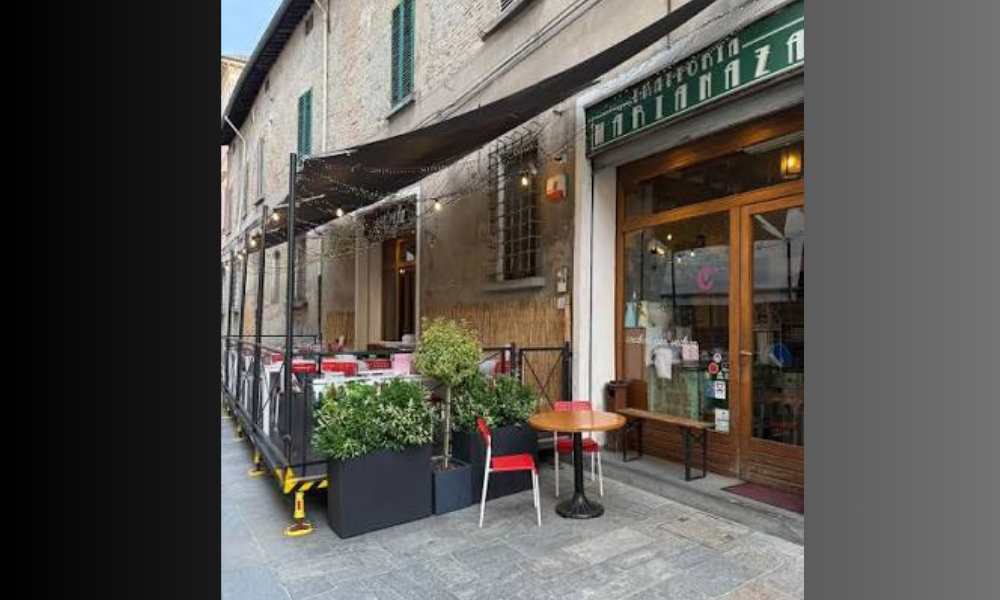
Il ristorante-trattoria Marianaza fu fondato nei primi anni del 1800 in via Torricelli a Faenza, nel centro storico della città, e divenne ben presto parte integrante della vita cittadina. Infatti, la trattoria esiste ancora nello stesso posto ed è tuttora uno dei posti migliori dove gustare l’autentica cucina romagnola, a cominciare da uno dei suoi piatti più famosi, i «passatelli in brodo»: un impasto di pangrattato, parmigiano reggiano stagionato grattugiato fresco, polpa di noci, uova e scorza di limone grattugiata, che viene fatto passare attraverso un apposito attrezzo per formare dei filamenti che vengono poi immersi in brodo di pollo fresco. Questo è senza dubbio uno dei piatti simbolo della regione.
Il ristorante/trattoria si è tramandato di generazione in generazione ed è ancora popolare come lo è sempre stato, come posso confermare dalle mie frequenti visite sin da quando sono arrivato a Faenza per la prima volta nel 1988; tuttavia, la sua fama non è legata solo all’indubbia qualità del cibo e del vino.
Infatti, chi non è del posto non sa che una delle tradizioni più insolite e meravigliose della regione è nata proprio all’interno della Marianaza a causa del comportamento di una categoria dei suoi clienti.
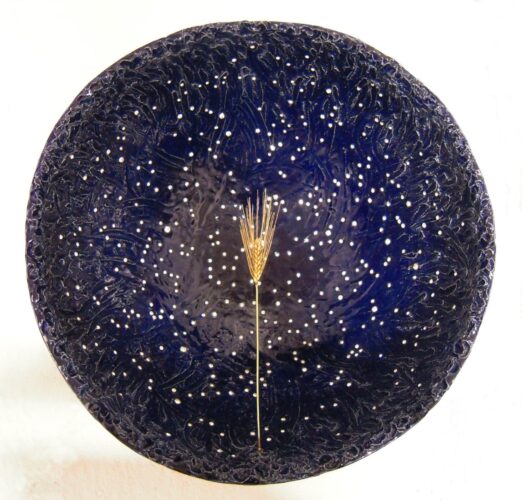
Faenza è nota soprattutto come città d’arte, in particolare per la ceramica, come testimonia l’odierno MEC-Museo Internazionale della Ceramica, che non solo documenta la storia della ceramica e della porcellana in tutto il mondo, ma assegna anche il prestigioso Premio Faenza alle opere ceramiche originali provenienti da ogni parte del globo. Di seguito è riportata l’opera del 2011 “Corrispondenze Ceramiche” del ceramista e artista Giovanni Ruggiero, che si è aggiudicata ex aequo il Premio Faenza nel 2011.
Ma Faenza non attirava solo ceramisti: in città c’erano anche altre categorie di artisti e, negli anni Quaranta dell’Ottocento, alcuni di loro cominciarono a mangiare e a bere alla Marianaza. Tra questi clienti figuravano il pittore Romolo Liverani, l’incisore Achille Calzi e il poeta Angelo Tartagni, solo per citarne tre.
Purtroppo per il locale, le loro tasche non erano all’altezza del loro talento, e spesso se ne andavano senza pagare il conto. Inutile dire che il proprietario della trattoria non gradiva che se ne andassero continuamente senza saldare il conto, e non ci mise molto a perdere la pazienza.
Alla fine, proprio alla vigilia di Capodanno del 1844, quando i soliti «smembri» (come venivano chiamati i «mendicanti» nel dialetto locale) stavano per andarsene dopo l’ultimo pasto, egli esigette il pagamento dovuto. Romolo Liverani disegnò immediatamente uno schizzo del gruppo di smembri che si recava alla trattoria. Poi lui e altri membri del gruppo di debitori scrissero un «discorso» in cui riportavano previsioni sulle stagioni, sulla politica, ecc., per l’Anno Nuovo, che poi consegnarono al proprietario con il messaggio: «Prendi questo, sarà la tua fortuna».
Nessuno nel locale avrebbe potuto immaginare quanto fosse profetica quella frase.
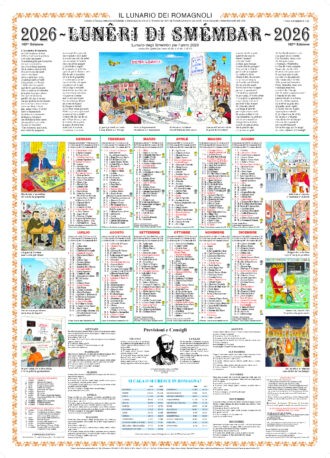
Quei contributi divennero la base per i «Lunêri di Smémbar» (in dialetto romagnolo «L’Almanacco dei Pezzenti»), pubblicato poco dopo; la pubblicazione divenne così popolare che da allora viene edita ogni anno, come dimostra l’edizione del 2026 riportata qui sotto.
Inoltre, questi almanacchi erano anche calendari lunari, e questo è uno dei motivi principali per cui i nuovi calendari divennero estremamente popolari in tutta la Romagna, poiché le fasi lunari riportate nei Lunêri costituivano lo strumento principale con cui i contadini romagnoli programmavano le loro attività durante l’anno. Per citare gli esempi principali, si basavano sulle fasi lunari per decidere quando seminare, organizzare il lavoro nei campi e imbottigliare il vino.
Tuttavia, questa non è l’unica ragione per cui i Lunêri di Smémbar sono ancora oggi in vendita. I loro disegni, commenti e poesie in dialetto romagnolo sono diventati estremamente popolari nella regione e sono in vendita praticamente in tutte le principali edicole del territorio. Infatti, chi visita le case dei romagnoli vedrà molto probabilmente i Lunêri esposti con orgoglio su una parete o sul lato visibile del frigorifero in cucina.
E nelle prossime settimane, chiunque si rechi a Faenza e nel resto della regione vedrà la nuova edizione del Lunêri di Smémbar esposta con orgoglio nelle edicole.
Sì, Romolo Liverani aveva ragione quando disse al proprietario della Marianaza che quel prodotto gli avrebbe portato fortuna, ma non avrebbe mai potuto immaginare che sarebbe diventato anche un elemento fisso nella vita dei romagnoli nei 181 anni trascorsi da quando quegli artisti, poeti, ceramisti e altri creativi un po’ tirchi furono costretti a pagare finalmente il cibo e il vino che avevano consumato nel corso di più di una serata.
Questa storia offre anche un eccellente esempio delle innumerevoli cose che le persone potrebbero scoprire visitando l’Italia, poiché illustra quanto sia davvero vasto e variegato il nostro patrimonio culturale.
Per questo motivo, i lettori d’oltreoceano dovrebbero davvero iniziare a documentarsi sulle zone d’Italia che visiteranno, non solo per quanto riguarda i piatti tipici – compresi, ovviamente, i posti migliori in cui gustarli – e la Marianaza, che vende ancora il calendario, sarebbe una tappa obbligatoria in Romagna, ma anche per approfondire la storia e il contesto del territorio, perché troveranno senza dubbio cose che non avrebbero mai potuto immaginare sul nostro Paese prima di visitarlo.
E queste scoperte mettono in luce quanto gli stereotipi che vediamo fin troppo spesso, non solo sui social media, ma anche sulla stampa internazionale, in televisione e nei film, limitino la percezione di ciò che la nostra cultura è realmente. Ed è ora che l’Italia, come Paese, si impegni molto di più per mostrare al mondo che gli stereotipi non riflettono la realtà del nostro Paese.
Anzi, cosa ancora peggiore, essi nascondono al resto del mondo la vera ampiezza e profondità della nostra cultura…
A most unusual and wonderful tradition
by Ginni Pezzano
When people talk about traditions, they usually refer to family traditions, perhaps giving the children the grandparents’ names, family recipes, making wine or grappa, and any number of activities within the family home.
Many traditions have origins that have been forgotten and some of them can be traced to specific events and people. They can belong to a family, a town, a community within a town, or simply to a particular series of circumstances.
And there is one tradition in the city of Faenza, not far from Ravenna, that provides a perfect and wonderful example of this with a tradition that started in a historic osteria that dates to the early 19th century, almost entirely “thanks” to some of its clients who did not exactly help the locale’s profits…
The ristorante trattoria Marianaza was founded in the early years of the 1800s in Faenza’s via Torricelli within the city’s historic city centre, and it quickly became a regular part of the city. In fact, it trattoria still exists in the same place and it is still one of the best places to taste the authentic cuisine of the Romagna region, starting with one of its famous dishes, “passatelli in brodo”, a mixture of breadcrumbs, freshly grated aged parmigiano reggiano, nutmeat, eggs and grated lemon rind that is passed through a device to form strands that are dropped into fresh chicken broth. This is undoubtedly one of the signatures dishes of the region.
The restaurant/trattoria has been handed down from generation to generation, and it is still as popular as it ever was, as I can vouch from my frequent visits there since I first came to Faenza in 1988, yet its fame is not connected only to the undoubted quality of its food and wine.
In fact, people outside the territory do not know that one of the most unusual and wonderful traditions of the region was originally created inside the Marianaza because of the behaviour of one category of its customers.
Faenza is best known a city of Art, most importantly for ceramics, as is testified by today’s MEC-Museo Internazionale della Ceramica (International Museum of Ceramics) which not only records the history of pottery, ceramics and porcelain around the world, but also presents the prestigious Faenza Prize for original ceramics from around the world. Below is the 2011 piece “Corrispondenze Ceramiche” (Ceramic Matches) by the ceramicist/artist Giovanni Ruggiero which was the joint winner of the Premio Faenza in 2011.
But Faenza did not attract only ceramicists, there were also other categories of artists in the city and in the 1840s some of these artists started to eat, and drink, at the Marianaza. These customers included the painter Romolo Liverani, the engraver Achille Calzi and the poet Angelo Tartagni, to name only three.
Sadly, for the establishment, their pockets did not match their talents, and they often left the establishment without paying their bills. Needless to say, the owner of the trattoria did not appreciate their continual leaving without settling their bills and it did not take him long to lose his patience.
Finally, precisely on New Year’s Eve 1844, when the usual “smembri” (as the “beggars” were called in the local dialect) were about to leave after their latest meal, he demanded his due payment. Romolo Liverano immediately drew a sketch of the group of smembri going to the trattoria. Then he and other members of the group of debtors wrote a “speech” in which they wrote predictions of the seasons, politics, etc, for the New Year, which they then handed to the owner with the message “Take this, it will be your fortune”.
Nobody in the establishment could not have imagined how prophetic that statement was.
Those contributions became the basis for the Lunêri di Smémbar, (Romagnolo dialect for “The Almanac of the Beggars”) which was released shortly afterward, and the publication became so popular that it is has been issued every year since, as the 2026 edition below shows.
Furthermore, these almanacs were also Lunar Calendars, and this is a major reason why the new Calendars become hugely popular throughout the Romagna because the phases of the Moon listed in the Lunêri were the main means by which farmers of the Romagna programme their activities throughout the year. To give the main examples, they relied on the phases of the moon decide when to plant crops, organize work in the fields and bottle the wine.
Yet this is not the only reason the Lunêri di Smémbar is still sold today. Its drawings, comments and poems in Romagnolo dialect have become hugely popular in the region and they are sold in virtually every major edicola (newsstand) in the territory. Indeed, people who visit the homes of the Romagnoli will most likely see the Lunêri proudly displayed on a wall or on the exposed side of the refrigerator in the kitchen.
And over the coming weeks, anyone coming to Faenza and the rest of the region will see the new edition of the Lunêri di Smémbar proudly displayed in the newsstands.
Yes, Romolo Liverani was correct when he told the owner of the Marianaza that it would make his fortune, but he could never have imagined that it would also become a fixed item in the lives of the Romagnoli in the 181 years since those miserly artists, poets, ceramicists and other artists were forced to finally pay for the food and wine they had consumed over more than one evening.
This story also gives an excellent example of the countless things that people could find when they visit Italy because it illustrates just how wide and varied our Cultural heritage truly is.
For this reason, readers overseas really should start to research the parts of Italy they will visit, not just for local dishes including, of course, the best places in which to taste them, and the Marianaza, which still sells the calendar, would be a must for the Romagna, but also research the history and background of the territory because they will undoubtedly find things that they could never imagine about our country before they visit it.
And these discoveries highlight just how much the stereotypes we see all too often, not just on the social media, but also in the international press, television and the movies, limit the perception of what our Culture truly is. And it is time that Italy as a country did much more to show the world that the stereotypes do not reflect the reality of our country.
In fact, and even worse, they obscure the true width the breadth of our Culture from the rest of the world…


